
Why would an academic with a doctorate, an endowed chair and successful spin-out companies still need a Cambridge Executive MBA?
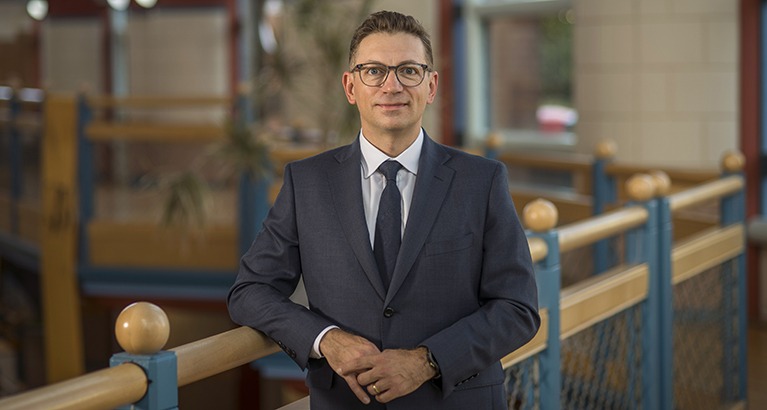
When Professor Umut Gurkan (Cambridge EMBA 2026) arrived in Cambridge, he had already built a rare academic career. As the Wilbert J Austin Professor of Engineering at Case Western Reserve University, his laboratory develops micro-engineered point-of-care diagnostics and human disease-on-a-chip models for blood disorders and cancer. His work has led to 2 spin-out companies, BioChip Labs and Hemex Health. Hemex’s Gazelle platform has run more than 5 million diagnostic tests in over 40 countries.
Yet, for all his scientific and entrepreneurial success, Umut recognised a crucial gap in his career: the skills needed to navigate management, finance and leadership at senior level. This led him to Cambridge Judge Business School and the Executive MBA, where he is now reframing how he thinks about research, innovation and leadership in academia. Alongside his studies, he is a Visiting Fellow at Clare Hall and a Visiting Scholar at the Centre for India and Global Business, working with Professor Jaideep Prabhu on frugal innovation.
Closing the leadership gap in academic careers
For Umut, this gap is not an individual oversight but a structural feature of academic training:
“I have a doctorate, an endowed chair at a leading research university, companies, and at no point in 20 years of training did anyone formally teach me management, finance, negotiation, governance, risk or how to lead people through change.”
Academics are typically expected to acquire these capabilities informally, through trial and error, and short workshops rarely build real competence. The Cambridge Executive MBA is his way of addressing that gap through rigorous, assessed education at a top business school, closely connected to the scientific environment that shapes his work.
From discovery to translation
Umut believes universities excel at discovery and invention but are far less equipped for translation: turning research into products, services and policies, particularly in healthcare. He sees much of this global gap as managerial rather than scientific.
In healthcare, he notes, getting the managerial side wrong has serious consequences: a diagnostic that never clears regulation or cannot secure reimbursement remains a paper, not a product. Universities, he argues, need more people inside who can see those issues early enough to act and who are trained to navigate regulation, funding, risk and organisational decision-making.
For Umut, these capabilities are learnable, and the Cambridge Executive MBA develops them explicitly through structured teaching, senior-level presentation workshops and dedicated executive coaching.
He also sees a two-way benefit, with academics bringing deep technical expertise and an understanding of research culture into the Executive MBA classroom and Cambridge Judge Business School’s entrepreneurial ecosystem. Shortly after joining the programme, Umut became an MBA mentor to a Cambridge Judge EnterpriseTECH team commercialising a new point-of-care diagnostic, coaching them to challenge assumptions, use the right market data and learn by doing.
Why Cambridge Judge and the University of Cambridge
Cambridge Judge Business School appealed because it is embedded within the University of Cambridge’s School of Technology, surrounded by engineering, computer science and biotechnology.
“It is not a business school sitting on its own politely beside a university. It is a department of Cambridge’s School of Technology, next door to the Department of Engineering, Computer Science, and Chemical Engineering and Biotechnology. Deep technology is the everyday house subject rather than an occasional guest lecture here.”
The Cambridge Executive MBA curriculum mapped directly onto the skills he felt were missing: corporate finance, management praxis, organisational behaviour, negotiation skills, managing innovation and corporate governance and ethics – “an inventory of my own and almost any academic’s gaps”.
A further draw was the opportunity to link his medical device work to research on frugal innovation at the Centre for India and Global Business, where Professor Prabhu’s work addresses a question Umut cares about deeply: how medical devices reach people in low-resource settings.
It is not a business school sitting on its own politely beside a university. It is a department of Cambridge’s School of Technology, next door to the Department of Engineering, Computer Science, and Chemical Engineering and Biotechnology. Deep technology is the everyday house subject rather than an occasional guest lecture.
Reframing research portfolios and leadership
Even at the start of his Cambridge Executive MBA, Orientation week changed how Umut thinks about his research and innovation portfolio, with corporate finance having the most immediate impact.
He now views translational research as a portfolio of uncertain, long-horizon assets and applies this lens to a new chairside oral cancer test funded by the National Cancer Institute and developed with colleagues in his School of Dental Medicine and Hemex Health. Rather than focusing mainly on scientific novelty and probability of funding, he concentrates on identifying and sequencing dominant uncertainties and investing where the cost of reducing uncertainty is lowest.
Clinical validation remains the critical path, but his view of who pays and how systems shape demand has shifted. He now sees the oral cancer test as part of a wider screening pathway with a clear coverage gap, which helps him articulate its value. Running the test on the existing Gazelle platform lowers costs and risk for new assets while concentrating platform risk across the portfolio.
Management Praxis has also reframed his understanding of leadership in academic settings, underlining that, outside academia, authority is not guaranteed by title and must be earned and maintained through everyday practice.
A Cambridge Executive MBA makes sense for academics
Umut’s experience shapes how he speaks to academics who are questioning the traditional pathway and wondering whether an Executive MBA fits their academic identity. He encourages mid-career academics to begin with an honest assessment of their frustrations. If the problem lies with the science itself, an Executive MBA will not solve it. But if strong work keeps stalling because of money, investment structures, regulation or people, then the Executive MBA directly addresses those issues, and academics are likely to recognise their own challenges within the first week.
He also rejects the idea that an Executive MBA sits beneath academic standards. Academics would never accept “I picked it up as I went along” as a standard for experimental method. Yet, they often rely on exactly that approach for leadership, negotiation, governance and finance – the areas that determine whether their work leaves the bench.
“What surprised me the most is how little of the Executive MBA is about becoming a businessperson, which is what many academics consider an MBA is all about. For me, the Executive MBA is about gaining the missing key leadership skills and being able to hold my ground as an academic in rooms where I previously had to take somebody else’s word for it.”
What surprised me the most is how little of the Executive MBA is about becoming a businessperson, which is what many academics consider an MBA is all about. For me, the Executive MBA is about gaining the missing key leadership skills and being able to hold my ground as an academic in rooms where I previously had to take somebody else’s word for it.
Balancing research, study and family life
Umut and his family have moved from Cleveland, Ohio, for a sabbatical year, bringing 2 research careers, 2 school-age children and an Executive MBA timetable. His wife, a professor of chemical engineering, is spending the year in the Department of Chemistry, and their daughters attend local schools.
Balancing academic work, Cambridge Executive MBA study and family life is demanding, but the programme’s structure helps. Delivered in intensive weekends and week-long blocks rather than daily classes, it allows Umut to stay involved with his lab and companies while preserving most family weekends. The household runs on “2 research calendars and one EMBA timetable”, held together by a shared experience of learning and discovery in Cambridge.
“It is not easy to balance all these responsibilities, but it holds, and it helps that everyone in this house is learning something new at the same time in a fascinating place called Cambridge!”
It is not easy to balance all these responsibilities, but it holds, and it helps that everyone in this house is learning something new at the same time in a fascinating place called Cambridge!
Featured student
Professor Umut Gurkan
Wilbert J. Austin Professor of Engineering at Case Western Reserve University
Related articles

Programme news
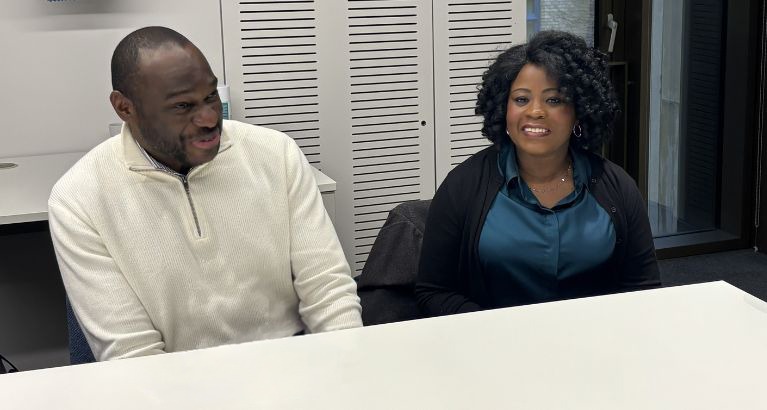
Partners in life and learning: 2 Executive MBAs, one journey
Stephen and Yvonne Amponsah share their Cambridge MBA journey, balancing 2 Executive MBA programmes, careers, family life and a growing business.

Student and alumni news
From courtroom to track: redefining ‘elite’ at Cambridge Judge
Balancing a corporate legal career, national level para-athletics coaching and the Cambridge Executive MBA, Jason Sewanyana is challenging traditional ideas of ‘elite’ by putting people, purpose and inner strength at the heart of performance.
Programme news
Inclusive futures: the Dean’s EMBA Diversity Award
Scholarships at Cambridge Judge Business School do far more than ease financial pressure; they unlock access to a world-class education, foster confidence and a sense of belonging, and inspire recipients to pay that opportunity forward.