
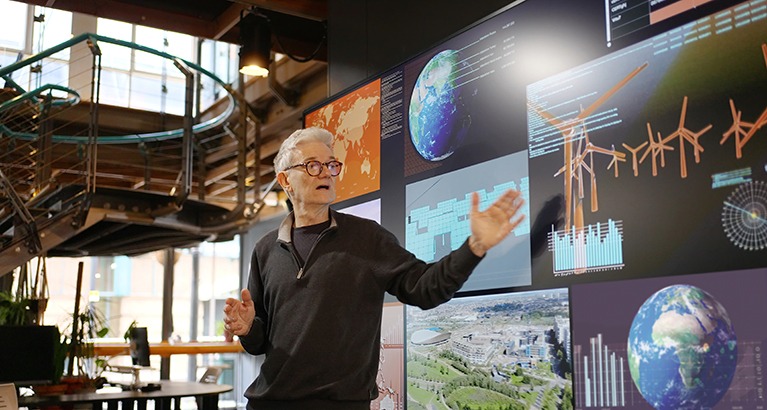
The 21 May Forum brought together former heads of government, architects of the United Nation’s Sustainable Development Goals (SDGs), senior representatives from multinational companies, development finance institutions and leading academics under the theme: Circularity: The New Reality – Sustainability for Growth. The event was organised by the Sustainable Development Forum in collaboration with the Circular Economy Centre at Cambridge Judge, and was formally opened by Professor Gishan Dissanaike, Dean of Cambridge Judge.
Circularity and the SDGs: from principle to practice
A highlight of the Forum was the UN High-Level Dialogue on Circularity and the SDGs, moderated by Jennifer Howard-Grenville, Diageo Professor in Organisation Studies at Cambridge Judge, which examined how circular economy principles can help accelerate progress across the SDGs while supporting economic resilience and sustainable growth. The panel also explored how circularity, while not explicitly referenced during the drafting of the SDGs, was embedded in many of the principles underpinning responsible production, consumption and resource management.
Throughout the day, speakers explored how circularity is reshaping industries, investment strategies and global value chains, with sessions examining such issues as circular economy at scale, circular finance and capital allocation, AI and the circular economy, and fashion industry sustainability. A recurring theme was that circularity is increasingly viewed not simply as an environmental objective, but also as a strategic response to resource scarcity, supply chain disruption and growing geopolitical uncertainty.
Europe’s competitiveness and the case for circular models
The Forum concluded with a fireside conversation between Professor Mario Monti, former Prime Minister of Italy and former European Commissioner, and Khaled Soufani, Director of the Circular Economy Centre and Management Practice Professor of Financial Economics and Policy at Cambridge Judge. The session focused on Europe’s future competitiveness, industrial policy and the role of circular economic models in strengthening resilience within an increasingly fragmented global economy.
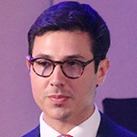
The challenges we face today cannot be solved by governments, businesses or universities acting alone. Sustainable growth requires partnerships, shared knowledge and long-term thinking.
Reflecting on the event, the President and Founder of the Sustainable Development Forum, Cambridge Judge alumnus Kosta Živanović (MPhil Technology Policy 2017), emphasised the importance of collaboration across sectors.
“The challenges we face today cannot be solved by governments, businesses or universities acting alone,” he said. “Sustainable growth requires partnerships, shared knowledge and long-term thinking. Forums like this help create the connections needed to turn ideas into action. The Sustainable Development Forum Cambridge 2026 brought together participants from academia, business, government and international organisations, reinforcing the importance of cross-sector collaboration in addressing the most pressing economic and sustainability challenges of the coming decades.”
Featured faculty
Jennifer Howard-Grenville
Diageo Professor in Organisation Studies
Khaled Soufani
Management Practice Professor of Financial Economics and Policy
Related content
Related articles
Research centre news
UN report: circular economy boosted by digital tech
United Nations posts report authored at the Circular Economy Centre on how digitisation can advance circular economy principles and help meet UN goals on responsible consumption and production.
Faculty news
Circular but costly
Circular supply chains are more sustainable, but they will be rare unless consumers compromise on cost, says a new Harvard Business Review article by Khaled Soufani and Christoph Loch of Cambridge Judge Business School.

Faculty news
Impact and engagement at the Circular Economy Centre
Each of our research centres has unique ways to engage with non-academic organisations and, through that, to generate positive social, economic and environmental impact.