

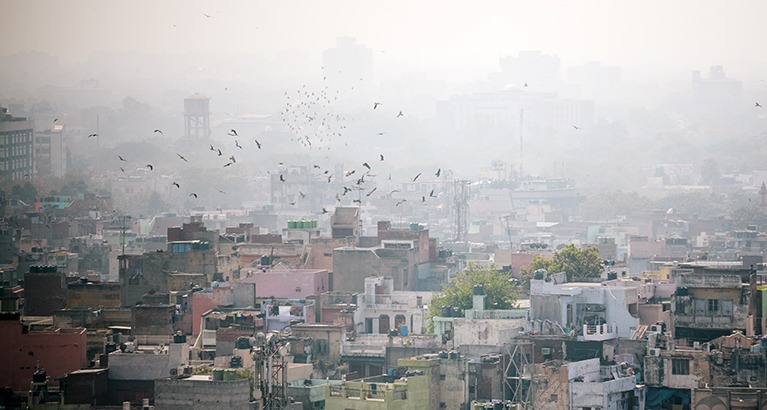

PM2.5 refers to fine particles approximately 2.5 micrometres or smaller in aerodynamic diameter. PM10 includes particles up to approximately 10 micrometres, including the finer PM2.5 fraction. Concentrations are measured in micrograms per cubic metre of air (µg/m³).
The Cambridge Tracker, developed by Paul Kattuman, Professor of Economics at Cambridge Judge, forecasts particulate pollution and the probability of specified concentration thresholds being exceeded. It aims to give public agencies, health services, schools, employers and residents time to prepare for high pollution. Fine particulate pollution poses significant risks to respiratory and cardiovascular health.
The sharpest forecast increases occur in average station peaks. The forecast mean of station daily maxima reaches about 677 µg/m³ for PM2.5 and 748 µg/m³ for PM10 on 9 November. Differences in weather, emissions and crop burning “could alter the timing and magnitude of pollution this year”, the report notes.
The forecasts use observations from a fixed set of 32 stations in Delhi, a subset of the city’s monitoring network. Each pollutant and measure is modelled separately, using historical seasonal patterns and adjustments for festivals and the crop-burning calendar. Wide 90% prediction intervals reflect uncertainty about daily outcomes.
Cambridge Tracker was first developed during the pandemic
The Cambridge Tracker was first developed during the COVID-19 pandemic in 2020, when forecasting work at Cambridge Judge supported public health officials in the East of England. Forecasts of case numbers and hospital bed occupancy helped the NHS and Public Health England plan resources. The air pollution tracker carries forward that emphasis on regular forecasts to support early action.
“A warning signals a risk,” the latest report says. It pairs forecasts with estimates of uncertainty, helping users judge the likelihood of concentrations crossing specified thresholds. Users should also follow current local monitoring and official advice. Days without warnings may still have elevated pollution, and precautions can remain reasonable even when a forecast risk does not materialise.
The latest Cambridge Tracker for Delhi
The latest outlook covers 1-14 November 2026 and uses observations through 31 October. It reports probabilities and concentration forecasts for both PM2.5 and PM10.
Featured research
Kattuman, P. (2026) “Air quality forecasts for Delhi: forecast period: 1 November 2026 to 14 November 2026.”
Related content
“New ‘severe plus’ air pollution forecast for Delhi on Diwali.” Cambridge Judge Business School, 20 October 2025
Related articles
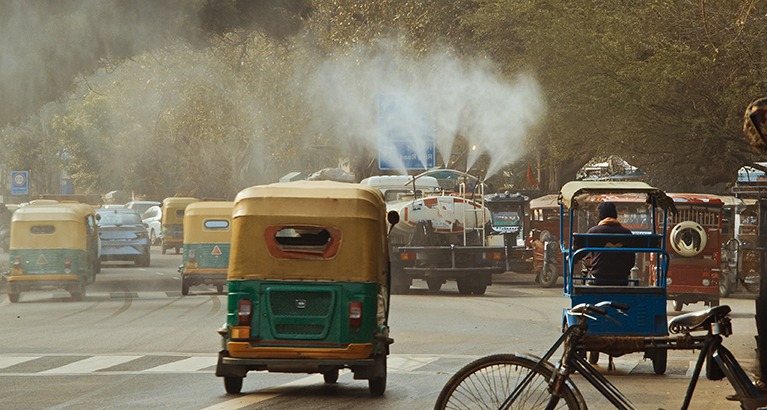
Forecasting model by Cambridge Judge Business School and the Indian Institute of Technology, based on a successful time-series model developed during the COVID-19 pandemic, says air pollution in Delhi will be in the severe plus category much earlier than in past years.

Companies benefit from higher forecasts from analysts when CEOs express more ‘internal’ factors for poor performance, says new study co-authored by Rafael Rogo of Cambridge Judge Business School.

Research centre news
Are analysts whose forecast revisions correlate less with prior stock price changes better information producers and monitors?
Superior analysts identified by their measure are better information producers and monitors.