

2026 EPRG Spring Seminar

14 May 2026
18:00 -21:00
15 May 2026
08:30 -16:00
Times shown are in local time.
By invitation only

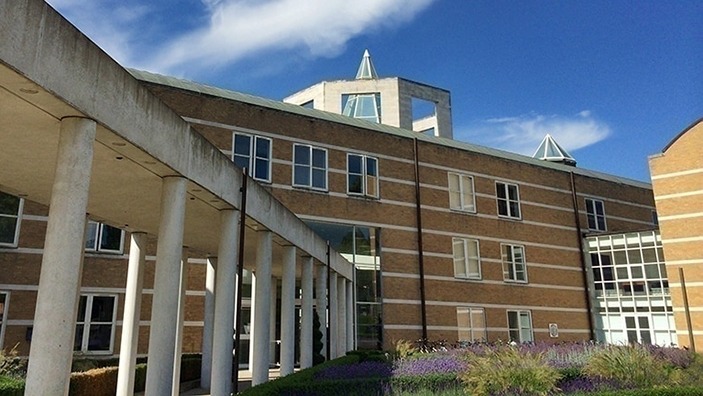
The Møller Institute (Churchill College)
Storey’s Way
Cambridge
CB3 0DS
United Kingdom
Strategic Energy Planning
EPRG is pleased to announce the success of our 2026 Spring Seminar.
The seminar began on 14 May with a reception, dinner and keynote speech given by Meredith Crowley (University of Cambridge) on the effect of trade tariffs, held at Robinson College. This was followed by a full-day seminar on 15 May at the Møller Institute.
Agenda
Thursday 14 May, Robinson College
18:00-19:00
Reception
Keynote address: The effect of trade tariffs
Professor Meredith Crowley, University of Cambridge
19:00-21:00
Dinner
Friday 15 May, The Møller Institute
08:30-09:00
Registration and coffee
09:00-09:10
Welcome
09:10-10:20
Session 1: Expanding offshore wind
Chair: David Newbery (EPRG)
Catherine Banet (University of Oslo)
Drew Garrick (University of Birmingham)
10:50-12:00
Session 2: Energy policy implications of AI and data centres
Chair: Ramit Debnath (EPRG)
Seabron Adamson (University of Cambridge and Charles River Associates)
Sotiris Georgiopoulos (UK Power Networks)
13:00-14:10
Session 3: System security
Chair: Mark O’Malley (Imperial College, London)
Janusz Bialek (Imperial College, London)
Alex Hart (NESO)
14:40-15:50
Session 4: Re-alignment of UK and EU carbon and energy policies: opportunities and challenges
Chair: David Reiner (EPRG)
Robert Ritz (University of Cambridge)
Mark Duffield (National Grid Interconnectors)
Roy Collins (EDF)
Paul Dawson (RWE)
Lena Kitzing (Technical University of Denmark)
15:50-16:00
Concluding remarks
Speakers
Session 1: Expanding offshore wind
David Newbery
Director of the Energy Policy Research Group (EPRG)
David Newbery CBE, FBA is the Director of the Cambridge Energy Policy Research Group, an Emeritus Professor of Economics at the Faculty of Economics, University of Cambridge, and a Professorial Research Associate in the UCL Bartlett School of Environment, Energy and Resources, University College London. He was educated at Cambridge with undergraduate degrees in Mathematics and Economics, and received a PhD and ScD in economics also from Cambridge. He is a Fellow of the British Academy and of the Econometric Society. He is Vice-Chairman of Cambridge Economic Policy Associates and has been an occasional consultant to the World Bank, Ofgem, Ofwat, and ORR, a former member of the Competition Commission, former chairman of the Dutch electricity Market Surveillance Committee and a former member of DECC’s Panel of Technical Experts on the Capacity Market. He is a member of Ofgem’s Gas Network Innovation Competition and an Independent Member of the Single Electricity Market Committee of the island of Ireland.
Drew Garrick
MTC Fellow, University of Birmingham
Drew is an MTC Fellow at the University of Birmingham working on sustainable manufacturing and lifecycle engineering. He received a PhD in Mechanical Engineering (focused on manufacturing for resource efficiency) from the University of Strathclyde before becoming a researcher at the University of Cambridge, modelling the deployment of zero-emissions energy infrastructure using techniques from manufacturing science. Through this work he engaged with the EPRG, later becoming an external research associate. He has continued developing his energy infrastructure deployment model which aims to challenge the realism of clean energy targets by mapping the pipeline of real projects against resource bottlenecks. His work in this area focuses on the delivery of large energy projects, acceleration of deployment and policy implications.

Catherine Banet
Professor, University of Oslo
Catherine Banet is Professor of law specialised in Energy Law, and Head of the Department for Energy and Resources Law at the University of Oslo, Norway. Professor Banet has a background from the private law practice (Norway, France), the European Commission (DG ENV), US diplomatic mission and academia. She is one of the 4 academic directors of the professional LLM programme North Sea Energy Law Partnership (NSELP). She is a member of the Academic Advisory Group of the Section on Energy, Environment and Infrastructure Law of the International Bar Association, and Chair of the Board of the Norwegian Energy Law Association. She is Academic Co-Director of the Centre on Regulation in Europe (CERRE).
Session 2: Energy policy implications of AI and data centres

Ramit Debnath
Executive Director, Centre for Human-Inspired AI (CHIA), University of Cambridge
Dr Ramit Debnath is the Executive Director of the Centre for Human-Inspired AI (CHIA) and an Assistant Professor at the University of Cambridge. He is an affiliated researcher of the Energy Policy Research Group. Ramit is an elected member of the DWP Methods Advisory Group (MAG) of the UK Government. He leads the Cambridge Collective Intelligence and Design Group and climaTRACES Lab and has a visiting academic role at Caltech and Stanford University.
Dr Debnath’s research involves designing safe and human-centric AI systems to advance climate and environmental sustainability goals using a combination of machine learning/AI and systems thinking. Ramit has a background in electrical engineering and computational social sciences, with a MPhil and a PhD from the University of Cambridge as a Gates Scholar. He is a Fellow and Director of Studies of Churchill College.

Sotiris Georgiopoulos
Director of Distribution System Operator (DSO), UK Power Networks
Sotiris leads UK Power Networks’ Distribution System Operator (DSO). He joined the organisation in 2005 as a graduate engineer. Sotiris studied electrical engineering at the University of Manchester, has an MBA from the University of Cambridge and has worked in engineering, construction and innovation. For the last decade he has championed innovative ways to plan and operate our networks, such as flexible connections and the development of flexibility markets.
Seabron Adamson
Vice President (Energy), Charles River Associates
Research Fellow (Visiting), EPRG
Seabron Adamson is Vice President, Energy at global economics consulting firm Charles River Associates and a visiting research fellow at EPRG. He specialises in energy markets and regulation. He started his consulting career in the UK and has since worked on power and gas markets in the USA, Canada, the European Union, Australia, and a wide range of other countries. In the US, Seabron and his colleagues have advised many of the major hyperscaler technology companies on the commercial and regulatory implications of rapid growth in data centre and AI energy loads.
Session 3: System security

Mark O'Malley
Leverhulme Professor of Power Systems, Imperial College London
Mark O’Malley is Leverhulme Professor of Power Systems at Imperial College London, co-founder of the Global Power System Transformation Consortium, Global Director for the international research centre, Electric Power for a Carbon Free Society and Hagler Fellow at Texas A&M. He was the Chief Scientist at the Energy Systems Integration Group (2020-2022) and Chief Scientist at the US National Renewable Energy Laboratory, USA (2018-2020). He is a Foreign Member of the US National Academy of Engineering, member of the Royal Irish Academy, Fellow of the Institute of Electrical and Electronic Engineers and a fellow of the Chinese Society for Electrical Engineering.

Alex Hart
Head of Zero Carbon Operation, National Energy System Operator
Alex is the Head of Zero Carbon Operation at the National Energy System Operator. The Zero Carbon Operation function mainly focuses on the challenges for secure and efficient electricity system operation 2 to 10 years in the future.
The teams within ZCO are responsible for the processes NESO uses to identify and assess the new risks for system operation that will emerge as power generation continues to decarbonise.
Alex’s career started in science research for the Home Office, then moved to a small energy technology startup company, followed by a period in strategy consulting and finally various roles across NESO.
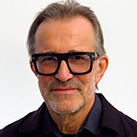
Janusz Bialek
Principal Research Fellow, Imperial College London
Janusz Bialek (FIEEE) is Principal Research Fellow at Imperial College London. Previously, he held Full Professor positions at the University of Edinburgh, Durham University, Newcastle University and Skolkovo Institute of Science and Technology (Skoltech, Moscow). He resigned from Skoltech when Russia invaded Ukraine. Janusz has been PI and CoI of multi-million research grants funded by UK Research Councils and the industry, and a consultant to the UK government, European Commission, and International Energy Agency. He has published widely on the integration of renewable generation in power systems, smart grids, power system dynamics, preventing electricity blackouts and power markets.
Session 4: Re-alignment of UK and EU carbon and energy policies: opportunities and challenges

David Reiner
Assistant Director, EPRG
Professor of Technology Policy, Cambridge Judge Business School
Professor Reiner’s research focuses on the social licence to operate in a carbon-constrained world including public and stakeholder acceptability of low-carbon (and negative emissions) technologies. He investigates the challenges of reaching net zero including for hard-to-abate sectors such as residential heating, heavy industry (such as steel, chemicals, cement) and international aviation as well as greenhouse gas removals (blue carbon, direct air capture, bioenergy with carbon capture and storage, soils and forests).
He’s a member of the Economics and Policy subject group at Cambridge Judge Business School, which analyses how economics can improve growth and business performance.

Mark Duffield
Head of Market Design, National Grid Interconnectors
Mark is the Head of Market Design at National Grid Interconnectors, managing electricity interconnections between the UK and several European countries. With over 25 years of experience in the UK government and National Grid Group, he specialises in creating innovative solutions to regulatory and commercial challenges affecting electricity networks. His current areas of expertise include reformed national pricing, capacity market design, EU-UK cross border electricity trading arrangements and developing market arrangements for new hybrid interconnectors.

Paul Dawson
Head of Regulatory Affairs, RWE Supply & Trading (RWEST)
Paul Dawson is Head of Regulatory Affairs for RWE Supply & Trading (RWEST), where he leads a team responsible for RWEST’s regulatory affairs activities in the wholesale energy and carbon markets and associated financial services regulation.
Paul has 35 years’ experience working on the design and regulation of energy and environmental markets having started his career as an economic consultant advising clients on energy market liberalisation and electricity market design. Prior to joining RWE in 2008, Paul worked on energy and carbon emissions regulation within the banking and energy sectors.
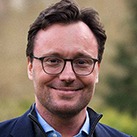
Robert Ritz
Fellow in Economics, University of Cambridge
EPRG Associate Researcher
Robert Ritz is a Fellow in Economics at Peterhouse, University of Cambridge and an associated researcher with EPRG. His research sits at the interface between climate policy, industrial organisation and energy economics. It has been published in leading international journals, featured in major news media including The Economist and Financial Times, and won the 2025 Royal Economic Society Prize. Robert’s business career includes Vivid Economics, McKinsey and several climate and infrastructure analytics startups. He currently serves on the academic panel at Ofgem, and is writing his first book.
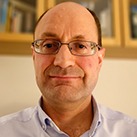
Roy Collins
Senior Manager, UK strategy and policy team, EDF
Roy Collins is a senior manager in EDF’s UK strategy and policy team. He has worked in the energy sector for over 30 years, initially within government and then for EDF since 2010. His current focus is electricity market reform topics including the Reformed National Pricing programme and carbon pricing.

Lena Kitzing
Professor of Energy Economics and Policy, Technical University of Denmark
Lena Kitzing is full Professor of Energy Economics and Policy at the Technical University of Denmark, where she is also leading the multidisciplinary Division of Wind Energy Systems. She is part-time professor at the Florence Schoon of Regulation, European University Institute. Her research spans across the energy-economy-society nexus and especially concerns the effective governance of energy systems through policy instruments, with particular focus on deployment and financing of renewables and their integration into the energy system. Lena is a leading expert in auction design for renewable energy procurement, contracts-for-difference design and the economics and policy for offshore wind energy.
Lena is a sought-after scientific advisor to public and private organisations, is regularly invited to key-note speeches and high-level events, and appears in the media on energy related issues. Since March 2022, Lena is member of the European Scientific Advisory Board on Climate Change, with a mandate by the European Climate Law to advise European policymakers and stakeholders on climate and energy related decisions.