

Non-truthful mechanism design for revenue management in queueing systems

12 Oct 2026
12:30 -14:00
Times shown in local time
Open to: All

Room W2.02 (Cambridge Judge Business School)
Trumpington St
Cambridge
81
CB2 1AG
United Kingdom
Join our Operations and Technology Management seminar
Speaker: Dr Siddharth Singh, University College London
About the seminar topic
Service providers commonly cater to heterogeneous customers with private types. It is well known that in such situations, rather than offering a single class of service, providers can extract additional revenue by offering 2 service classes: a regular class and a premium priority class, featuring differentiated prices and lead times. Traditional menu design in such settings has focused on incentive-compatible (IC) mechanisms, which induce rational customers to truthfully reveal their private types through their choice of service class. These mechanisms are built on the premise that customers will misrepresent their types whenever doing so is advantageous. In practice, however, customers often face procedural or behavioural constraints that make such misrepresentation difficult or undesirable. We show that the presence of such unconditionally honest customers, even in arbitrarily small proportions, can make non-truthful (NT) mechanisms, under which some misrepresentation occurs in equilibrium, strictly optimal. These NT mechanisms can yield higher revenue than any IC mechanism and, in contrast to IC designs, never rely on delay tactics (that is, artificially inflating lead times) to screen types. We characterise the structure of optimal NT mechanisms, identify the conditions under which they outperform IC alternatives and show that NT mechanisms, when optimal, also improve social welfare. Finally, we discuss managerial insights and practical considerations for the implementation of such NT mechanisms in real service settings.
Speaker bio
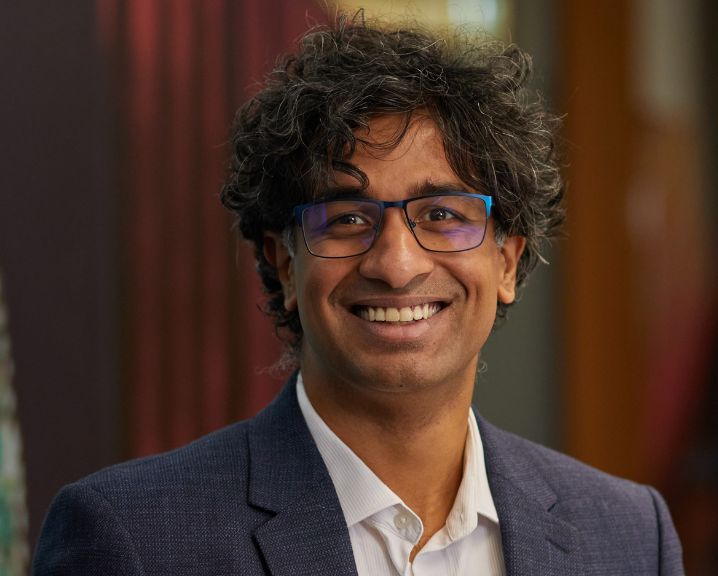
Siddharth Singh is an Assistant Professor in the Operations & Technology group in the University College London School of Management. He joined UCL after completing his PhD in Operations Management at the Tepper School of Business at Carnegie Mellon University. Prior to his PhD, Siddharth was an Associate at the Boston Consulting Group.
Siddharth’s research activities focus on studying how technological advancements are shaping the way we think about business and the role that regulators should play to promote responsible technology deployment. Siddharth’s primary domains of interest are sustainable operations and service operations. Within the realm of sustainable operations, his research typically adopts a social lens and tackles problems associated with clean energy technology adoption by firms and individuals. Siddharth is particularly excited by the burgeoning solar/wind/storage and EV markets and its implications for management and policy decisions. In the realm of service operations, Siddharth studies how strategic customers interact with queues and queue-related information. Recently, Siddharth has developed an interest in studying how customers’ decisions may deviate from ideal (fully rational) behaviour and what implications this has for service design. Siddharth’s research has been published in Manufacturing and Service Operations Management, and Production and Operations Management.
Register
No registration required.