

Research Associate
El-Erian Institute of Behavioural Economics and Policy
Senior Combination Room Member at Queens’ College
BASc, MSc (UCL), PhD (University of Cambridge)
My research spans behavioural science, decision-making among policy/corporate leaders, consumer psychology, sustainability, political psychology. My behavioural policy work aims to strengthen representative democracy. My experiments with Members of Parliament aimed to correct their misperceptions of public support for climate policies, were presented in the Palace of Westminster, and generated substantial international policy and media engagement. I currently lead research for the UK Cabinet Office focused on improving how accurately senior government understands public preferences.
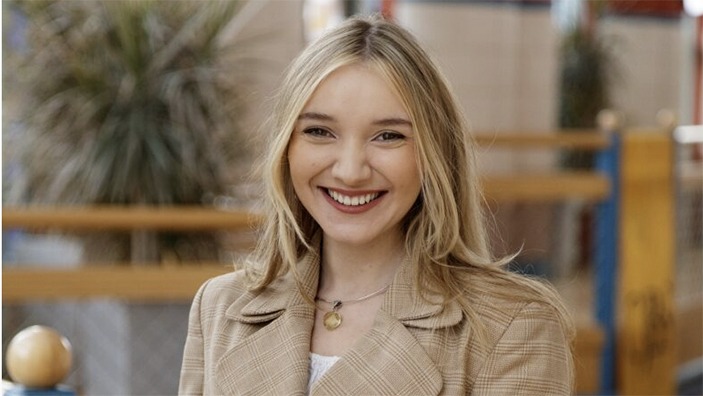
Professional experience
Dr Tanase completed her PhD within the University of Cambridge Political Psychology Lab and the El-Erian Institute of Behavioural Economics and Policy (supervised by Professor Lucia Reisch and Dr Lee de-Wit). She is also a Policy Advisor within the Cambridge Centre for Science and Policy’s Policy Fellows Network.
Dr Tanase supervises and teaches on several courses across the University. Alongside her research, Dr Tanase regularly advises international governments and delivers keynotes as a science communicator. She has for instance delivered several invited talks for the UK Parliament, including the All-Party Parliamentary Group for Anti-Corruption and the Parliament Climate and Environment Hub, as well as presented keynotes for European policymakers and contributed as an expert speaker to several policy and corporate roundtables ranging from groups interested in behavioural science applications, to companies interested in promoting sustainable behaviour within their organisations and among their consumers.
Previous appointments
Dr Tanase was previously a researcher based in the Winton Center for Risk and Evidence Communication in the Cambridge University Mathematics Department, focused on effective science communication to the public. Prior to this, she was a Behavioural Consultant at Innovia Technology, applying behavioural science to support innovative development of new products and consumers strategies for leading brands.
Publications
Selected publications
- Tanase, L.-M., Reisch, L.A., Dewies, M. and De-Wit, L. (2026) “Perception gaps in British Parliament reveal a possible pathway to stronger climate policy action.” Communications Sustainability, 1: 127 (DOI: 10.1038/s44458-026-00097-9)
- Freeman, A.L.J., Tanase, L.-M., Schneider, C.R. and Kerr, J. (2024) “Can narrative help people engage with and understand information without being persuasive? An empirical study.” Royal Society Open Science, 11(7): 231708 (DOI: 10.1098/rsos.231708)
- Tanase, L.-M., Kerr, J., Freeman, A.L.J. and Schneider, C.R. (2022) “COVID-19 risk perception and hoax beliefs in the US immediately before and after the announcement of President Trump’s diagnosis.” Royal Society Open Science, 9(8): 212013 (DOI: 10.1098/rsos.212013)
Awards and honours
- Policy Innovation Award, Centre for Science and Policy, University of Cambridge, 2025
- Ambassador’s Award for Academic Excellence and Community Impact, Romanian Embassy, 2020
- Dean’s List UCL for Academic Excellency, UCL, 2020
News and insights

Research centre news
Are you a victim of habituation too? Here’s how to combat it
What is habituation and how does it impact our perception of the world, freedom and social issues? An interview with Professor Cass R Sunstein helps us understand and learn how to combat it.
Media coverage
The Times | 2 September 2026
MPs must look beyond their local problems
The article describes a study by Lisa-Maria Tanase at Cambridge University that asked 100 MPs to complete a survey estimating public opinion on a range of climate and energy policies, then compared the politicians’ guesses with polling evidence. The conclusion was that MPs significantly underestimate public support for climate-related policy interventions, on average by 11 percentage points and sometimes by wider margins.
Der Standard | 19 August 2026
Politiker unterschätzten die Popularität von Klimaschutz [Politicians underestimated the popularity of climate protection]
A survey of members of parliament in Great Britain shows that they significantly misjudged the acceptance of climate protection measures. The research was led by Dr Lisa-Maria Tanase at the University of Cambridge.
The Guardian | 5 January 2026
‘A silent majority’: MPs underestimate support for green policies, study reveals
“Based on recent research, I think some of these issues with the information environment has to do with a rightwing bias where the voices of conservative leaning members of the public tend to be overrepresented, for a range of systemic reasons,” says Lisa-Maria Tanase, an academic at the University of Cambridge who led the research. “They tend to be more privileged, educated and politically engaged segments of society.”
University of Cambridge, 19 August 2026
UK politicians think public opposition to climate policy is far greater than it is, study finds
Spotlight Magazine, 19 August 2026
UK politicians vastly overestimate public opposition to climate policies, study finds
EVZ.ro | 12 January 2026
Parlamentul Britanic dezbate studiul realizat de o româncă, care arată o latură negativă a politicii din UK [British Parliament debates study by Romanian woman that shows negative side of UK politics]
Libertatea | 12 January 2026
Doctoratul unei cercetătoare românce la Cambridge face vâlvă în presa și în Parlamentul din Marea Britanie [A Romanian researcher’s doctorate at Cambridge is causing a stir in the press and in the British Parliament]
Centre for Science and Policy, 2025
Case study: Lisa-Maria Tanase