

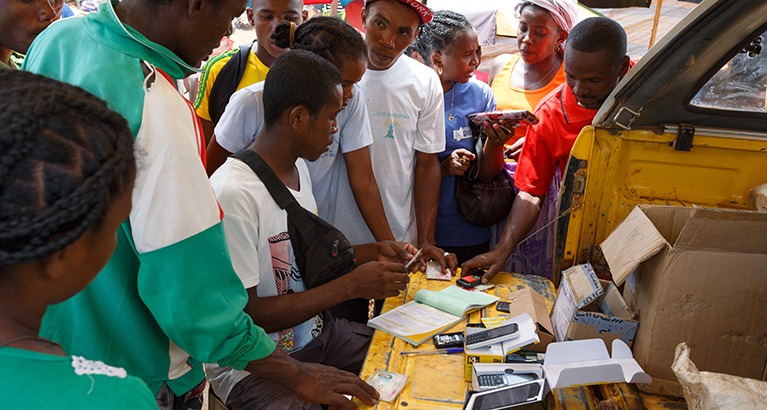
Identification systems in more than 90% of countries worldwide now rely on digital data, reflecting the growing role of digital identity as foundational infrastructure for modern economies. Increasingly, digital identity sits behind many of the transactions that shape everyday life, from opening a bank account and registering a SIM card to accessing healthcare, receiving social benefits and interacting with government services online.
Yet as digital identity use cases expand, so too does the range of institutions involved in governing them. A digital identity used for e-KYC may engage financial regulators and anti-money laundering authorities. The same identity used for SIM registration falls within the remit of telecommunications regulators, while its use in healthcare or social protection may involve sector-specific ministries and agencies. Overlaying these are broader considerations relating to privacy, cybersecurity, competition and consumer protection.
This growing need for co-ordination across institutions was a central theme of cross-regulatory dialogues convened by Financial Innovation for Impact and the Cambridge Centre for Alternative Finance (CCAF) which brought together public sector authorities and regulators, private sector representatives and civil society organisations in Kampala and Addis Ababa for a discussions on digital ID and eKYC.
While both Uganda and Ethiopia are making significant strides in expanding digital ID coverage, developing new use cases and adopting modern technologies such as MOSIP, participants agreed that the next phase of the journey is not primarily a technological one. The challenge is increasingly one of governance, particularly the ability to co-ordinate across institutions and align regulatory approaches. As digital identity systems become embedded across sectors, fragmentation across regulators and public authorities can impede the development of inclusive, trusted and interoperable digital identity ecosystems.
Strong foundations, fragmented implementation
Uganda has spent over a decade building the foundations of a digital identity ecosystem: more than 80% of women and 82% of men hold a national ID and UGHub, the country’s data exchange platform, now connects 146 government and private-sector entities. The national ID system, supporting legislation and growing integration across institutions have created important building blocks for digital financial services, public service delivery and broader digital transformation. But participants repeatedly stressed that Uganda’s core challenge is no longer building digital identity systems; it is ensuring they are used consistently across the ecosystem. Despite the presence of multiple functioning systems, identity verification and onboarding processes remain fragmented across institutions.
Similarly, Ethiopia’s digital ID programme, Fayda ID, has made rapid progress in enrollment and adoption. In 3 years Fayda ID registration surpassed 45 million, and the system is now used by more than 100 institutions for identity verification. Participants identified 2 key factors behind this progress. First, leveraging existing institutions, particularly telecom operators, helped expand access to enrolment services and accelerate registration. Second, strong political backing from the Office of the Prime Minister, where NIDP is housed, helped drive co-ordination across government agencies. At the same time, participants noted that important co-ordination challenges remain. While Fayda ID has helped reduce reliance on fragmented identity systems across government and the private sector, the continued separation between Fayda ID and Ethiopia’s Civil Registration and Vital Statistics (CRVS) system limits opportunities for integration. The absence of a clear policy framework governing the relationship between the 2 systems remains an unresolved issue.
What we heard: 6 key takeaways
1
Interoperability matters more than new systems
One of the clearest messages from the dialogue in Uganda and Ethiopia was the next phase of digital identity development depends less on building new platforms and more on connecting existing ones. Participants highlighted fragmentation between the national ID system and the various databases and verification processes used by relying parties. Without interoperability, many processes remain effectively manual despite being digitised, creating duplication, increasing compliance costs and limiting efficiency gains. In Uganda, for example, participants noted that while national ID verification is largely digitised through NIRA, institutions seeking to verify company registration records through the Uganda Registration Services Bureau (URSB), or passport and work permit information held by the Directorate of Citizenship and Immigration Control (DCIC), often cannot do so through real-time system-to-system checks.
Participants stressed that interoperability is as much an institutional challenge as a technical one, requiring clear mandates, agreed standards and co-ordination across agencies.
Stakeholders repeatedly called for harmonized standards, shared protocols and stronger institutional co-ordination mechanisms to reduce duplication and improve usability across sectors. In Ethiopia, participants pointed to the country’s previous reliance on separate biometric identity systems across government agencies, financial institutions and telecom operators as an example of how fragmented approaches can duplicate efforts and waste public resources. Ongoing efforts to consolidate identity management through Fayda ID were viewed as an important step towards greater efficiency. Regional interoperability, particularly within the East African Community, was also highlighted as a longer-term priority.
2
Infrastructure and affordability remain binding constraints
The workshops underscored that digital identity systems only create value if citizens can reliably access and use them. Participants highlighted a range of persistent barriers, including low smartphone penetration, high data costs, electricity and connectivity gaps, limited access to biometric devices in remote areas and low levels of digital literacy. In Ethiopia, these constraints remain particularly pronounced: only 19% of the population has access to smartphones and only 45% use internet. While Uganda has achieved near-universal 4G population coverage at 96%, access and usage continue to lag infrastructure availability. Only 22% of the population are unique mobile internet users and smartphone penetration stands at approximately 32%, highlighting the gap between network coverage and meaningful digital access.
Participants stressed the importance of ensuring digital identity systems work for rural, marginalised and digitally excluded populations, including through device financing, digital literacy initiatives and offline authentication options.
3
Trust and governance are central to adoption
Participants consistently emphasised that the adoption of digital identity systems depends heavily on public trust. Citizens must have confidence that their personal data is secure, fairly used, and protected against misuse. Establishing a legal framework for data protection is an essential first step, but its effectiveness ultimately depends on public awareness, institutional capacity, and robust enforcement through monitoring, audits, and redress mechanisms.
Concerns raised during discussions included biometric misuse, weak complaint and redress mechanisms, limited public awareness of data rights, and insufficient transparency around data-sharing practices. Several participants noted that citizens are often asked to share personal information without fully understanding how it will be used or who can access it. Participants also cautioned that where digital identity becomes a prerequisite for accessing essential services, inadequate safeguards, authentication failures, or exclusion errors can quickly undermine public confidence and disproportionately affect vulnerable groups. As digital identity systems become increasingly embedded across public and private services, participants stressed that privacy safeguards and “privacy by design” approaches must be treated as foundational requirements rather than afterthoughts.
A recurring theme across both workshops was the need to strengthen the broader data protection ecosystem. Participants identified limited capacity among data protection authorities, low awareness of privacy obligations, and weak public understanding of data rights as key barriers to building trust.
4
e-KYC should be treated as shared infrastructure
Rather than viewing e-KYC primarily as a compliance obligation, participants framed it as a form of shared market infrastructure capable of reducing onboarding costs, improving fraud prevention and expanding access to financial services. In Ethiopia, participants highlighted the potential for Fayda ID to reduce duplicate accounts and provide more reliable customer data for financial institutions and policymakers. If designed effectively, interoperable e-KYC systems could particularly benefit smaller financial institutions and SACCOs by lowering compliance burdens and improving access to trusted verification rails. At the same time, participants warned that high implementation costs and fragmented standards risk reinforcing market concentration if smaller providers are unable to participate.
5
Practical use cases should drive implementation
Discussions repeatedly returned to the importance of focusing on practical, high-impact use cases rather than attempting nationwide transformation all at once. Priority areas identified included bank and wallet onboarding, digital lending, SIM registration, social protection programmes, refugee service delivery and East African cross-border identity recognition. In Uganda, participants explored data-sharing use cases, particularly the use of telecom and alternative data to support credit scoring and expand access to lending.
6
The role of non-government actors
The discussions also underscored that building inclusive and trusted digital identity ecosystems requires a whole-of-society approach. Beyond government agencies, financial institutions, telecom operators, technology providers, civil society organisations and UN agencies all play important roles in expanding access, strengthening trust and enabling the practical use of digital ID systems.
Participants highlighted several examples of such collaboration. In Uganda, FSD Uganda has played an important convening role in advancing the country’s e-KYC ecosystem. Together with the Uganda Bankers Association, the National Information Technology Authority-Uganda (NITA-U), and the National Identification and Registration Authority (NIRA), it supported the procurement of a shared identity verification solution designed to streamline onboarding and identity verification for financial service providers.
The role of non-government actors extends beyond infrastructure and implementation to ensuring that digital identity systems reach those most at risk of exclusion. In Ethiopia, collaboration between UNHCR, the Refugees and Returnee Service and the National ID Program has helped integrate refugees into the Fayda ID ecosystem, improving recognition of refugee credentials and access to services.
More broadly, participants emphasised that building trusted digital ecosystems requires more than technical and institutional co-ordination. Civil society organisations and affected communities must have a meaningful seat at the table, to identify exclusion risks, amplify user concerns, strengthen accountability and ensure that digital ID systems work for everyone.
Get involved
A cross-regulatory dialogue was held on 30 March 2026 in Kampala, Uganda in collaboration with FSD Uganda on the 21 April 2026 in Addis Ababa in collaboration with National ID Program that explored how regulators, financial institutions, telecom operators, and technology providers in Uganda can better co-ordinate around digital identity and e-KYC implementation.
The Ethiopia and Uganda dialogue form part of a broader global research programme examining the intersection of digital identity, e-KYC, financial regulation and data governance across emerging markets. Insights from the workshop will feed into forthcoming research and policy recommendations developed by CCAF and Fii under the Cambridge DPI Regulatory Programme. If you are a regulator, policymaker, researcher, financial institution, telecom operator or practitioner working on digital identity or e-KYC, we would welcome your perspectives and engagement as the programme develops.
About the workshop
The Ethiopia and Uganda workshop was conducted under the Chatham House Rule. This post reflects the substance of the discussions without attributing views to individual participants or organisations.
Views expressed are those of the authors and do not necessarily reflect those of the Cambridge Centre for Alternative Finance.
Featured authors
Pavle Avramovic
Director, Research and Policy, Financial Innovation for Impact (Fii)
Gabriella Gebri
Digital Identity Specialist, Financial Innovation for Impact (Fii)
Aishwarya Viswanathan
Associate, Financial Innovation for Impact (Fii)
Write to us at: digitalid@fii.international
More from CCAF Perspectives

Research centre news
New global survey maps e-KYC and digital ID adoption
Financial Innovation for Impact (Fii) in collaboration with the Cambridge Centre for Alternative Finance (CCAF), has launched the Global e-KYC Landscape Study. It captures intersecting perspectives of public authorities, regulators and supervisors, and industry (fintechs, banks, other financial institutions and digital ID service providers) via 2 parallel surveys. The resulting insights will provide a holistic view of e-KYC landscape and adoption dynamics today.

Finance and accounting
Integrated digital finance regulation: lessons from Kigali
Fragmentation between data protection and financial regulatory frameworks is increasing compliance burdens and slowing the development of safe, data-driven financial services. Learn what joined-up oversight would look like in practice.

Finance and accounting
Where AI meets blockchain: assets, agents and blind spots
An analysis of AI and blockchain convergence, covering compute infrastructure, crypto assets, autonomous agents and emerging policy challenges by Wenbin Wu, Research Associate at the Cambridge Centre for Alternative Finance.