
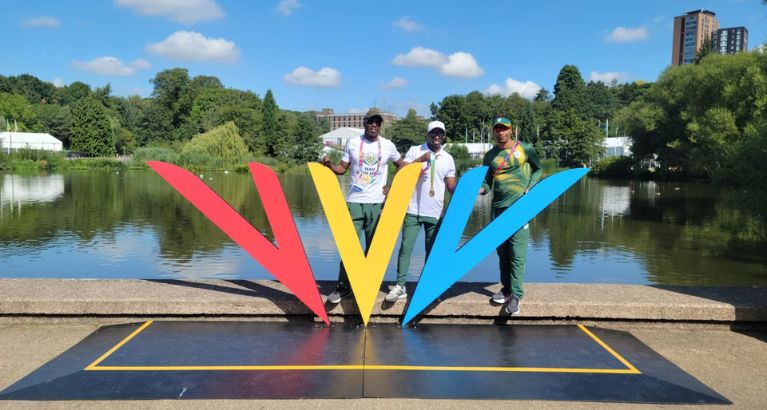
When South African corporate lawyer and para‑athletics coach Jason Sewanyana (Executive MBA 2025) arrived at Cambridge Judge for the Executive MBA, his schedule was already full: a demanding corporate role, national‑level coaching responsibilities, a deep commitment to his athletes and preparations to accompany them to the 2026 Commonwealth Games in Glasgow.
The Executive MBA programme has reinforced a lesson he first learned on the track: elite performance is as much about humanity, humility and inner strength as it is about results.
A lucky coincidence: how coaching para-athletes began
Jason’s journey into parasports began almost by accident. While on a sports scholarship at the University of Cape Town, he was approached by a fellow student who asked to train with him – a para-sprinter and long jumper specialising in the 100 metres, 200 metres and long jump.
Jason soon noticed his athlete’s remarkable inner drive, unmatched by many able-bodied competitors, and promised to obtain a formal coaching qualification if that commitment continued.
As he learnt more about the athlete’s background, his respect deepened. Born with amniotic band syndrome, he had severely underdeveloped limbs, could not walk for his first few years, underwent numerous operations and was rejected by some extended family members. Yet this adversity forged a mental resolve Jason has since recognised in many para-athletes.
Strength, vulnerability and what it really means to be ‘elite’
Working with para-athletes has fundamentally reshaped Jason’s understanding of strength and elite performance. He describes their inner strength as so profound it can feel like “the divine’s way of compensating for the disability”.
That strength is paired with a distinctive humanity. Jason says para-athletes are consistently kind, quick to encourage teammates and slow to complain. Humble and selfless, they support one another wholeheartedly, showing the strongest team spirit he has encountered.
This environment has challenged his assumptions about strength. He says, “Through para-athletes I have learnt that strength comes from within, and that by being the best version of yourself in your sphere of influence, you can be the spark that creates strength in others. I have learnt that strength doesn’t have to be packaged in bravado and the world’s stereotypical view of strength. On the contrary, strength can be mild mannered and displayed through acts of kindness and vulnerability.”
For Jason, parasports has also redefined what it means to be elite. To be truly elite, he believes, is to be the best version of yourself in every sphere of life, not just on the track, and to aspire to something beyond individual achievement – contributing to your community, supporting your family, caring for the planet and considering future generations.
Through para-athletes I have learnt that strength comes from within, and that by being the best version of yourself in your sphere of influence, you can be the spark that creates strength in others.
What law and elite sport have in common
At first glance, corporate law and coaching para-athletes seem worlds apart, but Jason sees clear parallels. Both demand meticulous attention to detail and a focus on controlling the controllables: in technical events like the jumps, as in drafting legal agreements, he works to anticipate and manage the most likely scenarios.
Coaching is also about teaching and inspiring people to improve, a skill he applies directly to leading legal teams. Just as athletics is built around long-term Olympic cycles, requiring patience and strategic planning, he approaches leadership in law with a long view, shared goals and a commitment to raising standards.
Jason’s work with para-athletes has deepened his empathy. In negotiations, he stays open to compromise while protecting his organisation’s integrity and values. The perspective gained from athletes who have overcome significant adversity helps him relate more constructively to clients and colleagues, without losing sight of ethical boundaries.
Coaching the whole person: success beyond medals
Jason’s coaching philosophy is holistic. He sees coaching as helping a person become a better version of themselves physically, mentally, emotionally and even spiritually. Medals and personal bests matter, but they are not his primary measure of success.
Instead, he defines success as helping someone become even 1% better, not only in performance, but in their wider life. If an athlete becomes a more present parent, a more disciplined student, a more supportive partner or a better friend, he counts that as a meaningful outcome of their work together.

Pressure as a privilege: on the road to the Commonwealth Games
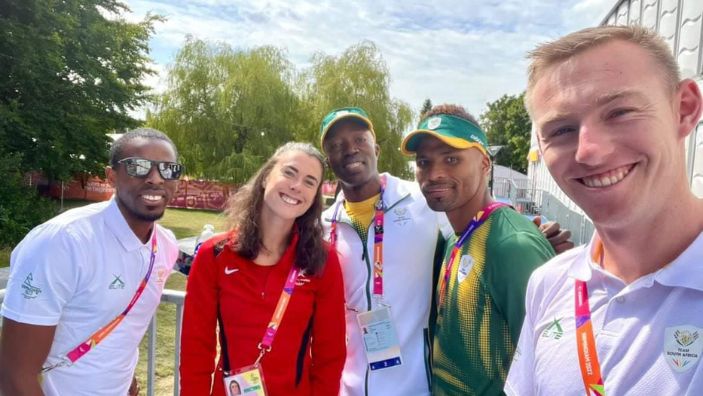
Jason will soon travel with his athletes to the 2026 Commonwealth Games in Glasgow as part of Team South Africa’s coaching staff, a responsibility he says keeps him humble and motivated to serve.
To help his athletes manage pressure, Jason reminds them of the challenges they have already faced in their personal lives. Many have endured difficulties far greater than any single race. He encourages them to see those hardships as sources of strength that have prepared them for the demands of elite sport.
A core principle he shares with his athletes is that pressure is a privilege. In a country of around 60 million people, only a few are selected to represent South Africa on a global stage. Remembering how many others are striving for the same opportunity can help reframe the stress of competition as evidence of how far they have come.
Why Cambridge: ethics and human-centred leadership
With so much already on his plate, choosing an Executive MBA at Cambridge Judge was a deliberate, values-driven decision. Jason was drawn to the focus on ethical leadership, sustainability, humility and the strong emphasis on the human side of leadership.
Coming from law, he found the finance elements stretching but immediately useful, deepening his understanding of the deals he works on and helping him engage more confidently with clients and colleagues. Courses in organisational behaviour, management praxis and negotiation have sharpened his leadership and coaching, particularly around emotional intelligence: empathy, self-regulation, motivation and self-awareness.
The Executive MBA has also highlighted the symbiosis between his coaching and legal work. Lessons on motivation, feedback and interpersonal dynamics apply in both arenas, whether he is advising a client, leading a team or supporting an athlete through a tough training block.
People first: a unifying leadership lesson
If Jason had to name one leadership lesson that links his legal work, his Executive MBA and his coaching with para-athletes, it would be the importance of keeping the human element at the centre of everything he does. He believes that when people feel valued and supported, performance improves, whether in organisations or on the sports field.
In both contexts, he sees coaching and development as parallel: in the workplace, training helps employees grow. On the track, coaching does the same for athletes. The goal is to create environments where people can become the best versions of themselves.
For Jason, that starts with genuine curiosity about others. We often keep conversations at surface level, but when you take time to get to know people and dig deeper, everyone is interesting, everyone is special and unique. As he puts it: “If you treat people that way and give them the time of day, you find gold.”
The Executive MBA
Be part of the journey towards inclusive leadership. Explore our ongoing gender research, download the latest reports, and discover how our Executive MBA programmes are shaping change.
Related articles

Programme news
Partners in life and learning: 2 Executive MBAs, one journey
Stephen and Yvonne Amponsah share their Cambridge MBA journey, balancing 2 Executive MBA programmes, careers, family life and a growing business.

Programme news
Inclusive futures: the Dean’s EMBA Diversity Award
Scholarships at Cambridge Judge Business School do far more than ease financial pressure; they unlock access to a world-class education, foster confidence and a sense of belonging, and inspire recipients to pay that opportunity forward.

Research centre news
New report says financial complexity requires rethink
Cambridge Judge Business School and Bain & Company have published a new whitepaper warning that the global financial system has entered a phase of sustained structural instability, as geopolitical fragmentation, rapid technological change and shifting capital flows redraw the rules for business. The paper says new ways of leadership, governance and strategy are needed.