
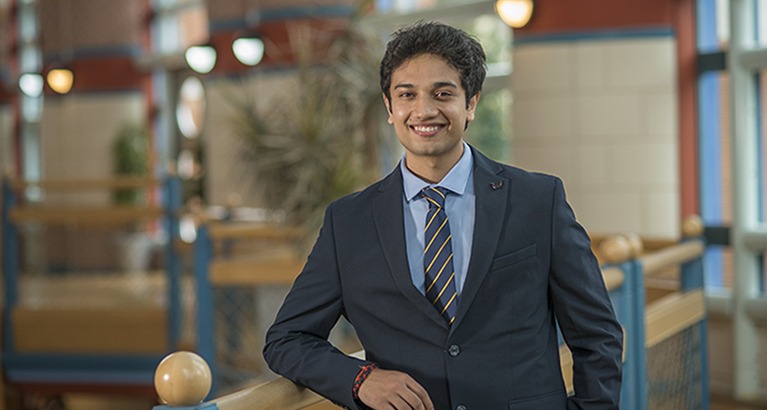
Honestly, this year has been a whirlwind, and I mean that in the best way. When I arrived at Cambridge Judge Business School for the Master of Finance (MFin), I expected rigorous coursework and late nights with problem sets. I got all of that, but I also found myself wearing a Cambridge Varsity jersey, pitching a social venture at Trinity Hall and finishing the year with the Lanvern Prize in international finance.
Looking back, the moments that have stayed with me the most are the ones where academic rigour, community and unexpected opportunities came together.
Settling into Cambridge on the MFin
Coming to Cambridge for the MFin was exciting and slightly overwhelming. The programme is intense, and from the first term it was clear that expectations were high. At the same time, College life at St Edmund’s College offered a different rhythm: formal dinners, chance conversations in the bar and friendships that formed quickly.
I decided early on that I didn’t want my year to be only about grades and exams. I started saying yes to more things: College events, cross-programme meet-ups and clubs that had nothing to do with finance. That choice opened doors I didn’t know existed when I arrived with my suitcase and reading list.
From College club to Cambridge Varsity
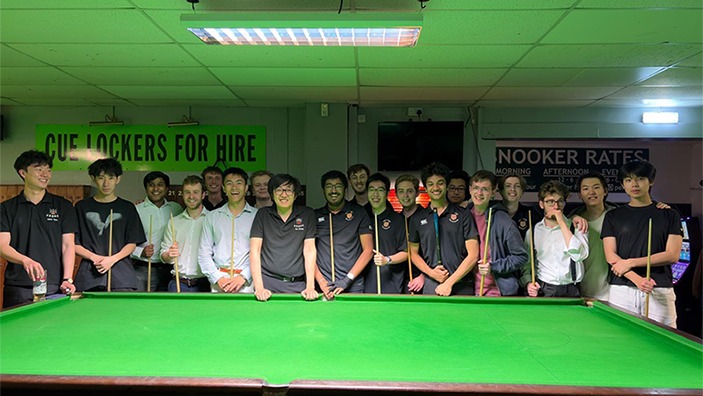
One of those doors was the pool and snooker table at St Edmund’s. I joined the College club and soon became Vice-President, helping to organise matches and keep things running. It was a welcome counterbalance to the intensity of the Cambridge MFin.
During a match against Homerton College, a member of the Cambridge Varsity pool and snooker team was watching. Afterwards, he invited me to trial. Competition for Varsity places is fierce, so it felt like a long shot, but I went for it.
What followed felt like a wildcard entry into a squad I had only ever hoped to join. I played tournaments at Hatfields, representing the University of Cambridge in the All Southern Universities Tournament, finishing in the top 16 while Cambridge reached the semi-finals. For someone who had come to study finance, representing the University in sport felt surreal.
The highlight was the Varsity match against Oxford. Pulling on the Cambridge jersey and helping the team beat Oxford 86–71 is a story I’ll be telling for years. Yet, when we won, I felt unexpectedly sad. Months of focus and effort had built up to this single moment, and in chasing the result, I realised I had missed parts of the journey, especially the fact that it was my last time playing in Cambridge colours.
I kept thinking I would enjoy it “once we’d won”. Then the win came, and the moment was already gone. That experience taught me something I’ve tried to carry into the rest of the year: you don’t get the time back, so you might as well be present while you’re in it.
Discovering social ventures at King’s E-Lab
Another major thread started just after Michaelmas exams, when I joined the King’s College Entrepreneurship Lab (E-Lab) Social Venture Residential. For 5 days, we lived at King’s College and were thrown into the deep end of entrepreneurship, working in mixed teams to turn rough ideas into social venture concepts.
It was intense, especially straight after exams, but I loved it. Listening to people who had actually built ventures, and testing ideas with peers, made me realise that social ventures interested me far more than I had expected. I began to see how the skills from the MFin could be applied to problems that were about impact as well as returns.
The residential is also where I met Natalie, a fellow with Cambridge Centre for Social Innovation. We clicked early on, and she ended up mentoring me through the rest of the year. In a place as busy as Cambridge, having someone who understood what I cared about and could point me towards the right opportunities made a huge difference.
Natalie was the one who suggested I apply for the Trinity Hall Catalysts programme. At the time, it felt like another learning opportunity. In hindsight, it became one of the defining experiences of my year.
Building a venture with the Trinity Hall Catalysts programme
Trinity Hall Catalysts supports and funds early-stage social ventures. Every other Thursday, we had sessions on the practical side of building something: talking to customers, running focus groups, testing markets and checking whether an idea really holds up.
I started with a vague sense that I wanted to build something with social impact. Through those sessions – and a lot of questioning – I developed a clearer venture I genuinely wanted to pursue. It wasn’t a single lightbulb moment, more a gradual sharpening of what mattered to me and how my finance training could be part of it.
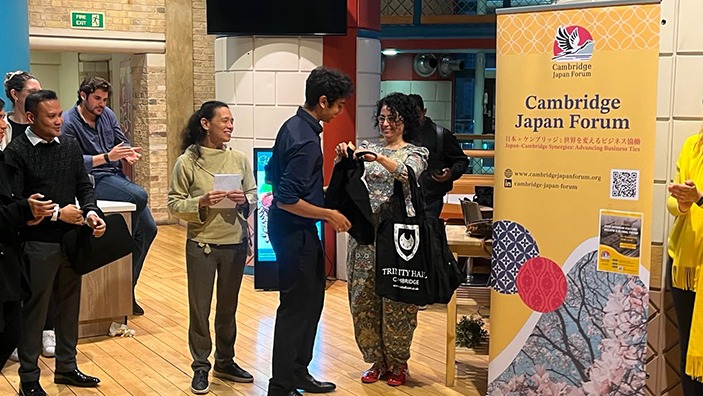
The programme ends with a showcase where you pitch to a panel, and only 6 ventures across the University of Cambridge are selected for further support and a grant. Standing up and pitching felt very different from presenting a case in class. The stakes were personal.
When I found out my venture was one of the 6 selected, it felt slightly surreal. The grant and recognition were encouraging, but what stayed with me most was the sense that if you engage with the Cambridge ecosystem, ideas can turn into real projects. The venture is still with me, and I hope to return to it properly one day.
Academic focus and the Lanvern Prize
Alongside all of this, the core of my year was still the Cambridge MFin. The programme is demanding, particularly in international finance, where the pace is fast and the material is challenging. I spent many hours in the University Library connecting theory with what was happening in markets.
Early in Michaelmas, I started working closely with Marwa Hammam, Executive Director of the Cambridge MFin, who became a key mentor. She has an unusual ability to understand what a student cares about and help them navigate the many options at Cambridge. With her guidance, I was able to focus my efforts and make choices that aligned with where I wanted to grow.
Being awarded the University of Cambridge’s Lanvern Prize on the MFin, for the highest overall performance in international finance in the cohort, was a highlight. It felt like the culmination of a lot of quiet work, supported by excellent teaching and mentoring. More than anything, it reminded me that academic achievement at Cambridge is rarely a solo effort.
Looking back: a year of rigour, community and impact
When I think about what the Cambridge MFin has meant to me, a few themes stand out. It has been academically rigorous, pushing me to deepen my understanding of finance and to approach complex problems with discipline. It has also been unexpectedly diverse in its experiences, from Varsity sport to social ventures.
Most of all, it has been shaped by people: mentors like Natalie and Marwa, friends across the MFin and other programmes and the wider Cambridge community that kept putting opportunities in front of me.
If you’re considering the Cambridge MFin, I’d say: come prepared to work hard, but leave room for the unexpected. Join a club, attend a College event and don’t be afraid to step into something that feels slightly outside your comfort zone. Use the programme not only to deepen your technical expertise, but also to explore where you want that expertise to take you.
And while you’re doing all of that, try to enjoy the journey as you go. The year moves quickly and the moments that feel small now may be the ones you remember most when you look back.
If you’re considering the Cambridge MFin, I’d say: come prepared to work hard, but leave room for the unexpected. Join a club, attend a College event and don’t be afraid to step into something that feels slightly outside your comfort zone.

About the blog author: Shivin Sharma
Shivin Sharma has built his professional experience at the intersection of strategy consulting and technology-driven execution. Prior to the University of Cambridge, he worked at Bain & Company and Boston Consulting Group, advising clients on growth strategy, market entry and performance improvement across a range of industries. These engagements required structured thinking, rigorous analysis and clear communication with senior stakeholders and allowed Shivin to develop a strong foundation in breaking down complex problems into actionable insights supported by robust data.
He later transitioned into an operating role as Strategy Lead at an AI-driven technology firm in the United States, where he led a 37-member cross-functional team across geographies. This shift from advisory to execution made Shivin responsible not only for designing strategic initiatives, but also for driving implementation and measurable financial outcomes. Working across different markets and teams strengthened his leadership capabilities and deepened his appreciation for how financial discipline underpins sustainable growth. Shivin came to Cambridge to further develop his expertise in finance and to engage more deeply with the innovation and entrepreneurial ecosystem.
Master of Finance
Engage with the world’s best financial minds and skilled professionals. Open doors to exciting new career possibilities with a Cambridge Master of Finance (MFin).
More from the MFin blog
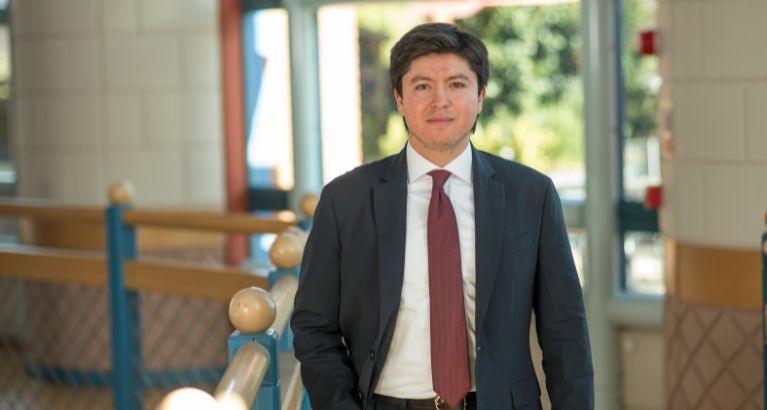
Andres Camacho (MFin 2025) reflects on how the MFin has broadened his horizons beyond traditional finance, leading to opportunities in impact investing, entrepreneurship, search funds and Entrepreneurship Through Acquisition (ETA).

Three alumni share how the Cambridge Master of Finance helped them pivot across roles, sectors and countries, and helped shape the mindset that carried them through.

MFin student Seoil Jang reflects on how her interest in Infrastructure Finance led her to Cambridge Judge Business School, where she co-founded a student-led Infrastructure Society and undertook a Group Consulting Project with the Asian Infrastructure Investment Bank (AIIB).