
Sustainable finance careers after the Cambridge MFin
“The intellectual challenge of working in sustainable finance is compelling,” says Amber Wang, who graduated from the Cambridge MFin in 2023. “You’re constantly working at the frontier, structuring financing for assets and technologies where the playbook is still being written. The problems are real and solving them makes the work meaningful.”
As Vice President of Corporate Finance and Investments at Ampyr Solar Europe, an independent power producer (IPP) that develops, constructs and operates solar and battery storage projects, Amber works on the investment team to support green energy projects.
“In renewables, you can point to a solar farm or battery storage project and say: this is where the capital went and this is the clean energy it’s producing,” she says. “That tangibility matters to me.”
Paul Kelly, who graduated from the MFin in 2015 and now leads the Global Sustainable Finance team for the International Wealth and Private Banking business at HSBC, says it’s the opportunity to do good, whilst doing well that got him interested in sustainable finance. “Successfully navigating the sustainability transition has the potential to provide a significant positive social impact for both today’s and future generations,” he says.
Paul works with senior leaders across the bank, advising on financial and strategic initiatives to support the business to achieve its sustainable finance and investments target of $750 billion to $1 trillion by 2030. He says impact investing, sustainable financial reporting, climate risk and compliance are key career growth areas in sustainable finance for those interested in pursuing a career in the field.

Successfully navigating the sustainability transition has the potential to provide a significant positive social impact for both today's and future generations.
How the Cambridge MFin integrates ESG and sustainability
Both joined their roles after completing the MFin at Cambridge Judge, where several elective courses put the focus on impact investing and other areas related to sustainability. “We had the chance to explore sustainable finance, including current trends, climate risk, and environmental, social and governance (ESG) frameworks, in real depth,” says Amber. “Those electives helped me develop a much more structured way of thinking about how sustainability considerations translate into investment and financing decisions.”
While on the programme, Amber had the opportunity to participate in the Turner MIINT Impact Investing Competition, an international contest organised by Pennsylvania’s Wharton School and designed to provide hands-on experience in impact investing. Her team represented Phoenix Carbon, a venture focused on recycling materials to support net zero. “It was a 6-month deep dive into impact due diligence that solidified my interest in sustainable finance,” she says.
“I also worked on a practical Group Consulting Project (GCP), where my team studied the development of impact investing in practice. This involved interviewing private equity funds across Europe, the US and Asia to understand how different institutions implement ESG, evaluate returns and approach reporting.”
Paul meanwhile credits the MFin at Cambridge with helping him transition into the sector from previous roles in consulting and accounting at PwC Australia. “The programme was instrumental in the transition to my sustainable finance career,” he says. “It provided exposure to real-world insights on social impact, economic development and the financial institutions that underly this.”
He says the City Speaker Series, where prestigious experts from the corporate world come to Cambridge Judge to deliver talks and join a select group of students for dinner afterwards, played a key role in the transition, opening up the opportunity to carry out his GCP in the UK Cabinet Office’s social innovation division. He then completed an internship at BNY Mellon, writing a report on millennials’ financial expectations and their interest in sustainability in the sector.
“These unique experiences provided the insights and experience to build out my knowledge base and perspective on sustainable finance and navigate my career in this direction,” he says.

Those electives helped me develop a much more structured way of thinking about how sustainability considerations translate into investment and financing decisions.
The future of sustainable finance
It’s not only careers in impact investing these skills are relevant to. Sustainability is becoming increasingly critical across the wider finance industry, meaning gaining relevant experience in the field is of the essence, according to Khaled Soufani, Management Practice Professor of Financial Economics and Policy and Director of the Circular Economy Centre at Cambridge Judge Business School.
“ESG literacy is increasingly expected in finance roles,” he says. “Sustainability is now core to finance: climate and ESG factors directly shape asset values, regulation and long-term returns, so they’re built into investment, lending and corporate strategy.”
“Financial institutions are embedding sustainability by using ESG metrics in investment decisions, setting net zero commitments, issuing green and sustainability-linked products, improving climate risk disclosure and adding climate stress tests to risk models.”
He explains that by integrating ESG across teaching, through optional elective courses as well as through practical GCPs and industry speakers, students on the MFin can develop skills that range from ESG data analysis to climate risk integration, while deepening their understanding of sustainable instruments, regulatory awareness and long-term value thinking.
“Alongside offering electives in sustainable finance, impact investing, environmental finance and behavioural finance, we also connect students to Cambridge sustainability research and bring in a number of speakers,” he says. “Our goal is to help prepare students for a career in the field, whether through roles such as ESG analysis, impact investing, climate risk consulting, green finance and organisations like the UN-backed Principles for Responsible Investment (PRI), all of which are quickly expanding, or through a more general finance career that incorporates sustainability.”
“As these elements become ever-more important in the wider sector, students that are able to gain first-hand experience and skills will have a competitive edge,” he says. “We want to help nurture that and to empower students to be at the forefront of the sustainability transition of the future.”

Sustainability is now core to finance: climate and ESG factors directly shape asset values, regulation and long-term returns, so they’re built into investment, lending and corporate strategy.
Challenges and opportunities in sustainable finance
What responsibility does the finance sector have in supporting the wider sustainability transition?
Paul Kelly (MFin 2014): “I believe the finance sector has a huge responsibility in supporting the sustainability transition. This is a global challenge, as well as an opportunity, which financial institutions are well-placed to support through their combination of significant capital, global footprint and stakeholder networks. We have the opportunity to help drive that and that’s incredibly exciting to me.”
Is the industry doing enough when it comes to sustainability and ESG?
Khaled Soufani, Professor and Director of the Circular Economy Centre: “Not fully. Progress is uneven and sometimes superficial. Key gaps include weak data standards, short-term incentives and limited accountability. There are improvements needed around global reporting standards, stronger links between pay and sustainability and more transition finance. Other key challenges include ESG data inconsistency, greenwashing, political fragmentation and balancing returns with sustainability goals.”
What are the key challenges?
Amber Wang (MFin 2022): “The biggest challenge is consistency: there’s no single agreed definition of what ‘sustainable’ really means in finance. Different rating agencies and methodologies produce different results, which makes it genuinely hard to compare companies or verify claims.
“Greenwashing is a related concern and regulators are rightly increasing scrutiny. But I’d push back slightly on the narrative that greenwashing defines the whole sector. The greenwashing label is increasingly being used to discredit the entire movement, which ends up hurting the people and businesses that are genuinely trying to do the right thing.
“Finance is an intermediary and it has a responsibility to make sure that capital lands in the right places. The challenge is building the standards and accountability to ensure that actually happens.”
Related articles
Programme news
Beyond the classroom: Cambridge MFin and Africa’s capital
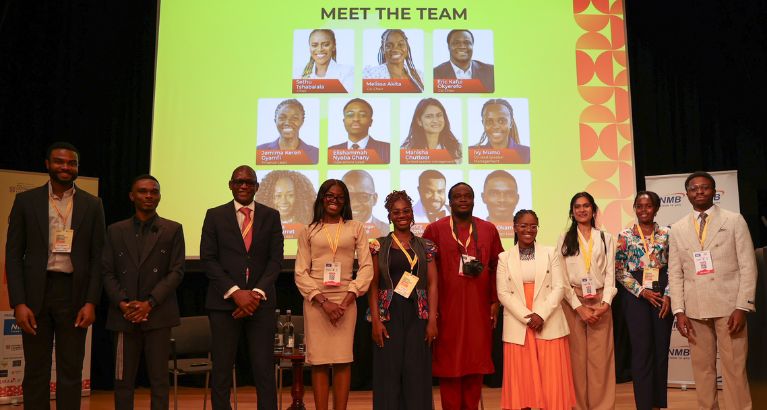
Curious about how finance professionals are engaging with Africa’s growth story during their MFin? Members of the Cambridge Africa Business Network share how organising a major conference, working with leading investors and moderating high-profile panels has helped them connect classroom learning with real-world impact across the continent.
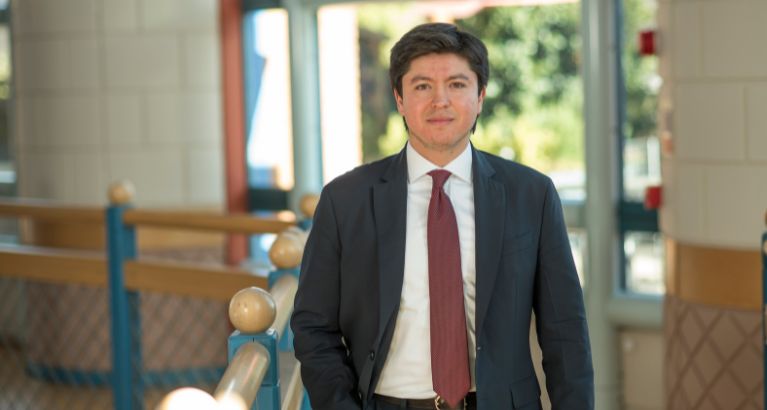
Andres Camacho (MFin 2025) reflects on how the MFin has broadened his horizons beyond traditional finance, leading to opportunities in impact investing, entrepreneurship, search funds and Entrepreneurship Through Acquisition (ETA).
Programme news
How to prepare for the MFin and what to expect
Wondering how to prep for the MFin and how the first few weeks will be once you’re on it? The programme team give us their insider insights and top tips to help you get the most out of the experience.