


For many finance professionals, a Master of Finance (MFin) is about sharpening technical skills and accelerating their career. At Cambridge Judge Business School, the experience is also about something more: joining a community where ideas, capital and people meet. This is visible in the Cambridge Africa Business Network and in the annual Cambridge Africa Business Conference that MFin students help to shape.
A platform for Africa’s future, rooted in Cambridge
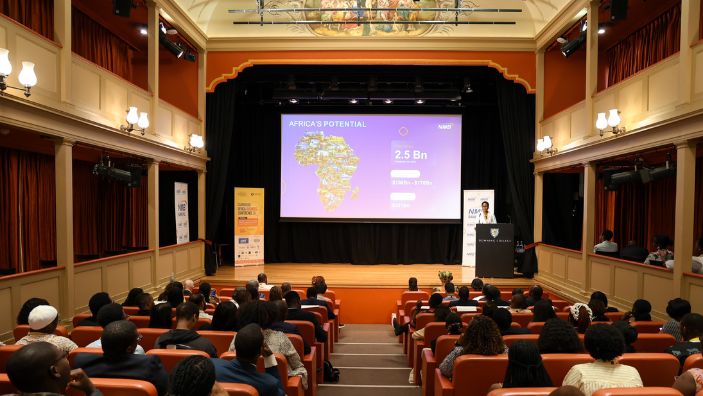
The Cambridge Africa Business Network (CABN) is a student-led platform that brings together leaders from finance, business, policy and entrepreneurship to discuss Africa’s economic future. Each year, its flagship conference is hosted at Cambridge Judge. The event draws more than 150 attendees, including investors, policymakers, founders, corporate leaders, students and development finance professionals. This year’s anchor sponsor was NMB Bank, one of the largest banking networks in Tanzania, whose values are to unlock lasting impact for customers and the community they serve. This sentiment is felt in this year’s conference from the very start.
For MFin students, the CABN offers a way to connect rigorous academic study with current questions facing African markets: how to mobilise institutional capital at scale, how to build trust in financial systems and how to create sustainable growth across the continent. It is one of the ways the Cambridge MFin becomes more than just a finance degree.
From lecture theatre to organising committee
MFin students play a central role in CABN’s work. Our MFin 2025 cohort have taken on responsibilities ranging from Finance Lead for the conference, to moderating high-profile panel discussions and leading on partnerships and speaker engagement.
Jemima Keren Gyamfi (MFin 2025) describes joining CABN because she wanted to contribute to conversations and action shaping Africa’s economic future. Having grown up and worked across accounting and finance, she had seen first-hand both the opportunities and the gaps in capital, infrastructure and trust that hold the continent back. CABN felt like a way to give back to the region that shaped her and to do so from a global platform.
Serving as Finance Lead for the conference meant designing and managing the budget, tracking expenditure and supporting strategic decisions throughout the planning process. Every choice, from venue and catering to marketing and travel support for speakers, had to be weighed against the broader vision for the event and the experience of attendees. She says: “It showed me that financial discipline is not just about saying no. It is about making deliberate trade-offs so the vision and the numbers move together.”
Jemima reflects that this responsibility changed how they saw finance in practice. It was not simply about cost control. It was about aligning numbers with purpose and ensuring that the conference remained both financially disciplined and impactful. The role drew directly on the analytical tools developed in the MFin classroom, but applied them in a complex, real-world setting where time, resources and expectations all had to be managed at once.

It showed me that financial discipline is not just about saying no. It is about making deliberate trade-offs so the vision and the numbers move together.
Capital moves at the speed of trust
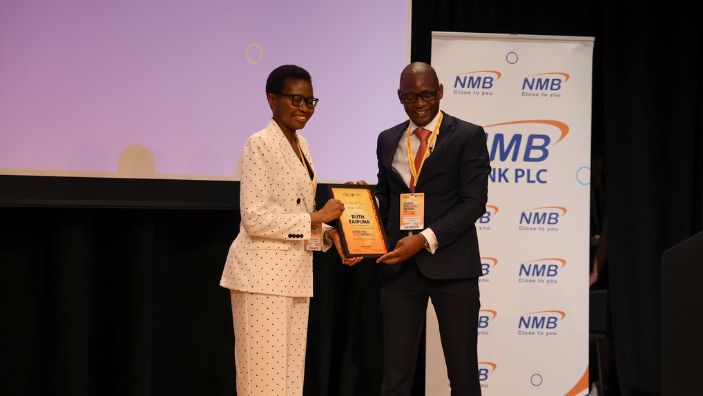
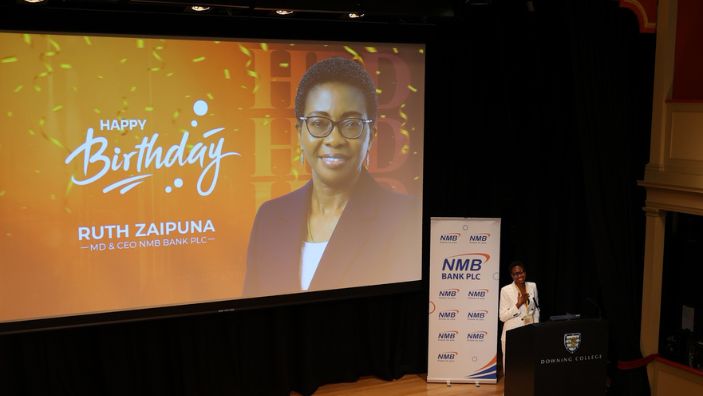
One of the most memorable moments from this year’s conference came from a keynote address by Ruth Zaipuna, the CEO of NMB Bank. Ms Zaipuna remarked that “capital moves at the speed of trust”, delivering a powerful statement that captured the hearts and minds of the audience. For Ivy Mumo (MFin 2025), this phrase captured something essential about both Africa’s investment landscape and her own Cambridge experience. She says: “That statement stayed with me long after the conference ended. Beyond finance, it reflects how opportunities are created, how partnerships are built, and how meaningful change happens. Looking back, the conference itself was a testament to that idea.”
Beyond the technicalities of valuation models or risk metrics, the conference highlighted how opportunities are created through relationships, how partnerships are built, how credibility is established and how long-term capital is unlocked. For students, this meant engaging directly with senior investors, executives and policymakers who are shaping markets on the ground.
Lindani Samkange-Chikumbirike (MFin 2025) moderated the panel Mobilising Capital for Africa: Unlocking Institutional Investment at Scale. Reflecting on the discussion, he recalls being struck by the sense of optimism in the room. While panellists were candid about the challenges facing investment across the continent, there was also a clear conviction that Africa’s future would be defined more by its opportunities than its constraints. The question, they concluded, is no longer whether capital should flow to Africa, but how to mobilise it at the scale required to support transformative growth.
Organising the conference and working closely with sponsors, speakers and delegates over many months reinforced another lesson: that trust is built long before any formal partnership is announced. Consistency, reliability and a shared sense of purpose proved just as important as technical expertise.

Beyond finance: community, purpose and collaboration
Although CABN is rooted in business and finance, students emphasise that the impact of the network extends far beyond balance sheets. Jemima said that being part of the organising team made her Cambridge experience far more practical and collaborative. It offered opportunities to lead across teams, solve real challenges under real constraints and build relationships with people who share a genuine interest in Africa’s growth and development.
Lindani reflects on the CABN as follows: “Conferences are at their best when they combine intellectual rigour with genuine human connection and this event certainly delivered both.”
Alongside serious discussions about institutional investment, infrastructure and innovation, there were lighter moments too: informal conversations over coffee, shared humour with keynote speakers and the energy of bringing together delegates from across sectors and geographies.
Our students highlight that these interactions are often where new ideas and collaborations begin. Many opportunities, they note, start with a simple conversation.

Conferences are at their best when they combine intellectual rigour with genuine human connection and this event certainly delivered both.
Cambridge as a connecting point for a global stage
For those with experience in finance and an interest in Africa or emerging markets, CABN illustrates how Cambridge functions as a connecting point. The network brings together the resources of a world-class university, the expertise of Cambridge Judge and the lived experience of students from across the continent and beyond.
Involvement in CABN complements the academic intensity of the MFin. While classroom learning builds a strong foundation in areas such as corporate finance, asset management and financial institutions, networks like CABN allow students to test ideas in practice, to understand how theory translates into policy and investment decisions and to explore new career pathways.
Students involved in CABN see the experience influencing their future trajectories in different ways. This ranges from pursuing roles in development finance institutions and impact investing, to returning to commercial banking with a renewed focus on long-term partnerships, to exploring entrepreneurial ventures that bridge capital and innovation in African markets. Ivy notes: “The conference may be over, but the conversations and connections it sparked are only just beginning.”

The conference may be over, but the conversations and connections it sparked are only just beginning.
More than a degree: a defining part of the MFin journey
Looking back on their time at Cambridge Judge, our 3 students describe the life outside of the classroom as one of the defining elements of their experience. It represents leadership, community and impact beyond academic achievement. Jemima points out: “Cambridge is more than a degree. It is a platform that expands perspective, builds lifelong relationships and creates opportunities to contribute meaningfully beyond oneself.”
For finance professionals considering a post-experience finance degree, the message from these students is clear. If you are looking for rigorous academic training, but also for a place where you can shape conversations on the future of finance and development, Cambridge Judge offers a distinctive environment. Here, the MFin is more than just finance and the connections you build can help shape your career, your region and the wider world.
Related articles

Programme news
Practical learning on the Cambridge MFin: a competitive edge
From real-world consulting projects to Q&As with senior executives, practical learning on the Cambridge Master of Finance (MFin) will give you a competitive edge in the industry. This article explores the practical learning experiences on offer.

Programme news
How the Cambridge MFin powers sustainable finance careers
From impact investing to climate risk consulting, sustainability is now a core component of the finance industry – and the Cambridge MFin has evolved to match the demand. We spoke to 2 Cambridge Judge alumni and Professor Khaled Soufani to find out what’s special about working in sustainable finance, the growing importance of ESG in the wider finance sector and how the MFin can help prepare students for a career in the field.

Andres Camacho (MFin 2025) reflects on how the MFin has broadened his horizons beyond traditional finance, leading to opportunities in impact investing, entrepreneurship, search funds and Entrepreneurship Through Acquisition (ETA).