


Turning theory into practice on the Cambridge MFin
For Cambridge Master of Finance (MFin) students, the Easter vacation is anything but a holiday. Over 5 focused weeks, they step into the role of consultants, working with organisations such as multilateral development banks, international initiatives, specialist investment firms and development finance institutions. Guided by faculty and industry mentors, they test their skills on complex, real‑time problems that matter to global markets.
The Group Consulting Project, or GCP, is a defining feature of the MFin programme at Cambridge Judge Business School. It gives students the chance to connect rigorous academic training with the realities of front‑line finance, while exploring sectors they hope to enter after graduation. For many, it is also a first experience of leading high‑stakes work across borders, time zones and cultures.
Designing a student‑led project in emerging markets
One of this year’s projects saw a team of MFin students, including Alejandro Delgado and Seoil Jang, work with a leading multilateral development bank on digital infrastructure financing in Asian emerging markets. Rather than taking an allocated project, the group took the initiative to approach the institution and shape a mandate that aligned with their shared interest in infrastructure and development finance. Their success resulted in the first such engagement on the MFin in several years.
Alejandro found striking parallels between his home region of Latin America and the markets the team analysed: “We analysed multiple data centre cases across Asian emerging markets, focusing on what makes projects bankable, where risk actually sits and what role multilateral development banks play in mobilising private capital.”
Working with classmates from China, Korea, Japan, Singapore and Indonesia, the team examined how energy constraints shape investment decisions in data centres. For Alejandro, the assignment underscored the importance of blended structures and innovative risk‑sharing mechanisms in making complex infrastructure deals work, especially in markets facing regulatory uncertainty and rapidly growing demand for digital services.

We analysed multiple data centre cases across Asian emerging markets, focusing on what makes projects bankable, where risk actually sits and what role multilateral development banks play in mobilising private capital."
Leading across borders and time zones
Within the same project, Seoil Jang brought a complementary perspective. As part of the team that collectively sourced the engagement, she helped steer the work from an academic exercise towards a deliverable that could inform real investment decisions. Leading a team of six across multiple time zones, she focused on pushing the analysis beyond surface‑level insights.
Looking back on this experience, she said: “We worked through more than 30 data centre cases across markets, trying to move beyond a typical research exercise and get closer to actual investment thinking: what makes something bankable, where risk sits and what role multilateral development banks can realistically play.”
The experience was demanding. The group operated almost entirely virtually, across 7 to 8 hour time differences and continually raised the bar on its own work. Seoil reflects that the real learning came from this iterative process: sharpening their thinking together, challenging each other’s assumptions and aiming for outputs that could genuinely influence how a major development institution approaches digital infrastructure.

We worked through more than 30 data centre cases across markets, trying to move beyond a typical research exercise and get closer to actual investment thinking."
Deepening expertise in sustainable finance
Sustainability and climate finance also feature prominently across this year’s GCPs, reflecting a growing focus within the MFin curriculum on the intersection of finance, climate risk and the energy transition. Lucas Elettore joined a team working with a global environmental finance initiative on the market dynamics of green bonds and their decarbonisation impact for asset owners. He commented: “At the Cambridge Master of Finance (MFin), the month of April means GCP and we got selected to work with United Nations Environment Programme Finance Initiative. The main task we were given was to analyse the market dynamics of green bonds and the decarbonisation effects for asset owners.”
Drawing on an exhaustive analysis of more than 5,000 bonds across Europe, the US and Asia‑Pacific, Lucas and his teammates explored how green bonds have moved from niche instruments to integral components of long‑term funding strategies. Working closely with practitioners, they were exposed to the policy, regulatory and market forces shaping sustainable finance today.
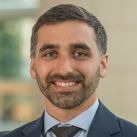
At the Cambridge Master of Finance (MFin), the month of April means GCP and we got selected to work with United Nations Environment Programme Finance Initiative."
Understanding transition risk and resilience
For Lindani Samkange‑Chikumbirike, the GCP offered a deep dive into the energy transition from an investor’s perspective. His team partnered with a specialist investment manager on an assignment focused on a company that has transformed itself from a traditional, carbon‑intensive utility into a global leader in renewable energy. He says: “Honestly, it’s been one of the most thought‑provoking pieces of work I have done in a while… As an investment professional, I find that kind of conviction both admirable and instructive.”
It wasn’t always smooth sailing: “Adaptability and risk management aren’t buzzwords, they’re what separates the companies that endure from the ones that don’t.” The project required the team to grapple not only with the company’s success story, but also with its recent challenges, including project delays, cost pressures and capital allocation decisions. For Lindani, this balanced perspective was crucial. It illustrated how adaptability and risk management distinguish firms that endure from those that do not and demonstrated the value of rigorous, nuanced analysis in public markets investing.

Adaptability and risk management aren't buzzwords, they're what separates the companies that endure from the ones that don't."
Quantifying risk in impact investing
Impact investing and development finance formed another key theme. Neeti Dudeja worked with a leading development finance institution on a project aimed at quantifying risk for an impact investor. Her role focused on benchmarking risk and return across geographies and products and improving the measurement of risk‑adjusted returns. She says: “Navigating the gaps, improvising it and trying to build meaningful insights around it was both challenging and incredibly exciting.”
For Neeti, the most valuable aspect of the GCP lay in the collaboration with experienced practitioners: “What made this experience truly special was the collaboration, constant feedback, being pushed to think deeper and learning how to approach problems the way practitioners actually do in the real world.” Continuous feedback and candid conversations helped her understand how investment professionals approach ambiguous problems and how to bridge the gap between theoretical models and real‑world decision‑making.

What made this experience truly special was the collaboration, constant feedback, being pushed to think deeper and learning how to approach problems the way practitioners actually do in the real world."
A catalyst for careers in global finance
Across these diverse projects, a common thread emerges: the GCP is not just a requirement of the MFin, it is a catalyst for growth. Students move from classroom discussion to client‑ready analysis, from case studies to live mandates and from individual assignments to high‑performing teams operating under real constraints.
Many also highlight the culture that surrounds the GCP at Cambridge Judge. Faculty supervisors, host company managers and alumni provide support, while peers bring expertise from banking, asset management, consulting, corporate finance and the public sector. Late‑night debates, cross‑time‑zone calls and shared deadlines create a strong sense of community.
The inclusion of projects like these within the MFin curriculum is a powerful signal of the programme’s commitment to experiential learning and impact.
For prospective candidates considering the Cambridge MFin, the GCP offers a glimpse of what to expect: intellectually demanding work with real clients, exposure to cutting‑edge areas such as sustainable finance and digital infrastructure and the chance to test and refine one’s skills in a supportive yet challenging environment. It is where theory meets practice and where many students begin to shape the next chapter of their careers in global finance.
Related articles
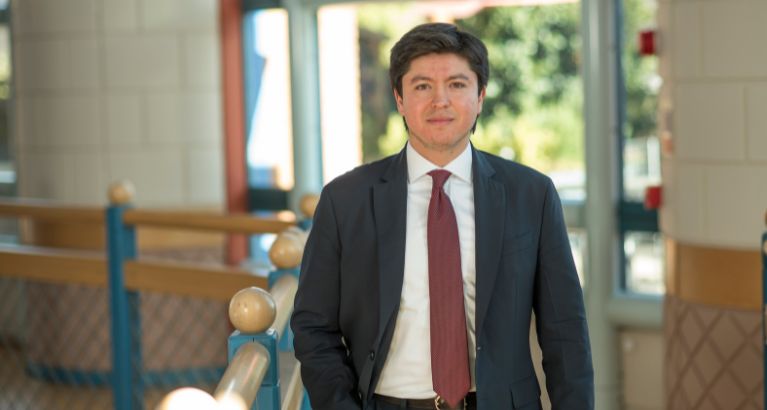
Andres Camacho (MFin 2025) reflects on how the MFin has broadened his horizons beyond traditional finance, leading to opportunities in impact investing, entrepreneurship, search funds and Entrepreneurship Through Acquisition (ETA).

Three alumni share how the Cambridge Master of Finance helped them pivot across roles, sectors and countries, and helped shape the mindset that carried them through.

MFin student Seoil Jang reflects on how her interest in Infrastructure Finance led her to Cambridge Judge Business School, where she co-founded a student-led Infrastructure Society and undertook a Group Consulting Project with the Asian Infrastructure Investment Bank (AIIB).