


The annual Cambridge Master of Finance (MFin) employment report is out, detailing the outcomes of our graduating class of 2024/25. In this latest report, we delve into the destinations our class has taken, 3 months after completing their degree.
Turbulence, resilience and the strength of our MFin graduates
As the world grows more turbulent, our MFin graduates show considerable resilience and success, securing a wide range of roles and creating exciting career transitions.
Through these challenging times, 94% of our graduates received an offer 3 months after completing the programme, with 85% of MFin graduates being employed 3 months out, increasing to 89% at 4 months. These figures show that despite uncertainty, our class were able to create meaningful career opportunities, reflecting positively on their abilities and the education and support they received.

We are proud of our students’ determination and success in making successful career transitions. Within 3 months of completing the programme 94% of students had received at least one offer and 85% had accepted a role. Almost 40% of the class made a transition in three different areas – changing geography, function and sub-sector.”
Job offers 3 months out
Employed 4 months out
Switched country, function or sector
Switching it up: changing job function, industry and country
The MFin 2024 class represented 31 different nationalities, who are now working in 12 different countries around the world. 91% of the class achieved one switch: this could be job function, industry or country and many switched all 3 areas (function, industry and country).
Sadia analyses the figures further. “Most graduates joined venture capital and private equity (25%), investment banking (21%) and asset management (18%). Our MFin students’ success in managing career transitions and securing employment reflects their capabilities, the quality of the education they receive and the strength of the careers support available to them.”
This year’s report also marked a different kind of change with 50% of our MFin students returning to their pre-MFin country after graduating. Forty-eight percent of students who accepted an offer in the UK were originally from outside of the UK, showing the popularity of the UK’s finance market. Of our graduates, 39% took up roles in Asia, 9% in Western Europe, 2% in Australasia and finally 2% in North America.
Popular post-MFin sectors: finance, consulting and industry lead the way
After completing an MFin degree, 74% of graduates went into roles within the finance sector, with 13% in industry and 11% in consulting. However, there is a new addition in the sectors with 2% going into not-for-profit/NGO areas.
Graduates are employed across 13 different sub-sectors, including fintech, public sector, central banks, hedge funds. Sixty-four percent of our students joined a new employer showcasing that new opportunities still exist, even in a difficult job market. Delving into this data a little more, we see that 50% of our students also turned their summer internship into a job offer.
Marwa Hamman, MFin Executive Director, concludes, “As the global financial landscape becomes ever more turbulent, the achievements of our 2024/25 MFin class are truly impressive. Within just a few months of graduation, the vast majority of our students had secured offers and accepted roles, often combining significant switches in geography, function and sector.” She continues: “Our rigorous, experiential MFin, together with its diverse and topical electives, continues to equip our graduates with the analytical tools, practical skills and confidence they need to navigate uncertainty and shape their careers on a global stage. We are particularly proud of the breadth of destinations they have achieved, from venture capital and private equity to investment banking, asset management and beyond, including not-for-profit roles.”

Their success speaks to their resilience and ambition, the strength of our careers support, and the enduring value of a Cambridge MFin. We look forward to following their journeys and seeing the impact they will make across the world of finance and wider society.”
Related articles

Programme news
How the Cambridge MFin powers sustainable finance careers
From impact investing to climate risk consulting, sustainability is now a core component of the finance industry – and the Cambridge MFin has evolved to match the demand. We spoke to 2 Cambridge Judge alumni and Professor Khaled Soufani to find out what’s special about working in sustainable finance, the growing importance of ESG in the wider finance sector and how the MFin can help prepare students for a career in the field.
Programme news
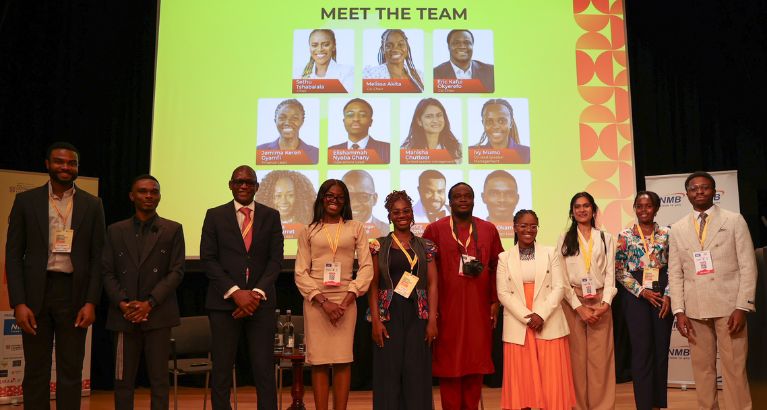
Beyond the classroom: Cambridge MFin and Africa’s capital
Curious about how finance professionals are engaging with Africa’s growth story during their MFin? Members of the Cambridge Africa Business Network share how organising a major conference, working with leading investors and moderating high-profile panels has helped them connect classroom learning with real-world impact across the continent.
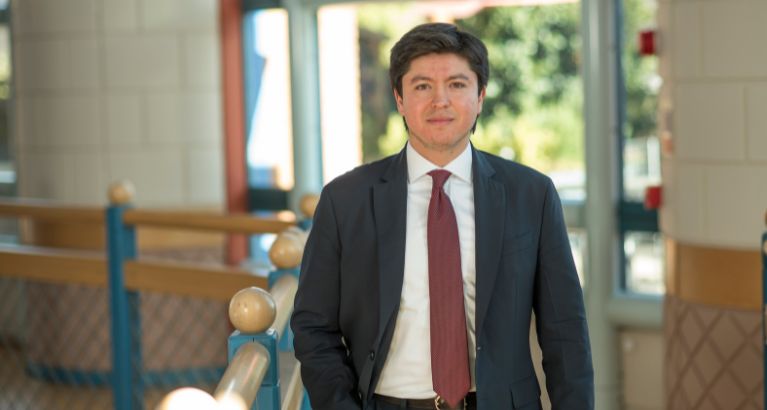
Andres Camacho (MFin 2025) reflects on how the MFin has broadened his horizons beyond traditional finance, leading to opportunities in impact investing, entrepreneurship, search funds and Entrepreneurship Through Acquisition (ETA).