
The paper co-authored by Shaz Ansari, Professor of Strategy and Innovation, and Madeleine Rauch, Associate Professor in Strategy and International Business, received the award on 19 October at the 46th annual conference of the SMS in Berlin.

3 key mechanisms identified
The winning paper, entitled Propellant organising amid politicised and polarised conditions, identifies 3 mechanisms through which organising by a spinoff entity unfolds to help tackle society’s grand challenges:
- negotiated infusing of new activities with mission meaning
- calibrating parent-spinoff distance
- leveraging parent-spinoff differences
“Organisations tackling grand challenges in fragmented, politicised, and polarised environments face a persistent tension: complex problems require dynamic experimentation, yet institutional rigidity constrains organisational change,” says the paper. “Drawing on a 13-year study of an Indian nonprofit, we develop a process model of propellant organising: the strategic creation and orchestration of temporary spinoffs that enable experimentation while preserving parent legitimacy.”
Helping organisations practically
The practical implications of the study are 2-fold:
- Providing a model demonstrating how organisations can over time sequence experimentation, legitimacy protection and organisational reintegration.
- Demonstrating how organisations build and communicate social engagement through different combinations of product, process and profit orientation – as such tools help organisations navigate “competing demands of social innovation, organisational survival and legitimacy preservation”.
The authors conclude: “Our findings suggest that in restrictive environments, effective organising for grand challenges depends on the capacity to sequence, contain, and relinquish organisational forms as legitimacy conditions shift.”
Featured faculty
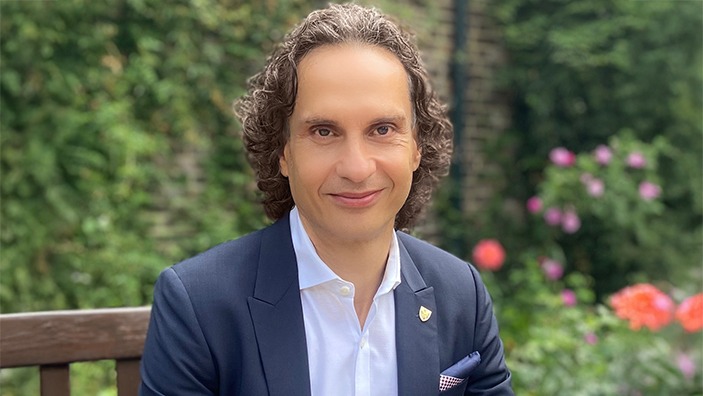
Shahzad (Shaz) Ansari
Professor of Strategy and Innovation
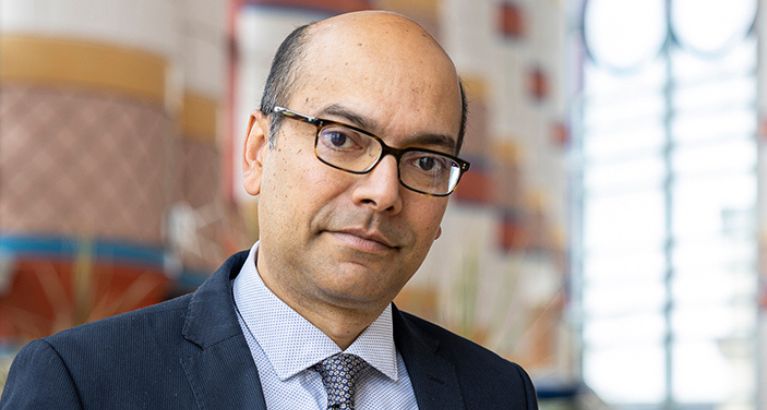
Madeleine Rauch
Associate Professor in Strategy and International Business
Related content
Ghosh, A., Biswas, I., Ray, S., Ansari, S. and Rauch, M. (2026) “Propellant organizing amid politicized and polarized conditions: orchestrating legitimate actions to mitigate grand challenges.” Strategic Management Society (SMS) 46th Annual Conference, Berlin, Germany.
Related articles
Faculty news
Professor Jaideep Prabhu and the University honoured
Professor of Marketing Jaideep Prabhu has won the Business, Management & Accounting Subject Award 2026 of the Global Research Partnerships hub, which brings together researchers and institutions globally. The University of Cambridge placed second in an award given for research collaboration in business, management and accounting.
Faculty news
Allègre Hadida honoured by arts and culture group
Allègre Hadida, Associate Professor of Strategy at Cambridge Judge Business School, was awarded the François Colbert Research Impact Award by the International Association of Arts and Cultural Management (AIMAC) at the group’s conference in Rio de Janeiro in July.
Faculty members of Cambridge Judge Business School won 2 awards and were finalists for 2 other awards at the 86th Annual Meeting of the Academy of Management held 31 July-4 August in Philadelphia.