


Startup success is notoriously difficult to predict.
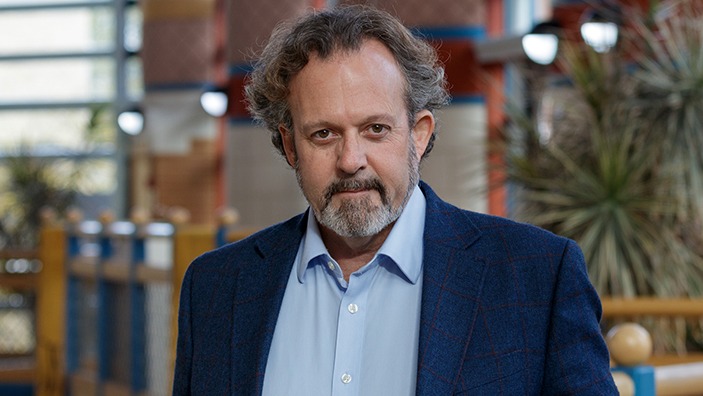
Investors, founders and policymakers are constantly searching for signals that might reveal which ventures will thrive and which will struggle. Yet according to Matthew Grimes, Professor of Entrepreneurship and Sustainable Futures at the University of Cambridge, many of the assumptions we make about prediction may be fundamentally flawed.
In conversation with Associate Professor Chris Coleridge on the Predicting Startup Success podcast, Matthew argues that startups are unlike most other organisations because they are built around futures that do not yet exist. Rather than simply uncovering value, investors and other stakeholders often help create it.
Startups are claims about the future
When people think about prediction, they often imagine that a startup’s true value already exists and simply needs to be discovered.
According to Matthew, that assumption breaks down when applied to early-stage ventures. At the point where investors, customers or employees engage with a startup, much of what is being evaluated has not yet been built.

A startup, he argues, is essentially a claim about a future that has not happened yet. Whether that future arrives depends partly on whether enough people believe in the claim and commit resources to it. Value is not merely observed. It is co-created through acts of persuasion and commitment.
This means that observers are rarely neutral participants.
Investors, researchers and ecosystem actors do not simply predict success from the outside. Their decisions help shape the outcome they are attempting to forecast.
That insight also helps explain why conventional signals can sometimes be misleading.
A founder who tells a compelling story may appear more likely to succeed, but what observers have actually witnessed is storytelling ability. Fluency and confidence can be mistaken for substance. As a result, attention often gravitates towards visible, easily performed signals rather than deeper indicators of progress.
What hype really means
One of Matthew’s most significant areas of research concerns hype.
The term is often treated as synonymous with exaggeration or even deception. In some cases, people blur the distinction between hype and fraud. But Matthew offers a different definition.
In his research, hype is understood as a collective vision and promise of a possible future around which attention, excitement and expectations accumulate. It is a social process that unfolds over time. Sometimes those expectations collapse. Sometimes innovations genuinely live up to them.
Viewed this way, hype is not simply noise – it has real effects.
Excitement attracts capital, talent and attention. Those resources improve the odds of success. Success then attracts further excitement, creating a self-reinforcing cycle.
Yet this process has a darker side.
The same forces that bring resources also create expectations. Ventures become accountable not only for what they have achieved but for what they have promised. Expectations begin to accumulate and harden, creating what Matthew describes as a liability as well as a resource.
As expectations solidify, founders may become constrained. They may discover that the most promising opportunity lies in a slightly different direction but find themselves tied to the story they have already told investors, customers and employees.
For this reason, hype may be highly predictive of a startup’s ability to raise money, but much less predictive of its ultimate success. Two ventures can attract similar levels of attention and funding and experience very different outcomes depending on whether they are able to convert expectations into something tangible and sustainable.
Looking for the signals that matter
If stories alone are insufficient, what should investors and other stakeholders focus on instead?
Matthew argues that the most useful signals are often the most costly.
Rather than focusing on impressive pitch decks, media coverage or presentation skills, he suggests paying attention to tangible commitments from others. Customers who have reorganised their workflows around a product, partners who have taken meaningful risks, or talented individuals who have left attractive roles to join a company all provide stronger evidence than a polished presentation.
These are difficult signals to manufacture because somebody has put something valuable on the line.
The same principle applies when evaluating external endorsements. Selective investors and highly competitive programmes can provide meaningful information because the organisations involved have their own credibility at stake. By contrast, awards, publicity and vanity metrics may create visibility without revealing much about underlying quality.
One question in particular emerged as a useful test:
What evidence would convince the founder that they are wrong?
According to Matthew, founders who are genuinely experimenting and learning can usually answer this clearly. Those who are simply defending a narrative often struggle.
Why feedback is harder than it sounds
Entrepreneurship literature often presents adaptation as a straightforward process.
Founders gather information, update their assumptions and improve their ideas. Yet Matthew’s research suggests that the reality is more complicated.
The challenge is that feedback is rarely just feedback about an idea.
For founders, ventures are often deeply connected to identity, values and personal purpose. As a result, criticism of the business can feel like criticism of the individual. What appears from the outside to be an obvious adjustment may feel much more significant to the person receiving it.
This helps explain why intelligent founders sometimes seem resistant to evidence. The problem is not necessarily that they have failed to hear what the market is telling them. Instead, acting on that information may require a change to their sense of self.
The most successful founders, according to his research, appear to develop the unusual ability to be both stubborn and flexible at the same time. They remain committed to the broader problem they want to solve while staying open to changing the specific solution.
Rather than abandoning their identity, they re-author it as they learn.
The limits of pivoting
The startup world frequently celebrates the pivot.
But Matthew’s work on the limits of pivoting suggests there can be costs to continual change.
Repeated pivots create burdens not only for founders but also for employees, investors and partners. Every significant change asks stakeholders to renew their commitment to a different future. Over time, this can erode trust.
The issue is not the number of pivots themselves. Instead, it is whether a coherent story connects them.
As long as stakeholders view change as part of a learning journey, adaptation can strengthen a venture. When changes begin to appear disconnected or contradictory, observers may conclude that the company is simply searching randomly for something that works.
The distinction lies in narrative coherence.
Rethinking what success means
Towards the end of the conversation, the discussion moves beyond prediction to a more fundamental question:
What exactly counts as success?
Much of the startup ecosystem focuses on valuation, funding and growth. While important, Matthew argues that those metrics capture only one dimension of entrepreneurial success.
His recent work on responsible entrepreneurship challenges the assumption that disruption inevitably produces unacceptable social costs. Rather than treating those consequences as unavoidable, he argues that governance, institutions and incentives can be redesigned so that innovation creates value while reducing harmful externalities.
Ultimately, he suggests that prediction depends on definition.
Before deciding which startups are successful, we need to decide what success itself means. The metrics we choose determine what becomes visible, what is rewarded and which ventures are celebrated.
For anyone interested in evaluating startups, that may be the most important question of all.
Featured faculty
Chris Coleridge
Management Practice Associate Professor
Matthew Grimes
Professor of Entrepreneurship and Sustainable Futures
About the podcast
Predicting Startup Success brings together leading researchers, investors, entrepreneurs and venture builders to explore one of the most challenging questions in entrepreneurship: why do some ventures succeed while others struggle?
Related articles

Entrepreneurship and innovation
Episode 2: Predicting deep tech success | Predicting Startup Success podcast
In Episode 2 of the Predicting Startup Success podcast, Isabell Welpe speaks to Ramana Nanda about why deep tech startups are difficult to predict, how technical and market uncertainty interact and how experiments and financing can reduce uncertainty over time.

AI and technology
Harnessing AI to push the boundaries of social science
AI is transforming social science but scholars need to ask AI to solve important puzzles rather than just identify gaps in knowledge, says Professor Matthew Grimes of Cambridge Judge Business School, who has developed 2 new AI tools for academics.

ESG and sustainability
Can business reset for climate goals, 10 years on?
A decade on from the Paris Agreement, the deepening climate crisis makes business action more critical than ever. Drawing on insights from Cambridge Judge Business School academics, this article highlights practical solutions and systemic changes needed to align business practices with sustainability and drive meaningful progress.