

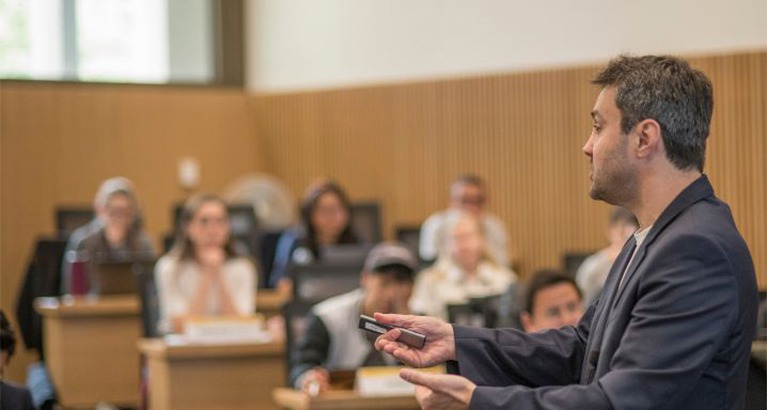
Practical learning is fundamental to the Cambridge Master of Finance and supports the intellectual rigour of the programme.
Unparalleled networking opportunities, leading industry talks, involvement with the wider University and the chance to work on live consulting projects help make the MFin at Cambridge Judge Business School stand out. It provides a hands-on, practical experience, whilst giving you a competitive edge for future career paths.
We spoke to Marwa Hammam, Executive Director of the Cambridge MFin, and MFin alumni Neha Nagaraj and Queenie Zhao, to find out more about how practical learning is woven into the year and the key skills and experience you can expect to gain by joining.
Neha Nagaraj (MFin 2025) told us “the biggest benefit of the practical side on the MFin for me was the accessibility of people working in the industry. Hearing directly from practitioners gives you a much better understanding of different career paths and what firms are actually looking for.”
For Queenie Zhao (MFin 2025) it was more about how the MFin bridged institutional rigour with practical experience. “What stood out to me most about the MFin was how seamlessly it bridged institutional rigour with real-time market reality. Because the faculty and guest lecturers have spent decades in the market, classroom discussions reflect boardroom debates rather than purely abstract theory.”

The biggest benefit of the practical side on the MFin for me was the accessibility of people working in the industry. Hearing directly from practitioners gives you a much better understanding of different career paths and what firms are actually looking for.
Dining with industry executives
One of the best ways to connect with practitioners while on the Cambridge MFin is through the City Speaker Series. “These events take place regularly and bring in senior professionals to give talks and share their experience,” explains Marwa Hammam.
The executives come from a variety of fields, including investment banking, private equity, fintech, quant hedge funds and venture capital. Previous speakers have come from organisations such as Morgan Stanley, UBS, BNP Paribas and Amadeus Capital Partners.
The City Speaker Series involves an in-class talk followed by an interactive Q&A with the industry expert. After the interactive session, a small group of students join the speaker for dinner at one of the Cambridge Colleges. This offers a unique opportunity to learn more about current market developments and gain invaluable perspectives in an informal setting.
The City Speaker Series is designed to encourage open dialogue between the speaker and students, allowing them to explore how theory translates into practice. This ensures that students gain relevant practical knowledge, rather than sitting in a traditional guest lecture.
This experience not only allows students to develop their network but also provides the opportunity to gain live insights from industry experts who are leaders in their fields.
For Neha, this was about building organic relationships and learning about certain sectors from those who are already operating in them. “The combination of speaker events, alumni interactions, consulting projects and special interest group (SIG) activities also creates opportunities to build relationships organically. Rather than simply learning about a particular sector from a textbook, you can have a conversation with someone who is actually working in it and understand where your own background might fit”, she said.
For Queenie it was about discussions and challenges in live market environments: “Initiatives like the City Speaker series bring senior managing directors, fund managers and policymakers directly into the room to discuss live market turbulence and capital allocation challenges” she said.

Initiatives like the City Speaker Series bring senior managing directors, fund managers and policymakers directly into the room to discuss live market turbulence and capital allocation challenges.
Elective courses by experienced practitioners
It’s not just through speaker events that students can engage with industry experts. Practitioners are at the centre of teaching at Cambridge Judge Business School, with classes led by a mix of world-renowned Cambridge academics and those from the industry.
“Many elective courses are designed and delivered by experienced practitioners,” says Marwa. “This provides exposure to emerging areas such as AI in finance, algorithmic trading, sustainable finance, private credit, digital assets, financial innovation and entrepreneurship, from those directly working in the field.”
“Students select which electives they take, tailoring the programme according to their goals. Our aim is to ensure they graduate not only with strong analytical and technical skills, but with a deep understanding of how finance operates in practice.”
Real-world consulting projects
There’s plenty of opportunity to work on real-world assignments while on the Cambridge MFin too, not least via the Global Consulting Project (GCP). “This is one of the programme’s signature experiential learning experiences,” says Marwa.
“Students work with a client organisation over the space of a few months to address a live business challenge, applying the analytical frameworks and technical skills developed throughout the programme. Organisations they might work with range from global financial institutions and investment firms to start-ups and international multi-lateral organisations,” she explains.
Recent projects have included developing growth strategies for fintech companies, advising private banks on engaging ultra high net worth clients, assessing investment opportunities in emerging technologies, supporting AI-enabled healthcare ventures with fundraising and financial planning, and exploring market entry strategies across a broad range of sectors.
Because each assignment addresses a genuine business need, students gain first-hand, practical experience in client management, consulting, teamwork and problem-solving. The projects involve tackling real commercial challenges, with teams often presenting their recommendations directly to senior decision-makers.
Neha and Queenie agree that GCPs are another great way to gain practical experience.
“There are lots of opportunities to get hands-on experience. For my practical project during the spring term, I had the opportunity to work as a student consultant with CBRE Investment Management in London – an experience that tied together everything we covered in the classroom” Queenie said.
For Neha it meant really strengthening her soft skills alongside her technical skills. “For my GCP, I worked with British International Investment (BII), where our team looked at benchmarking investment returns and risk across regions including Africa and South Asia. This really strengthened my teamwork and communication skills, as well as my ability to connect technical analysis with a practical business question”, she said.
Extra-curricular activities, entrepreneurial ventures and the wider university
Beyond the curriculum itself, there are a myriad of ways to expand your practical experience while at Cambridge Judge Business School, and not just within the finance sector.
“Many students become actively involved in special interest groups (SIGs) within the Business School,” says Marwa. “These provide opportunities to explore areas ranging from private equity and venture capital to entrepreneurship, sustainable finance and AI, via workshops, networking events, company visits and speaker sessions.”
“Students are also encouraged to immerse themselves in the larger Cambridge ecosystem,” she continues. “University and College societies offer the chance to meet students from different subject areas, and many collaborate with peers from engineering, computer science and other fields, sometimes working on startups and other projects together.”
The Entrepreneurship Centre at the Cambridge Judge Business School and Cambridge Enterprise, which both fund startups and support entrepreneurial ventures across the University, are also valuable resources for students interested in launching a business venture.
More broadly, being based at the heart of the Cambridge Cluster (or ‘Silicon Fen’) gives students exposure to one of Europe’s most dynamic innovation ecosystems, with opportunities to connect with entrepreneurs, investors and fast-growing companies well beyond the confines of the programme.
“It’s this combination of academic rigour, practical application and access to one of the world’s most dynamic innovation ecosystems that’s difficult to replicate elsewhere,” Marwa says.
The Cambridge MFin extends beyond teaching finance. It helps students develop into thoughtful, commercially minded professionals who can apply their knowledge in complex workplace situations from day one.
Many students build long-term relationships with speakers, alumni, project sponsors and employers through the programme, leading to internships, consulting opportunities, mentoring relationships and full-time roles. While there is no single pathway to career success, these experiences significantly broaden students’ professional networks and can open doors that help shape their future career paths.
Neha explains that SIGs are a great way to engage with people and activities outside of finance. “I was also involved with several special interest groups (SIGs), including being Co-Chair of the Cambridge Middle East Business Society and the Travel & Tourism groups. Through the Middle East Business Society, I helped organise activities, including virtual consulting panels, that gave me the opportunity to engage with professionals and alumni connected to the region. One of the things I also really appreciated about Cambridge was how interconnected the ecosystem is. You’re surrounded not only by people studying finance, but also by students, academics, entrepreneurs, researchers and professionals from completely different disciplines” she said.
“Cambridge encourages you to look beyond traditional finance and think about how finance interacts with technology, innovation and impact. Being in Cambridge has made me much more curious about these intersections and has broadened the way I think about where a finance career can take me” says Neha.
For Queenie, the cohort itself was a big asset to the practical element of the programme. “Because the projects and speaker sessions are practitioner-led, the interactions are grounded in substantive, technical dialogue. You aren’t just networking at a surface level, you’re presenting models, pitching investment theses and discussing live transactions. Also, the MFin cohort itself is one of the biggest assets. Having peers with backgrounds spanning sovereign wealth funds, private equity, consulting and central banks across dozens of countries creates a global sounding board that extends far beyond the duration of the programme.”

It’s this combination of academic rigour, practical application and access to one of the world’s most dynamic innovation ecosystems that’s difficult to replicate elsewhere.
Featured curriculum
City Speaker Series
Our City Speaker Series gives you the opportunity to network with today’s standout finance practitioners. Speakers are experts in their fields, working at the cutting edge of applied finance.
Master of Finance
Engage with the world’s best financial minds and skilled professionals. Open doors to exciting new career possibilities with a Cambridge Master of Finance (MFin).
More from the Cambridge MFin

Programme news
How the Cambridge MFin powers sustainable finance careers
From impact investing to climate risk consulting, sustainability is now a core component of the finance industry – and the Cambridge MFin has evolved to match the demand. We spoke to 2 Cambridge Judge alumni and Professor Khaled Soufani to find out what’s special about working in sustainable finance, the growing importance of ESG in the wider finance sector and how the MFin can help prepare students for a career in the field.
Programme news
Beyond the classroom: Cambridge MFin and Africa’s capital
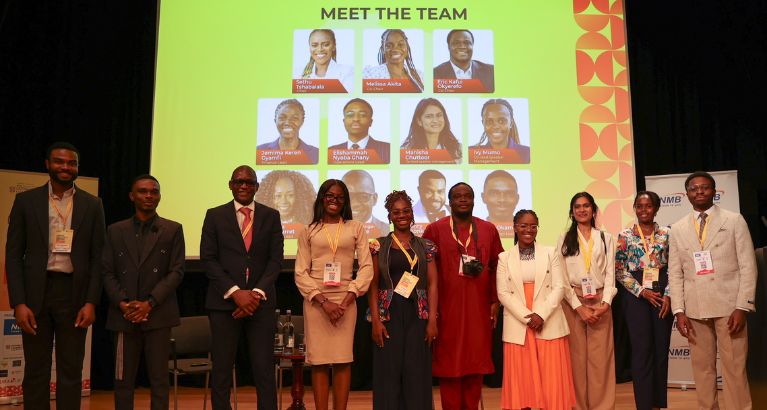
Curious about how finance professionals are engaging with Africa’s growth story during their MFin? Members of the Cambridge Africa Business Network share how organising a major conference, working with leading investors and moderating high-profile panels has helped them connect classroom learning with real-world impact across the continent.

Programme news
How to prepare for the MFin and what to expect
Wondering how to prep for the MFin and how the first few weeks will be once you’re on it? The programme team give us their insider insights and top tips to help you get the most out of the experience.