

Cambridge Risk Research Symposium 2026

18 Jun 2026
09:30 -18:30
Times are shown in local time.
Open to: Specialists and business managers, including threat specialists, academics, policy-makers, practitioners and advisors

Cambridge Judge Business School
Trumpington St
Cambridge
CB2 1AG
United Kingdom
Risk, resilience, and concentrations of power in a hyper-connected world
Please join us for the Cambridge Risk Symposium which is the annual flagship event for the Cambridge Centre for Risk Studies. This multi-disciplinary conference convenes participants from business, policy, and academia to examine challenging global issues.
This year’s Symposium will explore resilience under multi-hazard shocks, the concentration of power in artificial intelligence, and governance in a hyper-disinformation world. As shocks become more complex, interconnected, and fast-moving, traditional assumptions about resilience, governance, and accountability are being challenged.
Participants will hear from a panel of distinguished speakers representing multiple disciplines and perspectives. There will be expert discussions on artificial intelligence, geopolitics, climate change, and business management. In addition, poster sessions throughout the day will showcase current research, the latest analysis of rising geopolitical threats, and emerging insights.
We warmly invite executives, specialists, risk and business managers, academics, policymakers, practitioners, and advisors to join us in exploring these critical topics together.
The conference and networking reception will be held at Cambridge Judge Business School.

Principal knowledge partner

Programme
Session starts at 9.30am
Question #1: What is the Meaning of Resilience
For critical systems such as energy, telecoms, finance, food, and logistics when shocks are increasingly multi-hazard? What decisions in the next 3–5 years keep economies and firms investable and insurable?
The panel will consider geopolitical disruption, extreme weather, and cyber/AI-enabled attacks.
Session lead: Dr. María Fernanda Lammoglia Cobo
Question #2: Concentration of Power via AI
As the United States and China race to dominate frontier AI models and compute power, how will concentrated control over the most capable large language models reshape global power, economic dependencies and the risk of escalation, and what space is left for other countries and firms to retain real agency?
Session lead: Dr. Kevin Tang
Question #3: Firms and Governments Operating in a Hyper-Information World
How should governments and firms manage the new information environment allowing for: AI-generated misinformation, influence operations, and data integrity risks. What can be done to avoid undermining openness, innovation, and civil liberties?
Session lead: Dr. Tim Less
Presentation of the McKinsey Risk Prize Award
Poster session
Session ends at 5pm
Followed by drinks and a networking reception until 6.30pm
Symposium dress is business casual.
Speakers
Risk Research Symposium Chairs
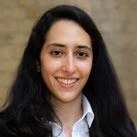
Fernanda Lammoglia
Research Associate, Centre for Risk Studies
Fernanda is a Research Associate in systemic risks at the Centre for Risk Studies. She is a Mexican engineer focused on the application of technology for development and social innovation. Previously, Fernanda worked on gene and cellular therapies for several years and then transitioned to consulting in technology innovation, disaster risk management (DRM) and emergency preparedness and response (EP&R). Fernanda is also a passionate traditional fencer and martial artist, looking forward to this new opportunity to work on systemic risks at the Cambridge Centre for Risk Studies.
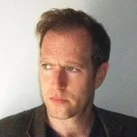
Timothy Less
Geopolitical Analyst, Geopolitical Risk Study Group at the University of Cambridge
Dr Timothy Less runs the study group in geopolitical risk analysis at the Centre for Geopolitics. He also works as a consultant for the private sector with a specialisation in the politics of central and eastern Europe about which he writes and comments for the media.
Previously, he worked as an analyst, diplomat, and policymaker at the Foreign and Commonwealth Office where he led the Countries at Risk of Instability project and ran the British Embassy Office in Banja Luka and the EU Institutions department. He also taught Eastern European Politics at the University of Kent.
Tim holds an MA in Eastern European Studies from the School of Slavonic and East European Studies, an MSt in International Relations, and a PhD in modern history from the University of Cambridge. His recent publications include the ‘City Risk Index 2022’ (co-author, Cambridge Centre for Risk Studies, January 2023); ‘The New Warsaw Pact’ (Engelsberg Ideas, May 2023); and ‘What If? Ten Geopolitical Risks to Keep You Awake at Night’ (GIRO conference paper, November 2023).
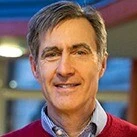
Professor Daniel (Danny) Ralph
Academic Director, Cambridge Centre for Risk Studies
Professor of Operations Research, University of Cambridge Judge Business School
Professor Danny Ralph is a Founder and Director of the Centre for Risk Studies, Professor of Operations Research at Cambridge Judge Business School, and a Fellow of Churchill College.
Danny received his PhD in 1990 from the University of Wisconsin Madison. He was a faculty member of the Mathematics & Statistics Department at the University of Melbourne before coming to Cambridge University for a joint appointment in the Engineering Department and Cambridge Judge Business School.
Danny’s research interests include: risk in business decision making; risk aversion in electricity markets; methods and models for optimisation problems and equilibrium systems. Specific projects undertaken in collaboration with the banking and insurance industry (Catlin, HSBC, ICBC, Lloyd’s, Munich Re, Risk Management Solutions, Swiss Re) cover emerging risk scenarios, financial stress testing and a global ranking of cities by risk exposure. Engagements with other sectors include electricity consultancies (Artelys, LCP), oil and gas (Shell Exploration, Statoil) and retail (BT Retail, Gap) on decision making under high uncertainty. Public service contributions to the UK Cabinet Office, UK Industry and Parliamentary Trust, UK Office of the Government Chief Scientific Advisor, and United Nations World Humanitarian Summit.
Professor Ralph is a member of the Australian Mathematical Society, INFORMS, the Mathematical Optimization Society and SIAM. He was Editor-in-Chief of Mathematical Programming (Series B) from 2007-2013 and has served on the editorial boards of Mathematics of Operations Research and the SIAM Journal on Optimization, as well as the SIAM-MPS book series on optimisation.
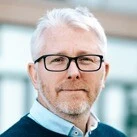
Trevor Maynard
Vice Chair and Director of Systemic Risk at the Cambridge Centre for Risk Studies
Dr Trevor Maynard is the Director of Systemic Risk at the Cambridge Centre for Risk Studies located at the Judge Business School.
He qualified as an actuary and holds a PhD in Statistics from the LSE and a Masters in Pure Mathematics from the University of Warwick.
His work has involved risk modelling in various guises from Pensions and Life Assurance to general insurance, working for firms such as Lloyd’s of London and Mercer. Whilst at Lloyd’s his team produced risk reports on subjects including Pandemics, Climate Change, Deep tail Marine disasters, Nano Technology, Geopolitics, AI, Robotics and IoT working with many think tanks, universities and specialist risk modelling firms.
Additionally he advises insurtech firms on risk and data science.
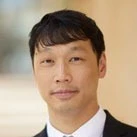
Kevin Tang
Researcher, Centre for Risk Studies
Kevin is a researcher at the Cambridge Centre for Risk Studies. His research looks at climate disaster risk and recovery, systemic economic and climate risk, and global trends, networks, and linkages in the design and analysis of risk taxonomies and scenarios. He has worked in research related to climate financial risk, including input/output analysis of climate-economy modelling, climate scenario modelling and stress testing, carbon accounting, energy systems, and transition and fiscal policy. He has been a researcher at Oxford University’s School of Geography, Department of Economics, and the Said Business School, where he has worked on topics related to international trade, competition, infrastructure, international development, inequality, and long-run growth. He has been a lecturer at Oxford University and the University of Buckingham. He holds a PhD and MSc from Oxford University, and a BA from Northwestern University.