

Business education can change our future and help calm the climate crisis by training a new generation of leaders who understand how to balance growth with sustainability. I hope to see that natural limits are respected and that humans understand the true meaning of nature\r\nand prosperity better.
Business education at Cambridge has helped me understand business could be sustainable and yet profitable. Climate change is not only a macro-trend, but a mega-trend because it impacts everybody across the globe threatening certain sectors and industries while providing opportunities for others.
The Cambridge MBA motivated me to dare to tackle complex, massive, wicked problems. The coursework, the projects, the classmates were all fundamental stepping stones and compass that gave me the confidence to start a venture combatting climate change.
In order to understand the sheer scale of the economic and societal change that’s required to get us to net zero in the next 30 years you have to study economics and public policy.
A good business education can shape raw human intelligence into powerful, vocational purpose.
Business education is uniquely placed to help translate the social, economic and environmental risks that we face from the climate and biodiversity crisis into opportunities not just to do less harm, but actually to do more good in the world.
We need to stop talking and start acting. And a major contributor to solving the problem are going to be entrepreneurial, high growth businesses focused on clean tech and reducing CO2.
I want each one of us to think about the habits and the choices we make every single day of our lives and try to bring in small, conscious changes in the way we live, to make this world a more sustainable place for ourselves and for the future.
IN CRISIS
Insights from Cambridge Judge on developing a sustainable future.
Climate change and nature: what business needs to know
Jennifer Howard-Grenville, Diageo Professor in Organisation Studies at Cambridge Judge authored a chapter in the Business Schools for Climate Leadership digital toolkit. The toolkit was released at the COP26 climate-change conference in Glasgow, by Business Schools for Climate Leadership, to help business leaders pose key questions and assess their readiness to act effectively to tackle this planetary emergency.
Our areas of expertise


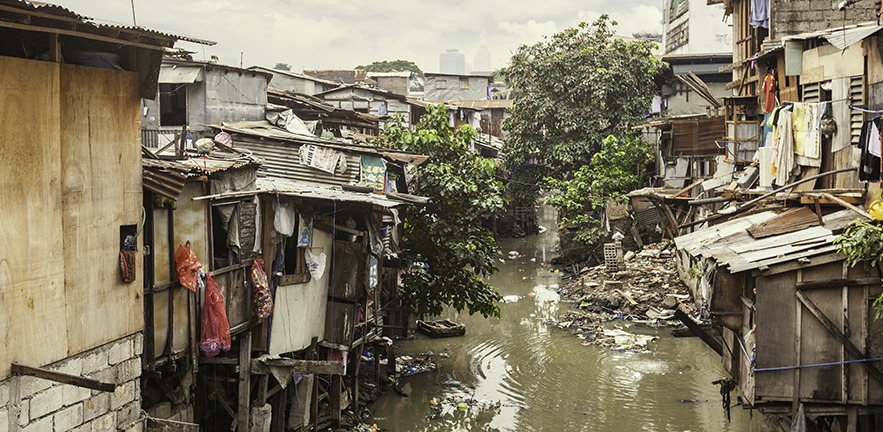


Thought leadership on sustainability
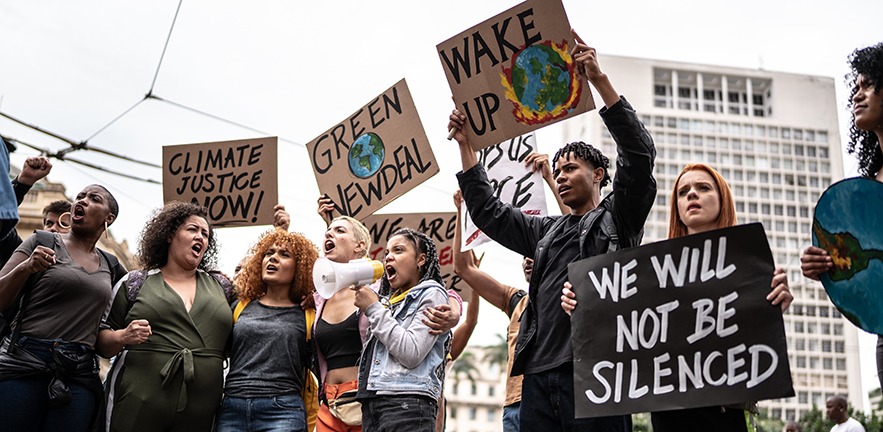
Governance, economics and policy
Why COP27 was always going to just be a placeholder
It is unrealistic to expect breakthroughs at every climate summit yet they are still important, says David Reiner, Professor of Technology Policy at Cambridge Judge Business School.
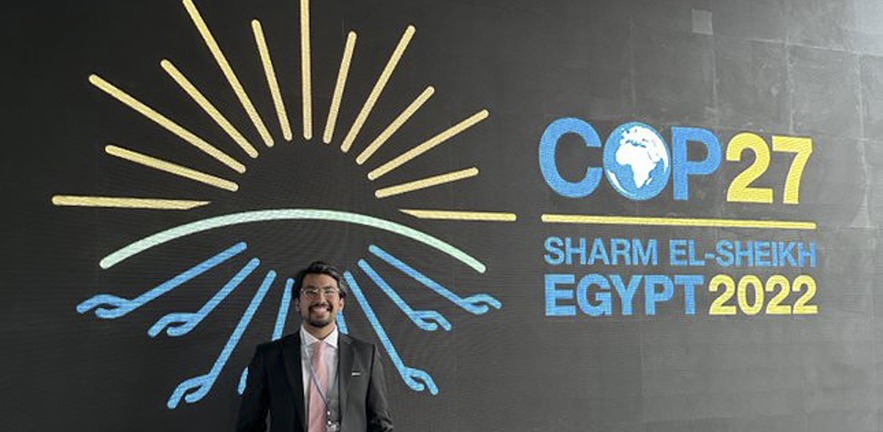
Andika Aufar Satria, a Cambridge MBA student at Cambridge Judge Business School, leads a non-profit organisation in Indonesia called the Society of Renewable Energy and has worked on climate engagements as part of the Boston Consulting Group. He is part of Indonesia’s delegation to the COP27 climate summit, and offers his view on the gathering in Egypt.
Career and personal development
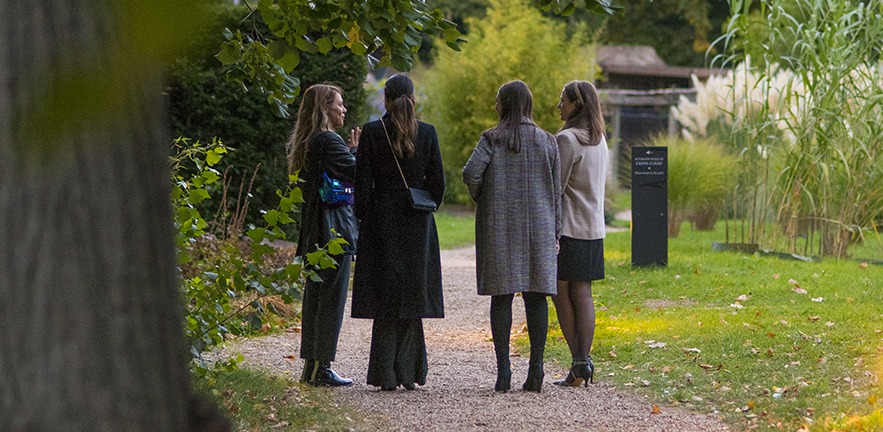
Careers with impact: how the Cambridge MBA puts ESG at the forefront
On the eve of COP27, with world leaders gathering in Egypt, we explore how an MBA from Cambridge Judge Business School can equip you for leadership in the sustainability or ESG space and we meet 2 MBA alumni whose career goals led them into the field after their Cambridge MBA.

Green innovation is key to addressing climate change, Kamiar Mohaddes of Cambridge Judge Business School says in latest webinar of Business Schools for Climate Leadership.

David Orr, a Visiting Associate at Cambridge Judge, wins the UN Global Compact Sustainable Development Goals Pioneer for Climate Mitigation award.

Having worked in the energy sector focusing on fossil fuels, Cambridge Judge alumna, Belinda Knox (MBA 2006) had an epiphany moment that set her on the path to decarbonising her career.

ESG and sustainability
Businesses must back up their sustainability promises says new handbook
Businesses need to back up their 'exciting' narratives on sustainability with clear implementation, says a new Handbook on the Business of Sustainability co-authored by faculty and others at Cambridge Judge Business School.

Research centre news
New ways of philanthropic giving: blended finance and the SDGs
Blended finance is an approach to global development co-operation that recognises that private capital has a pivotal role to play in meeting the Sustainable Development Goals (SDGs) for 2030.

Business schools must do more to address climate change, says Harvard Business Review article by representatives of eight European business schools including Professor Jennifer Howard-Grenville of Cambridge Judge Business School.

Insight
Final COP26 reflections
David Reiner, Associate Professor in Technology Policy at Cambridge Judge Business School, says future climate-change investment rather than words will be the test of COP26.

Insight
Climate bottleneck
Nature-based solutions and new international institutions could help solve current roadblocks to fighting climate change, a Cambridge Judge webinar is told.

David Reiner, Associate Professor in Technology Policy at Cambridge Judge Business School, looks back at the first week of COP26.

Student and alumni news
Green football trophy win
Cambridge United win the 'CUP26' trophy for green activity awarded by Planet Super League, which was co-founded by Cambridge MBA alumnus Tom Gribbin (MBA 2013).

Misc news
Climate-saving invention
A doubling of ‘green’ patent filings will lead to a 4.8 percentage point boost in real GDP growth, says study for KPMG authored by University of Cambridge economists including Kamiar Mohaddes of Cambridge Judge Business School.

Insight
Glasgow thoughts
Why is COP26 a big deal but not much may happen? A blogpost by David Reiner, Associate Professor in Technology Policy at Cambridge Judge Business School, lays out the background and his opinions going into the event in Scotland.

Insight
Electric attitudes
New study led by University of Cambridge researchers, based on 36,000 Facebook posts, finds that social justice and health issues impact electric vehicle uptake.
Business Schools for Climate Leadership, a group of eight European business schools including Cambridge Judge, launch a second series of webinars to accelerate climate-change action.
Read our article on uniting for the planet’s future
Business and sustainability
Leading European Business Schools including Cambridge Judge Business School unite to accelerate business response to climate crisis.

Experts on sustainability at Cambridge Judge
Our faculty and leaders at Cambridge Judge Business School can offer expert opinion on developing a sustainable future.
Robert W. Wilson Trust Natural Allies Environmental Leadership Program
Developing the collaboration between business, government and ENGOs.
The Natural Allies program centres on the need to hear the voices of members of governments, business and ENGOs to develop insights and strategies into how best to collaborate with one another to deliver solutions to the issues of sustainability.
Get in touch
Cambridge Judge Business School
University of Cambridge
Trumpington Street
Cambridge CB2 1AG
UK
Tel: +44 (0)1223 339700
Follow us
Keep on top of the latest sustainability content from Cambridge Judge.