


For several years, scholars and practitioners alike have wrestled with some key question regarding generative AI (GenAI) and human beings: can AI be as creative as humans, and how can humans and AI best work together to boost creativity? Numerous studies have yielded widely inconsistent results in how an AI-human combination can handle creative tasks.
Research co-authored by Yeun Joon Kim, Associate Professor in Organisational Behaviour at Cambridge Judge Business School, tackled this issue in a different way – and it provides valuable insight on how AI and humans can best work together creatively. The findings: while collaboration between humans and generative AI does not automatically enhance their joint creativity even after multiple rounds of co-creation sessions, joint creativity does improve over time if there are instructions and guidance on idea co-development. The research offers important practical insight for improving human-AI co-creation to achieve greater joint creativity.
“The overall message from our research is that for human-AI dyads (pairs) to achieve augmented learning and sustained creativity, they cannot rely on natural evolution of the collaboration,” says Joon. “Instead, organisations must provide targeted support – such as guidance on idea co-development – to help employees and AI learn how to co-create effectively.”
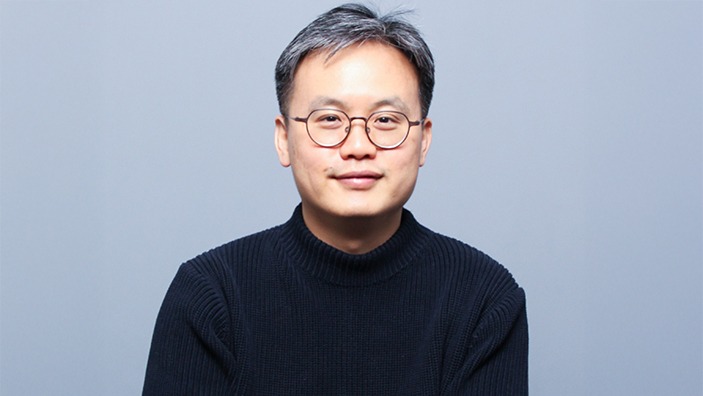
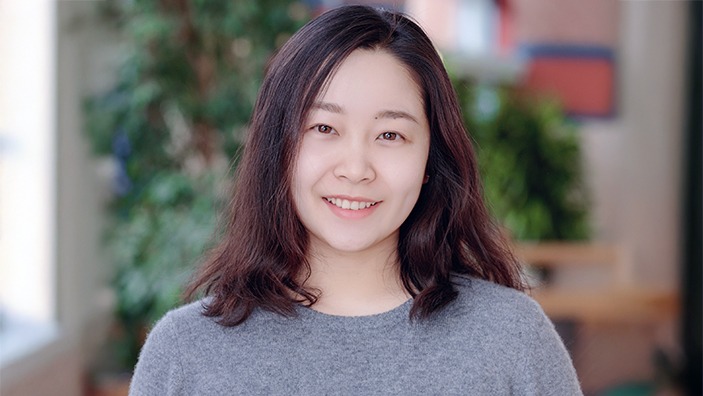
The research is co-authored by Luna Luan, a Lecturer in Management at the University of Queensland in Australia who recently earned her PhD at Cambridge Judge Business School, Yeun Joon Kim of Cambridge Judge Business School and Jing Zhou, Professor of Management at Rice University in Texas.
New theory of augmented learning explains human-AI creativity
One key aspect of the research is that it introduces a novel theory that develops a new conceptualisation of augmented learning, a concept first identified in a 1962 study as the phenomenon in which technology enhances human ability to acquire knowledge more effectively.
The research by Joon and colleagues shifts the focus of augmented learning from traditional human cognitive learning to collective learning between human and AI. In the context of human-AI co-creation, they define augmented learning as an evolutionary process in which humans and AI continuously adjust their levels of involvement across various co-creation activities (e.g., idea generation, feedback provision, combining ideas, refining existing ideas) in order to improve joint creativity over time.
How generative AI changes the role of creativity in innovation
While the original concept of augmented learning viewed technology as a supportive tool that boosts human cognitive learning by making existing data and other information more accessible, the advent of GenAI “has transformed technology from a passive assistant to a potential co-creator,” says the research, adding:
“Although GenAI, by definition, must be initiated by humans, once collaboration begins, it can actively participate in tasks and decision-making. In this way, GenAI moves beyond the traditional role of technology as a mere tool for supporting human cognitive learning. Therefore, we propose that the focus of augmented learning between humans and GenAI should shift from an intrapersonal cognitive phenomenon to a collective, intersubjective process. In this reconceptualisation, augmented learning can be understood through collective learning between humans and GenAI.”
Although GenAI, by definition, must be initiated by humans, once collaboration begins, it can actively participate in tasks and decision-making. In this way, GenAI moves beyond the traditional role of technology as a mere tool for supporting human cognitive learning.
What the creative workflow at Netflix shows about effective human-AI pairing
An example cited in the research as illustrative of effective human-AI pairing are the creative production workflows at Netflix. Humans and AI collaborate at Netflix in script and content generation, but “instead of treating script development as a single task, Netflix breaks it down into sub-activities such as idea generation, evaluation, and selection, each involving different degrees of human and AI participation”.
So while human writers generate early drafts and storylines for Netflix productions, AI is used to assess character development, narrative pacing and patterns of audience demand to help refine scripts and position the production in a way that can be best marketed to audiences.
Why past research missed the full picture of human-AI creativity
The research by Joon and colleagues traces previous studies in this area, highlighting that these studies (which have had positive, negative and mixed results) have focused on only a single collaboration between humans and GenAI on single-round creative tasks. “These inconsistencies show that the existing approach to understanding the relationship between human-GenAI co-creation and joint creativity is limited, pointing to the need for a new theoretical lens,” the research says.
That new lens, outlined in a study published in Information Systems Research, is anchored in the concept of augmented learning in which humans and GenAI engage in an evolutionary process over time in order to improve creativity. “This reconceptualisation reflects our new theoretical insights that the primary goal of human-GenAI co-creation is not limited to producing a single creative outcome but rather to achieving continuous improvement in their joint creativity via augmented learning,” say the authors. As both humans and GenAI have limitations, this evolutionary process allows both humans and GenAI to continually adjust their roles in co-creation activities in a way that fosters joint creativity.
How the researchers became interested in the topic
Joon says he became interested in this research because AI was originally developed to answer a longstanding question: “Can machines generate something genuinely new?” – because while traditional technologies excel at routine tasks, many doubted that technology could contribute creatively.
“Yet, paradoxically, past studies showed that human-AI co-creation sometimes produced less creative outcomes than humans working alone,” he says. “This misalignment between AI’s stated purpose and its actual performance motivated me to investigate what was going wrong. When GenAI systems became widely accessible, I also noticed that although they could generate ideas rapidly, people did not know how to collaborate with them in a way that actually improved creativity. This led me to explore whether humans and AI could learn together through an iterative, dynamic adjustment of roles – ultimately inspiring our reconceptualisation of augmented learning as a collective learning process between humans and AI.”
Adds co-author Luna Luan: “I became interested in this topic through my own early interactions with GenAI. I was struck by how effortlessly it could produce a large number of ideas, yet it wasn’t obvious how to turn those initial ideas into better outcomes. That experience made me curious about how people can learn to work with GenAI in a more intentional way so that human-GenAI co-creation actually leads to stronger joint results rather than just more content.”
I became interested in this topic through my own early interactions with GenAI. I was struck by how effortlessly it could produce a large number of ideas, yet it wasn’t obvious how to turn those initial ideas into better outcomes. That experience made me curious about how people can learn to work with GenAI in a more intentional way so that human-GenAI co-creation actually leads to stronger joint results rather than just more content.
3 studies that led to findings on human-AI creativity
The research consists of 3 interrelated studies:
1
Human-AI pairs don’t get more creative on their own
This study found that human-AI co-creation did not automatically lead to improved joint creativity over time, even after 10 rounds of creative tasks. In other words, human-AI pairs failed to achieve augmented learning spontaneously. The study was conducted with 162 participants randomly assigned to either human-AI co-creation or human-only ideation in social and environmental issues such as climate change. For example, participants were asked to suggest creative ways for society to save water, to keep a local park clean and to advocate for more city bike lanes.
2
Identifying key co-creation activities
This study, involving 166 participants, examined human-AI dialogues that identified creative ideas for business-related issues such as reducing employee theft and cracking down on excessive coffee breaks, then investigated why these human-AI sessions failed to enhance joint creativity over time.
As part of Study 2, the researchers identified 3 co-creation activities employed by human-GenAI pairings during co-creation activities:
- idea generation-response, referring to co-creation activity in which humans generate new ideas and propose them to AI, which offers responses to the ideas
- idea request-idea generation, where humans request AI to generate new ideas, which AI does
- idea co-development, which emphasises refinement of ideas through critical feedback exchanges and the joint refinement of generated ideas
Based on these three emerging co-creation activities, the authors showed that the failure to achieve spontaneous augmented learning occurred because human–AI pairs did not increase their engagement in idea co-development—the only activity that improved joint creativity over time.
3
Instructions on co-development significantly boost creativity
In this study, also involving 166 participants, the authors conducted an empirical test to assess whether instructions that encouraged participants to engage more in idea co-development could enhance joint creativity over time.
This study demonstrated that such instruction and guidance resulted in significant creativity improvement across rounds.
Feedback and refinement, not more idea generation, drive creativity
“We were surprised that human-AI pairs did not naturally improve through repeated collaboration,” says Joon. “Despite AI’s generative power, there was no spontaneous augmented learning: creativity simply did not increase over time. We found that improvement occurred only when we introduced a deliberate intervention.”
“Specifically, instructing participants to engage in idea co-development – focusing on feedback and refinement rather than endlessly generating new ideas – was the key. Equally surprising was that idea generation itself had no relationship with joint creativity in human-AI collaboration, directly contradicting what we know from human-human creative teamwork.”
Practical implications
Implications for AI designers
Build tools to support co-creation.
From a practical standpoint, the findings highlight that GenAI systems must be designed to support more than idea generation. Because the study shows that human-AI pairs failed to achieve improved joint creativity largely due to declining engagement in idea co-development over time (feedback exchange and iterative refinement), designers should build GenAI tools that actively prompt, scaffold and sustain co-development activities.
This includes features such as interactive feedback loops, mechanisms that encourage elaboration or critique of emerging ideas, and prompts that guide users toward deeper refinement rather than rapid idea production.
Implications for organisations
Train employees how to co-create with AI.
For organisations, the authors emphasise that effective human–AI co-creation requires deliberate structuring and guided learning, rather than assuming that creativity will improve automatically. The paper shows that augmented learning does not occur spontaneously and instead requires purposeful intervention— – such as templates, instructions, or structured workflows— – to help humans recognise when and how to engage in effective co-creation activities.
As a result, organisations should invest in training and development programmes that teach employees how to use GenAI not only as an idea generator but as a collaborative partner for refining and improving ideas. Such programmes should include hands-on exercises that cultivate skills in giving and receiving feedback with AI, integrating and reframing ideas, and iteratively improving concepts.
A new mindset for human-AI collaboration
The study also urges a mindset shift in how organisations conceptualise human–AI collaboration. Instead of treating automation (AI doing the task) and augmentation (human–AI doing the task together) as a binary choice, the authors argue that tasks should be broken down into distinct co-creation activities with varying levels of human and AI involvement.
This expanded spatial scale allows organisations to match human and AI strengths more precisely for example– e.g., using AI for broad idea generation while positioning humans as critical evaluators and context experts during co-development. Such decomposition also supports augmented learning over time by enabling teams to iteratively adjust involvement patterns as they better understand the strengths and limitations of both humans and AI.
“Since the release of ChatGPT in 2022, many companies have rushed to adopt GenAI systems, driven by the belief that GenAI will empower employees to generate more creative ideas and thereby enhance overall firm performance,” the authors conclude. “However, our research shows that the mere implementation of GenAI does not automatically offer these benefits. Particularly with GenAI, the effectiveness of its integration depends significantly on how well human users understand and interact effectively with it.”
Featured academics
Yeun Joon Kim
Associate Professor in Organisational Behaviour
Yingyue (Luna) Luan
PhD alumna
Featured research
Luan, Y.L., Kim, Y.J. and Zhou, J. (2025) “Augmented learning for joint creativity in human-GenAI co-creation.” Information Systems Research (DOI: 10.1287/isre.2024.0984) (published online Nov 2025)
Related articles
What if the future of artificial intelligence wasn't about building ever-bigger systems, but about building smarter ones?
Research centre news
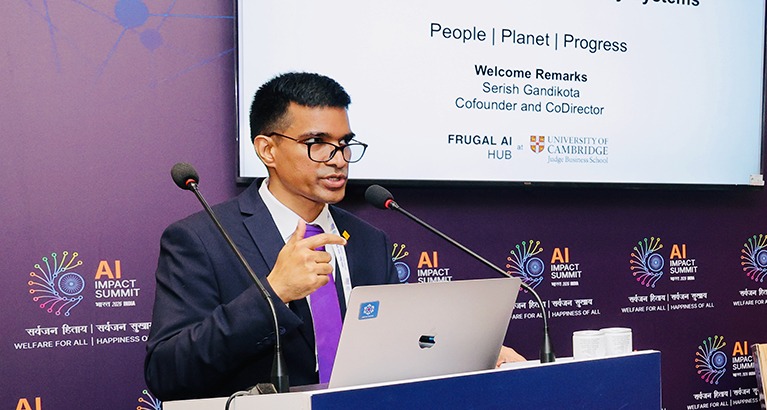
Frugal AI takes the stage at India AI Impact Summit 2026
The Frugal AI Hub at Cambridge Judge Business School hosted a session at the India AI Impact Summit 2026, an important global event for AI policy and innovation, contributing to a high-profile dialogue with global policymakers and industry leaders.
Programme news
Bringing case studies alive through AI
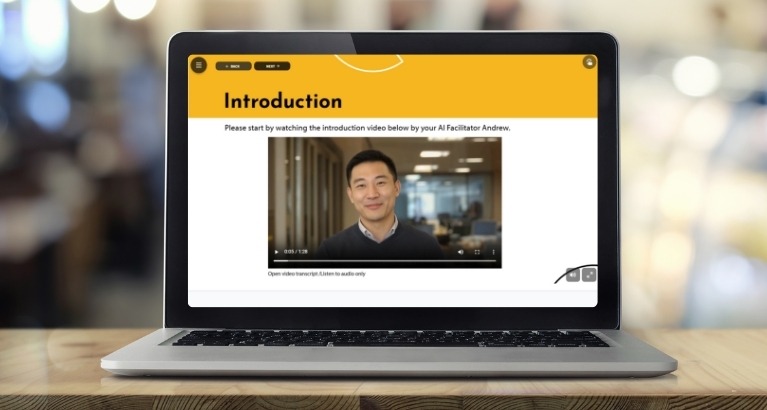
A new interactive platform driven by AI allows Executive Education participants at Cambridge Judge Business School to chat electronically with the CEO, CFO and other top executives of a fictional battery-making company. Their candid answers provide insight in a way the printed page cannot, and the system has proved very popular at the Advanced Leadership Programme at the Business School.