

“An environmentally and socially sustainable food system can only be achieved through a transformation of the way foods are produced, consumed and traded,” says the report.
“This chapter explores solution pathways for building a transformative food system, from food production to consumption, and back again, capturing the full cycle from ‘farm to fork’. It examines necessary transformations – for crops, livestock and fisheries – alongside dietary changes, including plant-based foods and novel alternative proteins. The chapter also highlights the key roles of governance, education, circular economic approaches, food distribution and marketing, all within the context of adapting to environmental and social change.”
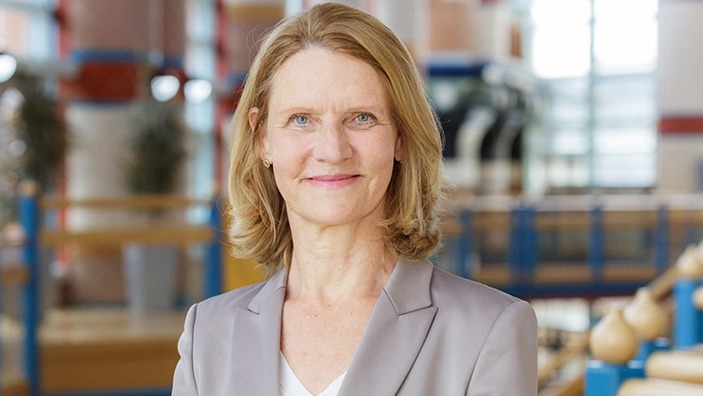
Lucia Reisch, Director of the El-Erian Institute, is a Contributing Editor to the report, which was launched on 9 December at an event in Nairobi, Kenya.
The cited El-Erian studies cover consumer behaviour and policy choices
The El-Erian-linked studies cited in the report explore:
1
Supermarket settings
Behavioural innovations in a supermarket setting to nudge customers toward more sustainable grocery purchases.
2
Food delivery apps
How choice architecture promotes sustainable choices in food delivery apps such as Just Eat and Deliveroo.
3
Food production
Contemporary issues and policies in sustainable food production, including various policy interventions such as information-based instruments, market-based initiatives, direct regulations and nudges.
4
Reducing greenhouse emissions
The need for consumers to switch to more plant-based diets and to waste less food in order for food systems to reduce their greenhouse gas emissions.
A simple choice for humanity, says UN Environment Programme head
“The Global Environment Outlook lays out a simple choice for humanity: continue down the road to a future devastated by climate change, dwindling nature, degraded land and polluted air, or change direction to secure a healthy planet, healthy people and healthy economies. This is no choice at all,” says Inger Andersen, Executive Director of the UN Environment Programme.
“And let us not forgot the world has already made so much progress: from global deals covering climate change, nature, land and biodiversity, and pollution and waste, to real-world change in the booming renewables industry, global coverage of protected areas, and the phasing out of toxic chemicals. I call on all nations to build on this progress, invest in planetary health and drive their economies towards a thriving, sustainable future.”
Featured research
UN Environment Programme (2025) The Global Environment Outlook, Seventh Edition: A Future We Choose. Brussels: UN.
Bauer, J.M., Aarestrup, S.C., Hansen, P.G. and Reisch, L.A. (2022) “Nudging more sustainable grocery purchases: behavioural innovations in a supermarket setting.” Technological Forecasting and Social Change
Lohmann, P.M., Gsottbauer, E., Farrington, J., Human, S. and Reisch, L.A. (2024) “Choice architecture promotes sustainable choices in online food-delivery apps.” PNAS Nexus
Reisch, L., Eberle, U. and Lorek, S. (2013) “Sustainable food consumption: an overview of contemporary issues and policies.” Sustainability: Science, Practice and Policy
Reisch, L.A. and Sunstein, C.R. (2021) “Plant-based by default.” One Earth
Related articles
Research centre news
How behavioural science can better promote conservation
Research and other initiatives at Cambridge Judge Business School seek to better apply behavioural techniques to conservation, which has lagged behind other fields in boosting outcome through behavioural approaches.
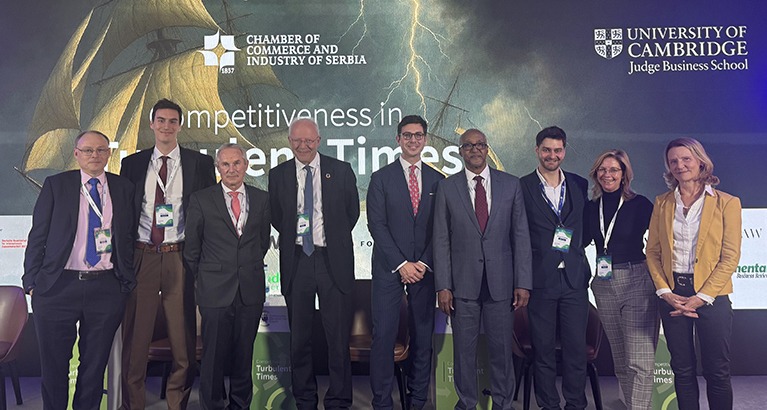
Cambridge Judge Business School faculty and staff were among participants at the Sustainable Development Forum 2025 held in Belgrade, Serbia, on 30-31 October, which focused on cross-sector collaboration involving government, industry and academia in order to tackle the green transition and achieve sustainable development.

Research centre news
Recent report: when innovation meets public opinion
2025 TechnikRadar’s findings offer a strategic lens for aligning technological development with societal values.