


There is little doubt that creativity is essential for companies to innovate in ways that refresh their product lines and stay ahead of the competition, and the novel ideas of such creators hold big sway within firms. So it’s been widely assumed that a higher proportion of creative team members translates into more innovative team performance.
Yet this so-called maximisation fallacy has clear flaws, because in simply aggregating all team members’ creativity it fails to take into account the social and professional interactions among team members – as such dynamics can often be the key to whether teams’ creative output is fostered or hindered.
As extensive research has pointed out, creative people can be prima donnas who are unable or unwilling to follow team norms and implement ideas in a disciplined manner. Although the tendency to break rules and engage in extensive exploration may foster creativity, they may also worsen intrateam co-ordination and increase team conflict.
Reconciling conflicting views on creativity and team composition
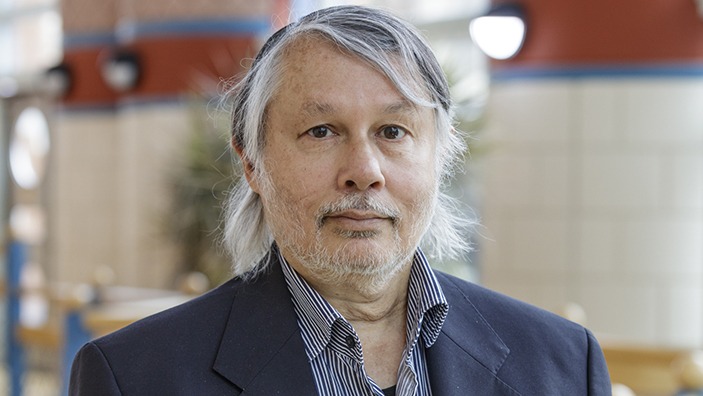
Research by Prithviraj Chattopadhyay, Professor of Organisational Behaviour at Cambridge Judge Business School, aims to reconcile this conflict between research that focuses on the innovative role of creative team members and studies that highlight the hidden costs of such creative types – costs that include the resource-intensive nature of creative team members owing to their own perception that their creativity requires more resources.
“The traditional assumption with regard to building teams and creativity was the building-block view, that the more creative people you put into a team the more you get out, but we show that it’s not that simple,” says Prithviraj. “Creative people can be chaotic, so there are opposing views to this building-block view, and our research aims to bridge the gap between those views in a practical and useful way.”
The research by Prithviraj and colleagues finds that there is an inverted U-shaped relationship between the proportion of creative team members and team innovation: creativity, in terms of registered patents, increases up to a certain intermediate point as the proportion of creatives on a team rises, but creativity then declines if that creative team proportion gets bigger. “When an R&D team is overcrowded with creative members, the increased complexity of co-ordinating their creative ideas and higher levels of conflict may adversely affect their team’s innovative performance,” the research says.
The traditional assumption with regard to building teams and creativity was the building-block view, that the more creative people you put into a team the more you get out, but we show that it’s not that simple.
How HR management including pay dispersal affects team creativity
Breaking new ground, the research then goes on to examine how participative management (often centred around enhancing job characteristics and granting more autonomy to team members) and pay dispersion (in which work of certain team members receives higher monetary reward) affect this U-shaped curve, as previous research has not focused on the joint impact of team attributes and such human resource management (HRM) practices.
The findings, as outlined in the study: “We found an inverted U-shaped relationship between the proportion of creative team members and team innovation when the levels of participative management and pay dispersion are high. We found the relationship between the proportion of creative team members and team innovation to be linear and positive mostly when the levels of participation or pay dispersion are low. Overall, these results support our key propositions that higher proportions of creative team members do not always lead to higher levels of team innovative performance, and that HRM practices implemented to stimulate innovation may backfire unless they are considered alongside team composition.
“Overall, we suggest that managers think carefully about the combination of initiatives they undertake to boost innovation, instead of blindly following the dictum that more initiatives undertaken to boost creativity is always better.”
Creativity research fits in with work on team composition and individual behaviour
Prithviraj says his recent research on creativity and team composition fits in well with a long line of studies throughout his career looking at team composition and individual attitudes and behaviours, although this is his first foray into studying team performance.
“My work since my dissertation has focused on understanding how team member outcomes such as their altruistic behaviour, level of conflict experienced and influence in the team can be shaped not just by their attitudes and behaviours but also team composition – specifically how individuals are different from their peers in salient characteristics. I’ve looked at race/ethnicity, nationality, gender, at age, at functional backgrounds, and this research was on creativity.”
My work since my dissertation has focused on understanding how team member outcomes such as their altruistic behaviour, level of conflict experienced, and influence in the team can be shaped not just by their attitudes and behaviours but also team composition.
Why structure and routine matter for team success
Prior research by Prithviraj had found that teams are most likely to function best when their membership includes people who are expert in the team’s core function and offer key ideas, as well as others who play supporting roles that co-ordinate activities and strengthen processes through which the team achieves its desired outcome.
Drawing on this, the more recent research by Prithviraj argues that “teams with too many creative experts may function poorly because the creative members often engage in competition for limited resources and, in so doing, increase team conflict and inhibit team co-ordination”.
Regarding participative management, the research finds that a high level of participative management “tends to blur the task and territory boundaries of team members, thereby increasing the complexity of intrateam co-ordination” – and this can lead, through blurred territorial boundaries, to team members pushing their own ideas at the expense of their teammates’ contributions as they seek to garner resources. In contrast, when participative management is low, team members are more likely to “stick to his or her own job description and the team will have greater clarity of roles, procedures, and authority related to task ownership.”
As for pay dispersion: while this can play a critical role in boosting employee motivation, differentiating between high and low performers can also encourage a focus on personal goals at the cost of overall team performance. Previous studies on sports have borne this out, showing, for example, that high pay dispersion in football is related to more individual actions such as runs and dribbles rather than co-operative plays like passes.
Examining creativity in R&D teams during a time of change
The research by Prithviraj uses data from South Korea around the time of the Asian financial crisis in the early-to-mid 2000s, when companies led by tech giants Samsung Electronics and LG Electronics led a war for talent that focused on recruiting talented workers rather than the traditional seniority-based system of labour.
The data, from the Human Capital Corporate Panel (HCCP) collected by the Korea Research Institute of Vocational Education & Training, assessed team members’ job competency for creativity based on several categorisations:
1
Creator
Creators are team members capable of creative and innovative job performance.
2
Trainer
A trainer is a team member who teaches others but does not work on creative things.
3
Highly independent performer
Someone who ably performs duties within job requirements.
3
Dependent performer
Dependent performers are those who need guidance from others in conducting their duties.
The average size of research and development (R&D) teams studied was 17, though Korean firms varied in their proportion of creative members among R&D teams. “Although many types of teams consider innovativeness to be an important component of their work, we focused on R&D teams because innovative outputs are central to their mission,” the authors say.
This proportion of creative team members was then assessed, based on firms in the HCCP data set, against patent registration data from the Korean Intellectual Property Office. The sample included only those companies with a single R&D team in order to test against only one team’s innovation, and the final sample included 120 R&D teams from the same number of firms.
Balance matters when assembling teams
The research by Prithviraj shows that balance matters more than sheer numbers when it comes to assembling creative teams. The inverted U-shape identified in the research underlines the importance in effective teams of support roles and collaboration, thus challenging the pile-them-high assumption when it comes to building creative teams.
At the same time, the research cautions that common human resources practices such as differentiated pay, while aiming to spark innovation, can backfire when applied to teams with many creative individuals.
“The practical implication is that you’ve got to think about who you include on a team, as more isn’t necessarily better,” says Prithviraj. “To have a proper team you need to recognise the team’s strengths and weaknesses from an individual and group perspective.”
Challenging assumptions around creativity, gender pay gap and cost overruns of megaprojects
This recent research that challenged more-is-better beliefs on team creativity also fits in with Prithviraj’s work since mid-2024 as an Editor of the Academy of Management Discoveries journal, which focuses on research that challenges assumptions and opens new theoretical paths for scholarship.
In an introductory essay to the journal’s recent 10-year anniversary issue, Prithviraj, along with 3 other current and past Editors, cited 2 recent winners of the journal’s 10-year impact awards: a 2024 study challenging beliefs that the gender pay gap reflected women’s lower propensity to negotiate salary (the study said this had previously been the case, but had since been reversed), and a 2022 study challenging scholarly and lay consensus on why megaprojects are prone to cost overruns (the authors found that such cost hikes result from “nuanced organisational governance adaptations” intrinsic to huge projects).
Featured research
Jeong, I., Chattopadhyay, P., Shin, S.J. and Park, O. (2024) “When less is more: the proportion of creative members and R&D team innovative performance.” Human Performance, 37(4): 163-183 (DOI: 10.1080/08959285.2024.2366222)
Miller, C.C., Chattopadhyay, P., Bamberger, P. and Rockmann, K. (2025) “Leveraging empirical abduction to bridge the rigor–relevance divide: celebrating 10 years of Academy of Management Discoveries.” Academy of Management Discoveries, 11(3): 325-331 (DOI: 10.5465/amd.2025.0239)
Related articles

AI and technology
Beyond AI: what about the human side of the future of work?
How the focus on artificial intelligence and other technologies risks obscuring the essential role that human emotion and ingenuity play in how the modern workplace will develop.

Entrepreneurship and innovation
Why too many creative people can stifle team innovation
Does having more creative members in research and development (R&D) teams translate to higher team innovative performance? Only to a certain point, says a new study co-authored by a Cambridge Judge Business School professor.

Equality, diversity and inclusion
3 ways diversity can impact team dynamics
Three recent studies by new Cambridge Judge faculty members Elizabeth George and Prithviraj Chattopadhyay look at how diversity in gender, geography and pay grade affect the modern workplace.