

Predictions from our faculty for 2026
Opportunities for knowledge-based solutions in a turbulent world
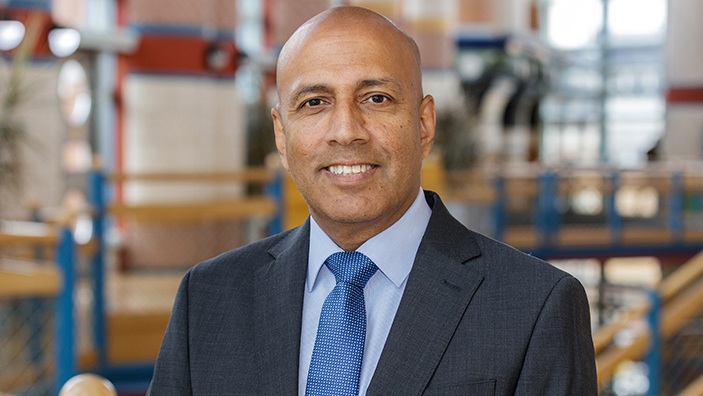
Thoughts from Gishan Dissanaike, Dean of Cambridge Judge Business School.
Following a turbulent 2025 on many fronts, 2026 will likely be another year of upheaval in areas ranging from climate change to cybersecurity to supply chain fragility. These challenges are global and interconnected, and while the world faces huge risks there are also enormous opportunities for knowledge-based solutions. History reminds us that periods of profound uncertainty and adversity often give rise to transformative innovation – including inventions during the Great Depression of the 1930s that included the car radio, instant coffee and (not everyone may love this next one) the parking meter.
I have no doubt that the current period of turbulence will lead to breakthroughs that will change the lives of this and future generations. At Cambridge Judge Business School, many of our initiatives in areas such as climate change, AI and healthcare involve members of the Business School community working alongside peers in other departments of the University of Cambridge and practitioners in the hugely successful Cambridge ecosystem. This is all by design because, in today’s volatile environment, business schools embedded within world-class universities are uniquely positioned to help leaders navigate complexity. Cambridge’s longstanding international networks and intellectual breadth offers an advantage in equipping individuals and organisations to innovate responsibly and lead successfully – and that, after all, is the core mission of a world-class business school.
Adaptable humans pursuing, perhaps, the possible future
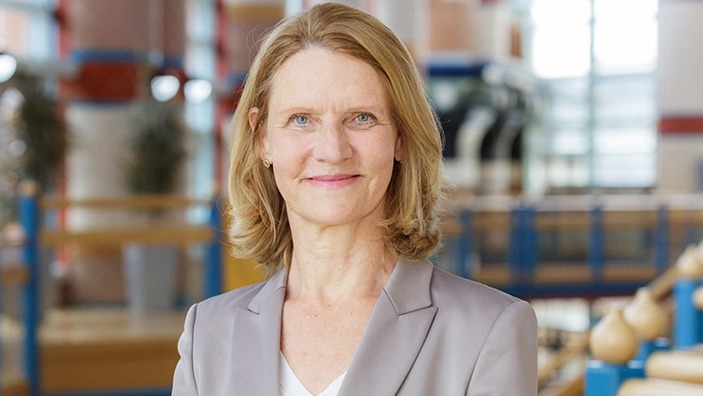
Thoughts from Lucia Reisch, Director of the El-Erian Institute of Behavioural Economics and Policy.
If 2026 were a behavioural experiment, it would be a complex but enlightening one – a global test of our collective ability to align good intentions with smart incentives. And while the data are still coming in, the early results are, well, intriguingly mixed. Take China. Once the industrial workhorse of the world, it has become an environmental overachiever. Batteries, electric vehicles, hydrogen, renewables – the list goes on. Its new Five-Year Plan reads like science fiction, but the plot twist is: they might actually make it happen.
Elsewhere, policymakers are slowly learning that system change requires more than vision. It needs good governance: sophisticated, stable and evidence based. Businesses, in turn, need coherence and reliability, along with regulatory frameworks that make long-term, sustainable investments not only possible but profitable. Behavioural economics 101: reduce uncertainty, and people (and companies) are more likely to act for the future. Will 2026 be a good year to save the planet? Politically, perhaps not. But as behavioural economists remind us, humans are remarkably adaptable – even against the odds. You do not give up the future because it is hard – you pursue it because it is possible. And perhaps, just perhaps, 2026 will be remembered as the year optimism became a collective behaviour worth catching.
Could AI hype peak? Or is that only wishful thinking?
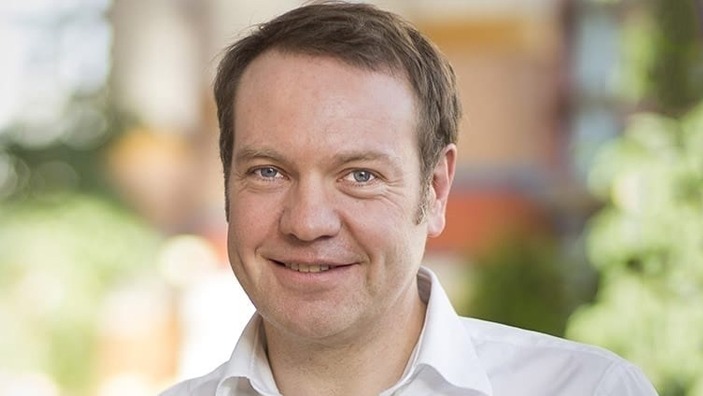
Thoughts from Paul Tracey, Professor of Innovation and Organisation and Vice-Dean for Research, Cambridge Judge Business School.
I’m going to make the kind of prediction that could come back to haunt a person: the hype around AI in business school education will pass its peak in 2026. I don’t mean a peak in terms of its capability or innovation in how it can be applied, but a turning point in how people understand its value in the business school classroom. After a couple of years of unfettered exuberance, at time verging on the absurd, faculty and students and Executive Education participants will reach a more mature understanding of its role.
So while the technology may continue to advance apace, the novelty will wear off. AI’s surface-level answers to complex organisational and societal problems will start to grate. And as the shine fades, a desire for the true value of business school education at its best will re-emerge: being in a room with peers from many different countries and sectors, with many different experiences and views of the world – debating, building, creating, challenging one another in ways that cannot be replicated by algorithm. Programmes that push AI too much to the fore will begin to fall out of fashion. Classroom dialogue and debate will return to centre stage. Or maybe I’m just imagining the world I would like to see rather than the world that will emerge in 2026 and beyond.
Lessons from science fiction, as the pendulum swings from breaking things to reconfiguration
Thoughts from Monique Boddington, Management Practice Associate Professor and Director of the Master of Studies in Entrepreneurship Programme.

In the world of innovation and entrepreneurship, there is a history of getting the future spectacularly wrong. Elon Musk said that we were 2 years away from completely autonomous cars, in 2016. Bill Gates, in his 1995 book, The Road Ahead, suggested that the internet would not become a major platform for commerce, and Larry Ellison thought cloud computing back in 2008 was “complete gibberish”, nothing more than a passing fad. If we turn instead to science fiction, writers and filmmakers have long explored not just new technologies but their social consequences. In Ghost in the Shell (1995), for example, the boundary between human consciousness and artificial intelligence dissolves, raising profound questions about identity and agency.
It is interesting that our fiction has been far more effective at anticipating the frictions, inequalities and ethical dilemmas that accompany technological progress. So yes, 2026 is a world that is beginning to resemble near-future science fiction worlds imagined over the decade’s past. Several converging dynamics (AI, geopolitical instability, climate volatility and social fragmentation) are redefining and reshaping what it means to innovate, and the role of entrepreneurship. After a decade of start-ups being celebrated for moving fast and breaking things, we will see the pendulum swing the other way towards repair, resilience and reconfiguration. Rather than a focus on disruption, there is a growing opportunity around entrepreneurial endeavours that fill in the gaps left by technology – climate restoration, circular supply chains, humanising automation, social cohesion and digital trust. Taking inspiration from science fiction (more so than the tech leaders of our time), in 2026 entrepreneurship will shift from inventing new technologies to re-imagining how humans, machines, and ecosystems co-exist.
Risk of burnout as AI upends the workplace
Thoughts from Thomas Roulet, Professor of Organisational Sociology and Leadership.
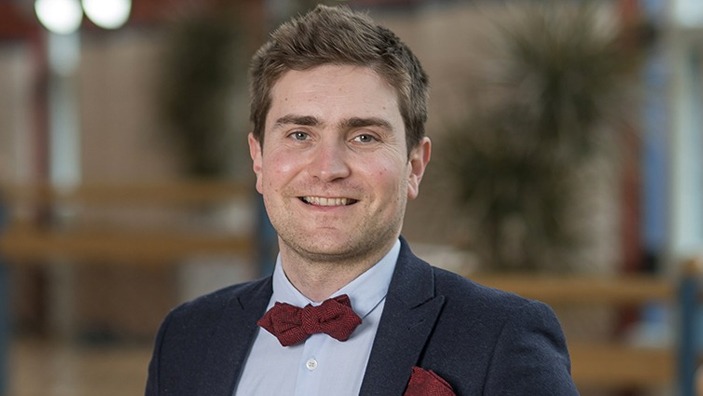
In a context in which every major tech firm and beyond are announcing significant layoffs, pinned on AI-driven productivity gain, I believe we are about to enter a new crisis of overwork.
Most of the firms that are engaging in mass dismissals are still unsure about how they will achieve productivity gains with AI – they are laying off their people before thinking how AI can practically and concretely replace them at scale. It means that those employees left behind will not only suffer from a survivor syndrome (being demotivated and having lost trust in their organisation due to seeing colleagues getting fired) but they will have to cover the labour gap left by the layoffs. Firms will then be at risk of demotivating and burning out their best people, having soon to go back to the job market to rebuild their human resources.
Converting negative tech shocks into positive shocks
Thoughts from Juliana Kozak Rogo, Management Practice Associate Professor and Director of the MBA programme.
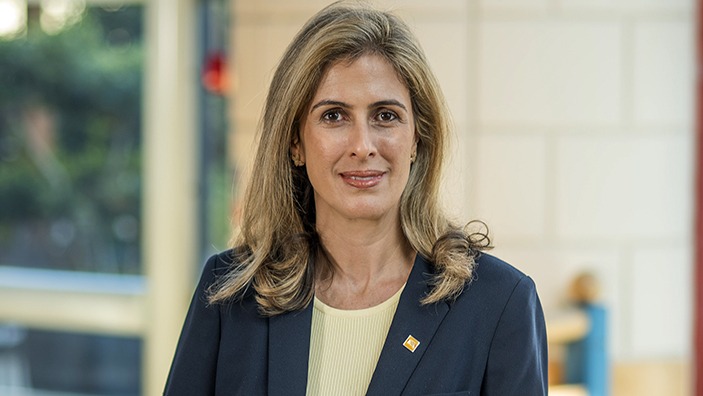
Owing in part to continuing negative supply shocks, both short and medium term and some likely permanent, economies around the world could face enhanced inflationary pressure coupled with sluggish growth in 2026.
My hope is that we can counter this through positive technology shocks from innovations in areas including agritech, fintech and climate tech, which can improve productivity and spark new potential growth. Given this backdrop, it is important in business schools and beyond to develop data analysis and AI tools along with strategic thinking, communication skills and adaptability. This will help leaders current and future to identify the relevant questions to be tackled and to communicate them well and effectively with a focus on smart and responsible results.
In marketing, a focus on both global aspiration and local authenticity
Thoughts from Jaideep Prabhu, Professor of Marketing and Vice-Dean of Faculty at Cambridge Judge Business School.
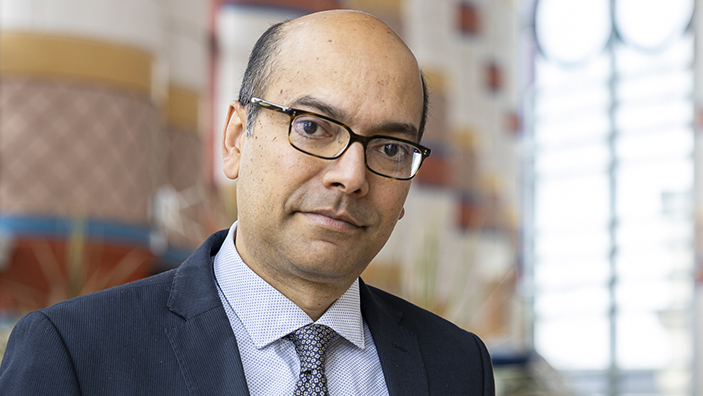
Globalisation is of course real and irreversible, as we are all dependent on supply chains that span continents and time zones, but globalisation is not the same as a single global consumer culture. I expect that in 2026 we will more clearly see that consumer culture is instead divided into several innovation circles such as countries belonging to the BRICS+ bloc (emerging economies, which will surpass the G7 in global trade share), mostly wealthy OECD countries, and Non-Aligned nations. Along with this, we’ll see brands co-creating with local ecosystems rather than adopting one-size-fits-all marketing campaigns, and this more local approach will allow companies to adapt quickly to changes in those local or regional markets.
This strategy is not risk-free, as brand coherence can be strained if not handled carefully. So there’s a real opportunity for creatives (in both the advertising and innovation senses) to craft firm identities in a hybrid manner that feels globally aspirational yet locally authentic. And global trade tensions could bring tariff retaliation from various parts of the world that pose further difficulties for such brand positioning. I also expect that trust will emerge as the most valuable marketing currency in 2026 as consumers tire of algorithms and AI. This trust can be generated through verifiable sustainability claims, traceable supply chains and dashboards that clearly illustrate corporate claims. Firms that fail to do so risk reputational backfire and loss of competitiveness.
Conditions for an AI market correction in 2026?
Thoughts from Virginia Leavell, Assistant Professor in Organisational Theory and Information Systems.
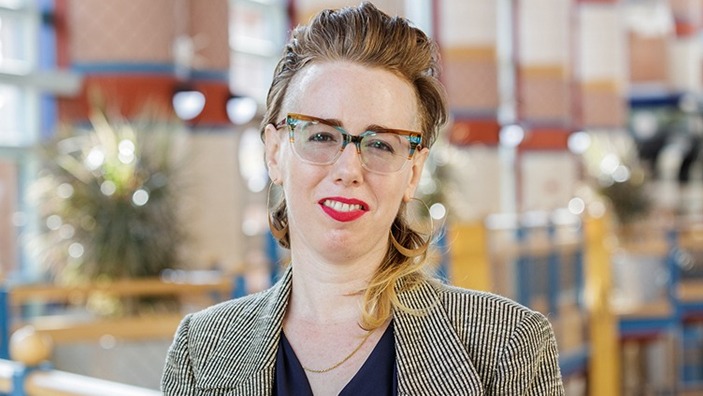
The past year has seen technology company leadership position themselves increasingly assertively in political and social spheres, pursuing compute power and regulatory rollback with total disregard for climate impacts, democratic norms and privacy protections. This trajectory will likely generate a more visible countervailing reaction in the coming year. We can expect to see segments of users downgrading to dumb phones, abandoning social media platforms degraded by AI slop and more broadly pulling back from digital engagement altogether – similar to how users have exited dating apps overwhelmed by bot accounts. This represents both a shift to alternatives and a simple withdrawal from platforms that no longer serve their intended social functions.
This user exodus, combined with mounting evidence about whether current AI technologies are approaching performance plateaus, will create conditions for a market correction. The divergence between inflated valuations predicated on continued exponential capability improvements and actual technological trajectories will become harder to ignore, particularly as the social and environmental costs of massive computational infrastructure become more politically salient. The existential predictions promoted by tech CEOs and pundits – AGI (artificial general intelligence) timelines, superintelligence thresholds, an AI arms race with China – will be increasingly exposed as fundraising rhetoric rather than technologically grounded forecasts.
Versions of these predictions for 2026 were published in the business-school publication Poets & Quants in their articles ‘Deans’ 2026 Resolutions: B-School Leaders On How The New Year Will Bring New Tests For B-Schools’ and ‘New Year’s Predictions: Business School Thought Leaders On What Lies Ahead In 2026’.
Featured faculty
Virginia Leavell
Assistant Professor in Organisational Theory and Information Systems
Related articles

Faculty news
The Middle East conflict’s long-term effect
Three faculty members of Cambridge Judge Business School examine how the crisis in Iran may unfold in energy markets and geopolitics.

Student and alumni news
Alumnus writes on the trends that change the face of banking
Five key trends may shape the banking world of tomorrow, says an article by Aleem Wallani, an alumnus of the Master of Studies in Entrepreneurship Programme at Cambridge Judge Business School (MSt Entrepreneurship 2021) in The International Banker magazine. The magazine is published by the Worshipful Company of International Bankers.

The 2026 Cambridge Disinformation Summit, which formally opens today (Wednesday 8 April), focuses on how intentionally misleading narratives are often the prelude to acts of harm and exploitation. The event is the 3rd Cambridge Disinformation Summit, and is chaired by Alan Jagolinzer, Professor of Financial Accounting at Cambridge Judge Business School.