


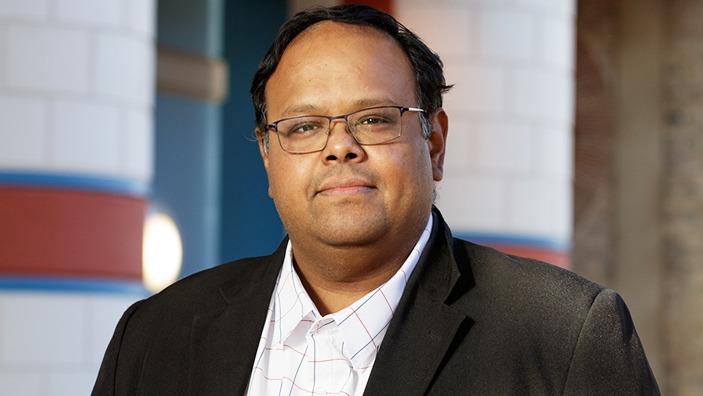
More than 1.7 million satellites are now proposed in filings with the US Federal Communications Commission (FCC), including roughly one million by Elon Musk’s SpaceX, says the technical policy brief for the FCC and international regulators, titled Crowded Orbits, Fading Skies: A Policy Framework for Satellite Mega-Constellations.
Such “unmanaged growth” poses huge policy issues according to “a growing, methodologically independent body of peer-reviewed research, spanning ground-based astronomy, space-based astronomy, empirical archival analysis and atmospheric chemistry,” says Arjuna’s paper.
Regulatory environment was developed for much smaller low-Earth orbit population
The paper notes that low-Earth orbit has moved within a decade “from a comparatively sparse operational environment to one approaching saturation at certain altitudes”, adding that this trajectory sits inside a space economy that the World Economic Forum in partnership with McKinsey & Company forecasts will grow from around $630 billion in 2023 to $1.8 trillion by 2035.
“The commercial logic driving this growth (cheaper launch, falling satellite unit costs, and new demand sources such as orbital compute) is not in question. What is in question, and what this paper addresses, is whether the regulatory and international-governance architecture built for an earlier, much smaller orbital population is adequate to manage the externalities of its next order-of-magnitude expansion: light pollution and loss of astronomical capability, disruption to circadian biology and nocturnal ecosystems, orbital debris and collision risk, and atmospheric effects from launch and re-entry.
What can regulators do? Recommendations from the research
The paper includes a set of policy options and recommendations for regulators and other policymakers over the next 12 to 24 months including adoption by the FCC of a cumulative, cross-operator ceiling that links total satellite population to brightness rather than treating them as separable licensing criteria, and pursuit by regulators and the astronomical community of an international brightness and debris standard through the UN Committee on the Peaceful Uses of Outer Space (COPUOS).
Space Economy Initiative
The Space Economy Initiative within the Centre for India and Global Business at Cambridge Business School brings together researchers across engineering, economics, governance and policy to make space activity more accessible – particularly for emerging economies and public-interest missions.
Related content
Sathiaseelan, A. (2026) Crowded orbits, fading skies: a policy framework for satellite mega-constellations. A technical policy brief for FCC and international regulators.
Related articles

Research centre news
Governments urged to keep frontier-technology markets open
Governments should examine whether major decisions to procure and adopt frontier technologies could restrict future competition, argue 2 academics at Cambridge Judge Business School writing in the leading journal Nature. They propose a contestability check to help public agencies reward strong performance today without closing credible routes for later suppliers.
Research centre news
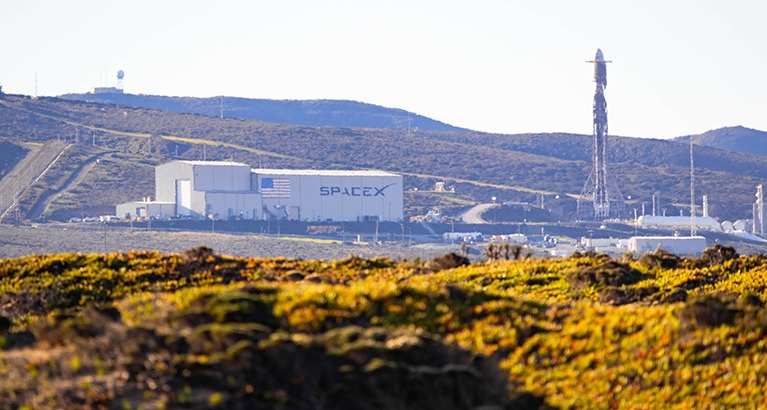
SpaceX’s $1.8 trillion IPO: what the valuation reveals
The recent $1.8 trillion valuation of SpaceX, the largest initial public offering in history, is a bet not about the launch business but rather on second-order consequences such as a dominant satellite-broadband utility in Starlink, says a research paper by Dr Arjuna Sathiaseelan, a Visiting Fellow at Cambridge Judge Business School involved in the Space Economy Initiative at the Business School.

Research centre news
Research shows efficiency of India’s low-cost space missions
Recent missions by India’s space programme have shown that major milestones such as a 2023 soft Moon landing can be achieved on relatively modest budgets in the 10s of millions of dollars, says a just-published academic paper co-authored at Cambridge Judge Business School that demonstrates the scope of frugal innovation. For countries that have not ventured into space or fully reaped the benefits of space activity because they are held back by notions of extreme expense, these Indian examples chart a practical way forward.