
Space Economy Initiative
The Space Economy Initiative within the Centre for India and Global Business at Cambridge Business School brings together researchers across engineering, economics, governance and policy to make space activity more accessible – particularly for emerging economies and public-interest missions.
Frugal innovation applied to space
Frugal means disciplined scoping, reuse, modularity, and explicit cost-risk trade-offs in mission design – not unsafe shortcuts. The initiative bridges the gap between technical ambition and practical, governed deployment.
Guiding principles
- Do better with less, without compromising safety or reliability.
- Create repeatable pathways that others can adopt, adapt, and govern.
- Measure social and economic value alongside technical performance.
Why barriers to space participation remain high
Despite falling launch costs and faster innovation cycles, meaningful participation remains concentrated. Entry is still costly, regulated and uneven – especially for Global South entrants and public-interest missions.
High costs
Launch may be cheaper, but non-recurring engineering, testing, licensing and insurance remain prohibitive for most new entrants.
Complex rules
Licensing, spectrum, debris and liability pathways remain fragmented and opaque for teams without dedicated legal infrastructure.
Concentrated capability
Ground stations, integration facilities and advanced components remain in the hands of a small number of actors.
Siloed thinking
Engineering, economics, governance and ethics rarely work together early enough in mission design and procurement.
Uneven inclusion
Emerging markets and underserved communities remain secondary in most space narratives, despite having the most to gain.
Few shared tools
Lessons are rarely codified into reusable playbooks, templates or standards that others can adopt without starting over.
Cross-disciplinary research agenda
Theory, empirics and live experiments – making frugal space credible, scalable, and governable across 6 interconnected programmes.
Outputs
Practical tools, not only publications
The initiative will produce shared entry infrastructure designed for use by mission teams, regulators, investors and researchers.
Plain-language guidance on access, regulation, financing, governance, and procurement for mission teams.
Open architectures, cost models, COTS validation frameworks and testing guidance to de-risk technical choices for new entrants.
Flagship datasets – STCFI, CTL-DB, RS-FARM, DISASTER-EO, S2SDG – supporting comparable evidence across missions and geographies.
Co-design protocols, supervised testing environments and regulator-ready dossiers for repeatable experimentation.
Executive education, graduate modules, bootcamps and regulator training – capacity building as a core deliverable.
Reporting against baselines with open analytical pipelines, externally reviewable methods and decision-useful metrics.
Impact
From research and convening to tools, lower barriers, and a more inclusive and sustainable space economy – with measurable outcomes tracked annually.
5-year direct targets
- 40%+ reduction in concept-to-launch costs for new entrants
- 10+ frugal standards adopted by national space agencies
- 3+ regulatory sandboxes co-designed across jurisdictions
- 5+ frugal-first ventures supported through incubation
Publications
The Space Economy Initiative’s research output: peer-reviewed publications, book chapters and working papers from our team.
- Sathiaseelan, A. and Prabhu, J. (2026) Breaking the bottleneck: frugal satellite design and the politics of launch market concentration. Cambridge: Space Economy Initiative, Centre for India and Global Business, Cambridge Judge Business School
- Sathiaseelan, A. (2026) Crowded orbits, fading skies: a policy framework for satellite mega-constellations. A technical policy brief for FCC and international regulators. Cambridge: Space Economy Initiative, Centre for India and Global Business, Cambridge Judge Business School
- Corrado, L., Sathiaseelan, A., Kattuman, P. and Prabhu, J. (2026) Making space affordable, inclusive and sustainable: a global policy and research agenda. Cambridge: Space Economy Initiative, Centre for India and Global Business, Cambridge Judge Business School
- Corrado, L. and Makridis, C.A. (2026) “Measuring the space economy with input-output linkages.” CESifo Working Paper Series, No.12449
- Sathiaseelan, A. (2026) The $1.8 trillion question: inside the economics of SpaceX. Cambridge: Space Economy Initiative, Centre for India and Global Business, Cambridge Judge Business School
- Corrado, L., Grassi, S. and Paolillo, A. (2025) “Technology spillovers from the final frontier: a long-run view of U.S. space innovation.” Cambridge Judge Business School Working Paper, No.02/2025
- Corrado, L. and Kattuman, P. (2026) “Frontier-technology markets are too narrow – here’s how to widen them.” Nature, 656: 819-822 (DOI: 10.1038/d41586-026-02572-8)
- Corrado, L., Gupta-Rawal, S., Kattuman, P. and Prabhu, J. (2026) “Democratizing space: India’s frugal space innovation provides key lessons for emerging nations.” Proceedings of the National Academy of Sciences, 123(8): e2514657123 (DOI: 10.1073/pnas.2514657123)
- Corrado, G., Del Frate, F., De Santis, D., Marazzi, F. and Corrado, L. (2024) “New metrics for governance in the era of Earth observation data: monitoring violations after wildfires.” PNAS Nexus, 3(11): pgae466 (DOI: 10.1093/pnasnexus/pgae466)
- Corrado, L., Grassi, S., Silgado-Gomez, E. and Paolillo, A. (2023) “The macroeconomic spillovers from space activity.” Proceedings of the National Academy of Sciences, 120(43): e2221342120 (DOI: 10.1073/pnas.2221342120)
- Corrado, L., Cropper, M. and Rao, A. (2023) “Space exploration and economic growth: new issues and horizons.” Proceedings of the National Academy of Sciences, 120(43): e2221341120 (DOI: 10.1073/pnas.2221341120)
- Corrado, L., Grassi, S. and Paolillo, A. (2026) “The technological and economic impact of 60 years of space exploration.” In: D’Costa, A.P. (ed.) The Oxford handbook of the new space economy. Oxford: Oxford University Press
Events
The inaugural workshop of the Cambridge Space Economy Initiative explores the markets, technologies and governance shaping the sector.
News and insight from the Initiative
Research centre news
Governments urged to keep frontier-technology markets open
Governments should examine whether major decisions to procure and adopt frontier technologies could restrict future competition, argue 2 academics at Cambridge Judge Business School writing in the leading journal Nature. They propose a contestability check to help public agencies reward strong performance today without closing credible routes for later suppliers.
Research centre news
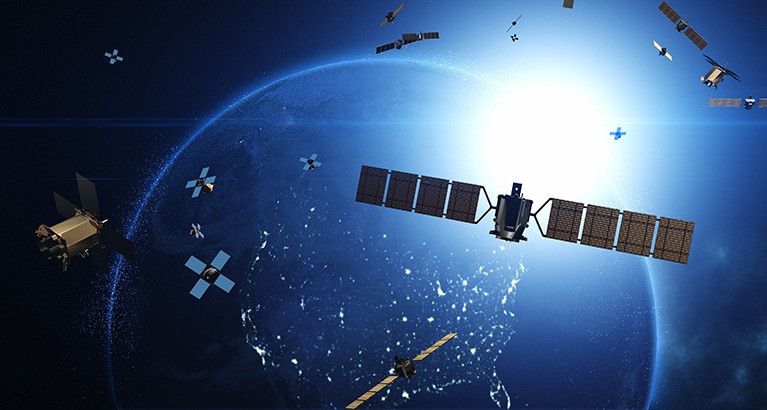
Paper calls for satellite ceiling linked to brightness
The huge rise in low-Earth orbiting devices has degraded astronomical capability and carries environmental risks that current regulatory and international governance frameworks cannot handle, says a new policy paper by Arjuna Sathiaseelan, a Visiting Fellow at Cambridge Judge Business School involved in the Space Economy Initiative at the Business School.
Research centre news
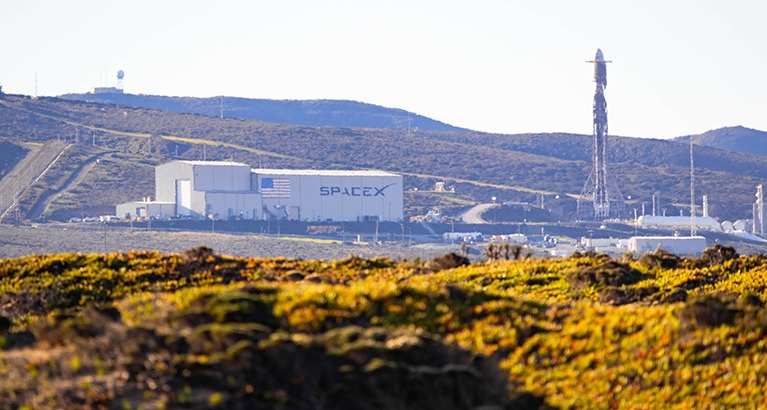
SpaceX’s $1.8 trillion IPO: what the valuation reveals
The recent $1.8 trillion valuation of SpaceX, the largest initial public offering in history, is a bet not about the launch business but rather on second-order consequences such as a dominant satellite-broadband utility in Starlink, says a research paper by Dr Arjuna Sathiaseelan, a Visiting Fellow at Cambridge Judge Business School involved in the Space Economy Initiative at the Business School.
Leadership

Professor Luisa Corrado
Co-Lead, Space Economy Initiative
Visiting Research Fellow, Cambridge Judge Business School

Professor Paul Kattuman
Academic Advisor, Space Economy Initiative
Professor of Economics, Cambridge Judge Business School

Dr Arjuna Sathiaseelan
Co-Lead, Space Economy Initiative
Visiting Fellow, Cambridge Judge Business School