

Expert opinion on huge world events like the conflict in the Middle East is always a snapshot: a look at events through a viewfinder that may yield a very different look very quickly.
While the conditional ceasefire between the US and Iran announced on 7 April may or may not prove durable, 3 faculty members of Cambridge Judge Business School reflected how the Middle East hostilities may bring long-lasting changes to energy markets and the world economy.
On the energy front, Professor of Business Economics Michael Pollitt and Professor of Technology Policy David Reiner examine how the conflict may affect diversification and supply of oil and gas, while Associate Professor in International Macroeconomics Michael Kitson urges a long-term view of how the conflict may alter geopolitics.



The Middle East conflict should be a catalyst for energy diversification
Michael Pollitt:
“In 2022 Europe lost around 20% of its gas supply following the interruption of pipeline supplies from Russia due to the Russia-Ukraine War. What happened next has lessons for this energy crisis. First, retail prices rose substantially and demand fell. Alternative sources of energy became much more attractive and substantial investment in diversifying supplies of energy occurred reasonably quickly: within the space of 18 months lost Russian gas supplies were replaced and prices returned to ‘normal’ levels in real terms.
“Second, Europe learnt the value of its own market integration. Russian-gas-dependent countries were able to participate in the shared security of the single energy market. Available gas was shared across Europe and energy security investments made by one country benefited all. This crisis is a call to further European energy market integration and redoubled efforts to transition away from fossil fuel use.”
We should look beyond the current US administration to longer-term geopolitical shifts
Michael Kitson:
“Much commentary has focused on President Trump’s role in the crisis and the increasingly unpredictable nature of US foreign policy. While leadership style clearly matters – especially when the President is a belligerent, foul-mouthed blowhard – it would be misleading to interpret the conflict primarily through the actions of a single administration that has less than 3 years remaining in office. More important are the longer-term geopolitical and geoeconomic shifts shaping the international system.
“The conflict should be understood as part of a wider transition from a rules-based international order towards a more contested and fragmented global environment. The rise of China, alongside the growing economic weight of India and other emerging powers with different political and economic systems from many Western liberal democracies, is reshaping patterns of influence and cooperation.”
The conflict highlights the distinction between oil and gas markets
The conflict in the Gulf will hit import-dependent Europe and Asia hard, whereas the US gas market is largely isolated from any price impacts.
David Reiner:
“To understand the regional energy market impacts, it is important to distinguish between gas and oil. Since oil is a genuinely global commodity, the US, though the largest producer globally, is paradoxically the most vulnerable because the US economy is far more oil-sensitive than others, because of its low petrol taxes (so the percentage increase is much higher), low penetration of electric vehicles and the salience of the price at the pump for American politics.
“By contrast, despite the ever-expanding reach of liquefied natural gas (LNG), gas markets are regional, and so the conflict in the Gulf will hit import-dependent Europe and Asia hard, whereas the US gas market is largely isolated from any price impacts. So the already large gap between prices in the US and European/Asian markets will continue to grow and further enhance US competitiveness.”
Don’t make the same mistakes we did in the last energy crunch in 2022
Michael Pollitt:
“After the energy crunch that followed the beginning of the Russia-Ukraine war in 2022, public money was wasted in untargeted fossil fuel subsidies, which often subsidised all consumption regardless of need or ability to pay. Governments across Europe listened to self-serving calls from energy retailers to blanket-subsidise consumption of their products regardless of the fiscal cost. The result was European industry paid even more for gas and the increased fiscal burden has contributed to ongoing public expenditure cuts. We should not make this mistake again.
“Every energy crisis has a silver lining. The stupidity of energy producers in ignoring economic rationality produces short-run costs for energy-consuming nations. However, those nations can bargain back with their own investments and higher import taxes. In the long run it is energy-export-dependent countries that will pay the economic price for imposing excessive costs on their own customers.”
The conflict will accelerate a shift toward pursuit of strategic resilience
A world economy increasingly shaped by geopolitical and geoeconomic rivalry.
Michael Kitson:
“Economic policy across advanced economies is increasingly driven not by the efficiency and welfare gains associated with globalisation but by security concerns. Access to critical raw materials, energy transit routes and specialised technological inputs – often concentrated in a small number of countries or firms – has become central to national strategies.
“In this context, the Iran conflict is best interpreted not simply as a regional crisis but as part of a broader movement towards a world economy increasingly shaped by geopolitical and geoeconomic rivalry and the pursuit of strategic resilience.”
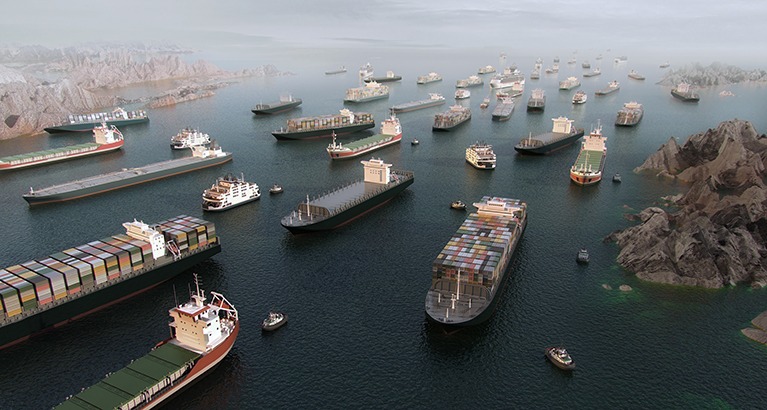
Threat to shipping will continue to loom over global energy markets
David Reiner:
“The conflict in Iran has unleashed some predictable and less-predictable impacts on global energy systems. Concerns over the Strait of Hormuz has been war-gamed since the Iranian revolution in 1979 and discussed in almost apocalyptic terms, but most analysts did not anticipate that the mere threat of attack, combined with the collapse of the insurance market, would allow Iran to selectively allow ships through the Strait of Hormuz, effectively creating the potential to extract a toll on any ship.
“If operations in the Strait of Hormuz can resume at pre-War levels, the impact on oil prices may be transitory. However, assuming the Iranian regime survives, the now-credible threat to shipping will loom over global energy markets. Sustained higher prices will provide further impetus for import-dependent economies to accelerate their shift away from fossil fuels.”
Featured faculty
Related articles
Faculty news
Global energy markets hold the key to climate action
As the world races to decarbonise, competing pressures – from AI-driven energy demand to geopolitical fragmentation – are complicating the transition. Michael Pollitt, Professor of Business Economics at Cambridge Judge Business School, argues that the answer isn't energy nationalism, but deeper global cooperation. In a wide-ranging interview, he explains why international trade, cross-border carbon markets, and smarter grid technology are the tools that will ultimately determine whether the world meets its climate goals.

News
Top 10 reads of 2025
Articles about artificial intelligence and sustainability were among the most popular stories on the Cambridge Judge Business School website in 2025, reflecting a year in which AI capabilities expanded apace and the November COP30 climate-change summit in Brazil focused attention on the environment.

Cambridge Judge Business School faculty and staff were among participants at the Sustainable Development Forum 2025 held in Belgrade, Serbia, on 30-31 October, which focused on cross-sector collaboration involving government, industry and academia in order to tackle the green transition and achieve sustainable development.