

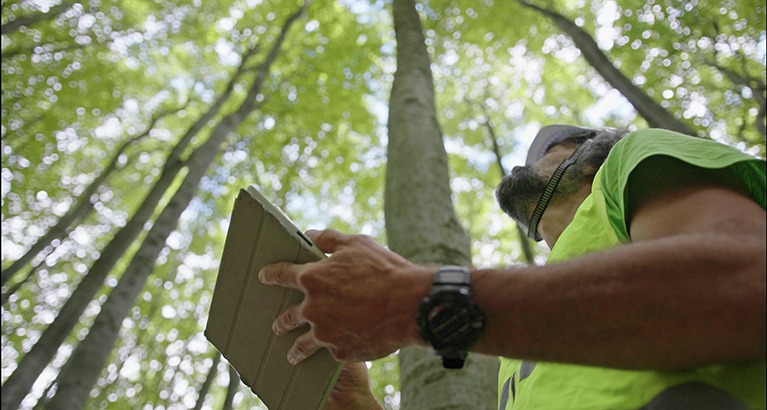
Look up the word conservation in a dictionary, and the provided meaning will likely focus on protecting natural areas such as forests, or endangered species, or valuable substances that exist in limited amounts. Yet beyond such big-picture goals, the actions of individuals are also vitally important to address our crisis in biodiversity and sustainability.
That’s the focus of an upcoming Cambridge workshop, a new area of research at the El-Erian Institute of Behavioural Economics and Policy at Cambridge Judge Business School, and an article on behavioural issues in conservation in the Stanford Social Innovation Review (SSIR) co-authored by Professor Lucia Reisch, Director of the El-Erian Institute.
“Biodiversity, ecosystem services and conservation impacts have been less well-studied than certain other areas such as the climate impact of consumption, but are equally relevant, and that’s the reason for this focus,” says Lucia, who has published numerous studies that look at the connection between human behaviour and various aspects of sustainability.
Applying lessons from other fields to conservation

The SSIR article co-authored by Lucia focuses on how conservationists can learn lessons from other fields in changing human behaviour for social good.
Currently, behavioural issues surrounding conservation are often put into an independent silo, but the article says that behavioural science should instead be embedded at the core of conservation work’s organisational structure.
“That means fewer late-stage redesigns, clearer measurement and success expectations, and an organisational culture that makes effective behaviour change business-as-usual,” says the article, co-authored by Philipe M Bujold, a senior behavioural scientist at Center for Behavior and the Environment, Rare, in Sydney, Australia, Gayle Burgess, behaviour change programme lead at TRAFFIC in the UK who is Co-Chair of the Special Interest Group on Human Behaviour at the Cambridge Conservation Initiative, and Lucia Reisch.
A call for standardised conservation language and better metrics
The article also urges standardising the language and tools used in behaviour-linked conservation efforts, because the work attracts experts in fields ranging from psychology to social marketing who are used to different jargon and techniques.
“Conservation lacks widely adopted, field-wide behaviour change frameworks,” say the authors. “Individual organisations develop their own models and processes, reinventing the wheel rather than converging on common diagnostic approaches, intervention taxonomies, or evaluation methodologies. This fragmentation has cut us off from advances in the broader behavioural sciences.”
Unlike areas such as public health, conservation efforts often lack evaluation metrics as the funding structure is linked to activities and outreach rather than impact.
“As a result, we track outputs obsessively (workshops delivered, materials distributed) but rarely measure whether anyone actually changed their behaviour,” says the article, which says investing in evaluation will help conservationists avoid wasting limited resources on ineffective interventions.
Systems – not only individuals – need changes to boost conservation
The article also calls for a change in systems rather than only individual behaviour, because frontline communities such as farmers and fishers are currently asked to change their behaviour while markets “only reward destructive practices”.
“Redefining success means rewarding projects that maximise real-world impact, pivoting when needed, and stopping interventions that aren’t working,” the article concludes. “We can do this by embedding behavioural science throughout organisations, by researchers and practitioners adopting shared frameworks that build on each other’s work, by funders making evaluation non-negotiable, and by all of us looking upstream to the systems that shape behaviour.”
Workshop to investigate behaviour‑led approaches to biodiversity protection
The 21 May 2026 workshop to discuss conservation issues and share empirical studies is entitled the Cambridge-LSE Behavioural Science for Biodiversity Conservation Policy Workshop, and includes participants from the Cambridge Conservation Initiative, the London School of Economics and the International Behavioural Public Policy Association. The event focuses on the need for transformative change in human behaviour at both individual and structural levels to halt biodiversity decline, as reflected in the Global Biodiversity Framework (GBF).
Target 3 of that Framework calls for ensuring that by 2030 at least 30% of terrestrial and inland water areas, and of marine and coastal areas, and especially areas of particular importance for biodiversity, “are effectively conserved and managed through ecologically representative, well-connected and equitably governed systems”, while being integrated into wider landscapes, seascapes and the ocean.
“Besides good regulation and monitoring, this can be supported by less resource-intensive consumption, for instance, reducing food waste by one third – an explicit target of the Biodiversity Protocol and the Sustainable Development Goals,” says Lucia. “At the El-Erian Institute, we have studied behavioural food policy interventions towards this goal for years and have a good idea how to steer this.”
Target of global land, freshwater and ocean areas to be effectively conserved by 2030.
At the El-Erian Institute, we have studied behavioural food policy interventions towards this goal for years and have a good idea how to steer this.
2025 workshop highlighted data gaps in behavioural conservation
In March 2025, the El-Erian Institute and the Department of Land Economy at the University of Cambridge co-hosted a workshop that brought together 31 experts from across the globe to explore the intersection of behavioural science and conservation. One of the most pressing concerns in the field is the difficulty in accessing comprehensive data on behavioural interventions – their contexts, outcomes and effectiveness – so participants proposed the creation of an evidence synthesis platform that would help conduct systematic reviews of such interventions.
Most scholars and practitioners at the conference agreed that a culture shift among funders and donors is essential, as few funders currently support the full arc (from planning to long-term evaluation) of behavioural-change initiatives needed for conservation. The workshop’s consensus was that encouraging funders to invest in holistic, sustained efforts could catalyse the field’s growth.
New area of conservation focus at El-Erian Institute
The El-Erian Institute’s new field of research on behavioural biodiversity conservation is led by Arjun Kamdar, a PhD student at the Department of Land Economy who is co-supervised by Professor Andreas Kontoleon of the Department of Land Economy and Lucia.
A project by Arjun at the El-Erian Institute examined how to apply behavioural science to improve intervention efforts in India focused on human-elephant coexistence given that most wild Asian elephants in India live outside protected areas where they frequently interact with people. Damage by elephants to people’s property, crops and physical safety are a serious threat to both species, with hundreds of people and elephants losing their lives in these conflicts each year.
“Our research identified easy, inexpensive and accessible elephant-safe behaviours and the behavioural levers needed to support their adoption in everyday decision-making contexts to help people and elephants share spaces safely,” says Arjun, whose earlier work has looked at establishing a wildlife corridor between 2 fragmented protected areas in northeast India, understanding elephants’ ecology through radio-telemetry and working to reduce snakebite through human-centred design. He has also worked on a project that works in collaboration with Indian tea producers to create an intervention to redesign their social and environmental outreach materials.
“Understanding how people think, feel, and make decisions is essential not only for identifying what actions need to be targeted, but also how to bring this change.” says Arjun.

Understanding how people think, feel, and make decisions is essential not only for identifying what actions need to be targeted, but also how to bring this change.
Featured research
Bujold, P.M., Burgess, G. and Reisch, L. A. (2026) “Making behavioral science work for conservation.” Stanford Social Innovation Review
Related content
A comprehensive overview of the Global Biodiversity Framework’s targets can be found online.
Arjun Kamdar has written about the role of human behaviour in shaping human-elephant co-existence and the need for conservation strategies grounded in how people think and act.
Related articles

Research centre news
New UN report cites Cambridge Judge sustainability research
Four studies co-authored at the El-Erian Institute of Behavioural Economics and Policy at Cambridge Judge Business School are cited in a new United Nations report on the global environment. The report – entitled the Global Environmental Outlook, 7th edition: A Future We Choose – cites the El-Erian research in an extensive chapter on food systems.

Research centre news
Recent report: when innovation meets public opinion
2025 TechnikRadar’s findings offer a strategic lens for aligning technological development with societal values.

Research centre news
Study finds simple restaurant table message cuts food waste
With 75% of hospitality food waste avoidable, a low-cost behavioural nudge using table cards significantly reduced restaurant diner leftovers, says a new study co-authored by Professor Lucia Reisch, Director of the El-Erian Institute of Behavioural Economics and Policy.