

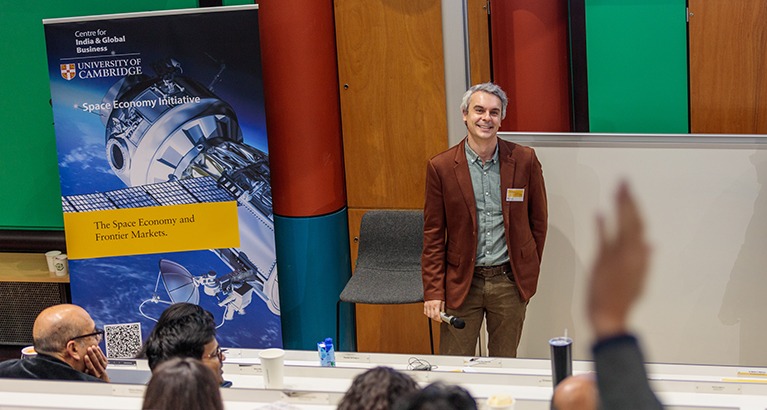
The timely Initiative at Cambridge Judge is examining how we build markets around frontier technologies such as space, and how our growing reliance on space-based technologies raises important questions about innovation, investment, governance and sustainability.
The 4 November workshop focused on how rapidly the space economy frontier is expanding, and a central theme emerged: success in the space economy will depend not only on scientific and technological breakthroughs, but on our ability to build effective markets, institutions, policies and partnerships – and there is a vital role here for the Cambridge ecosystem including research at Cambridge Judge and the wider University of Cambridge.
Forging a pathway from space infrastructure to space economy
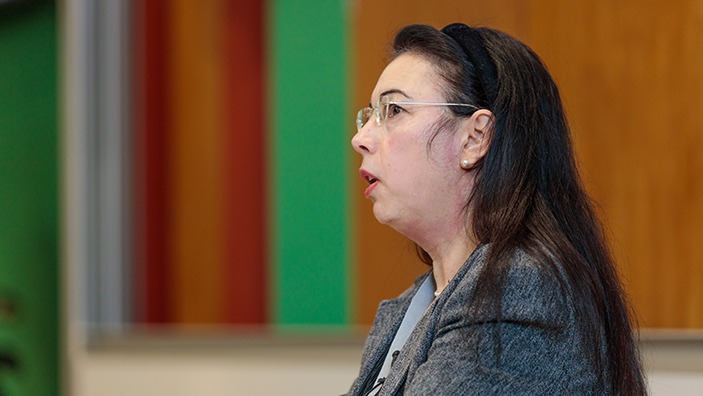
“What we are often short of is robust evidence and data – something Cambridge has in abundance,” said Aarti Holla-Maini, Director of UN Office for Outer Space Affairs (UNOOSA). “The burning question in space is no longer what we can build, but what can we build a market on.
“The step from infrastructure to economy is perhaps one of the most important questions or conundrums facing governments today,” she said. “A market needs customers who will pay and pay again and again, infrastructure that others can build on, capital that understands the risk it is taking and rules that make a 20-year asset financeable.
“So let me make the offer concrete rather than ceremonial: we would be delighted to put your research in front of the member states we serve, test your cost models and frugal standards against real national programmes, and bring your researchers into the rooms where policy is actually decided.”
Growing the space sector sustainably and frugally
Added Mike Taylor, Head of Strategic Planning at the UK Space Agency: “The kind of opportunity you’ve got here in Cambridge is bringing together those who are practitioners in the space sector – those who are technologists, who are scientists, who are engineers and who are entrepreneurs – together with those who are thinking about what are the future use cases of space, what are the policy implications and what are the regulatory implications, so that we can really think through how we grow our space sector in a sustainable way.”
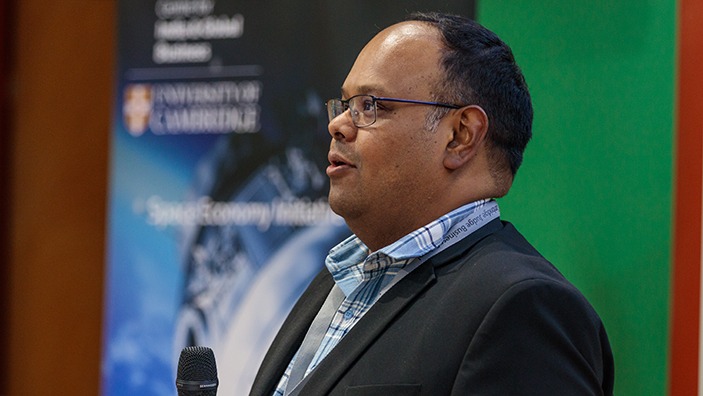
Marco Gomez-Jenkins, Co-Founder of SuperSharp Space Systems, a University of Cambridge spinout company that builds telescopes for high-resolution thermal imaging of Earth, said he was drawn to the focus on frugal innovation (doing more with fewer resources) of the Space Economy Initiative.
“The SuperSharp team had to be very clever in how we financed our in-orbit demonstrations, how we managed to overcome technological barriers,” said Marco, whose company participated in the Accelerate Cambridge programme at the Entrepreneurship Centre at Cambridge Judge. “Instead of just throwing money at it, it’s thinking about a way that you can do it efficiently, not only money but time, so I think the Initiative can really contribute on that frugal side on how to build companies differently.”
Cambridge Judge has been at the forefront of research on frugal innovation, including in AI and other frontier technologies. The Academic Advisor of the Space Economy Initiative is Professor of Marketing Jaideep Prabhu, who has written 2 books on frugal innovation focusing on both emerging economies and developed countries.
The Space Economy Initiative sits at Cambridge Judge within the Centre for India and Global Business, of which Jaideep is Co-Director. The Co-Leads of the Space Economy Initiative are Professor Luisa Corrado and Dr Arjuna Sathiaseelan, both Visiting Fellows at Cambridge Judge, and Cambridge Judge Professor of Economics Paul Kattuman is Academic Lead of the Initiative.
Key issues for space economy fit Cambridge Judge focus
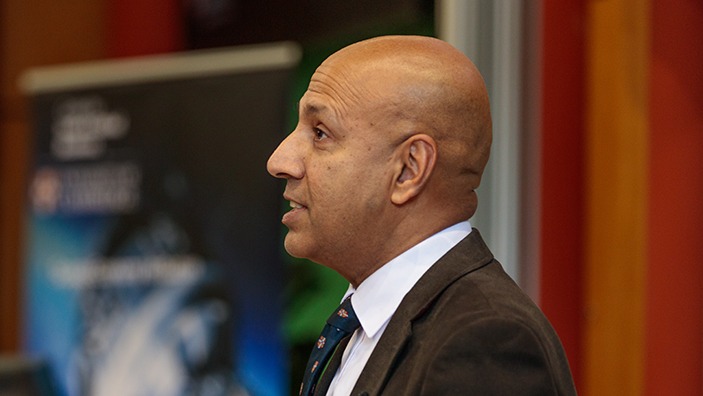
The Dean of Cambridge Judge, Professor Gishan Dissanaike, told the workshop that the Space Economy Initiative plays a vital role in answering some key questions on the frontier technology of space:
“Who will control this infrastructure? How to keep markets open to new entrants? And how to protect the orbital environment on which everyone depends? The decisions we make today will shape who benefits in the decades to come or centuries to come. We also have to consider unintended consequences.
“So these are substantial questions for any society, and it is entirely appropriate that here at this Business School we talk about the technological opportunities, the business opportunities and the societal outcomes. It is especially relevant for us here at Cambridge Judge because we have a new vision, and innovation and entrepreneurship is one key pillar here. Another is responsible business. Third is leadership. So the topic today is relevant in terms of innovation and entrepreneurship, responsible business and of course leadership. “So I think we have a tremendous opportunity here in Cambridge because we have tremendous strengths in science and technology, and great strengths in economics, sociology and at the Business School as well.”
Space Economy Initiative welcomes partners
The Space Economy Initiative at Cambridge Judge Business School is open to founding philanthropic partners in order to build the work going forward in this important area. Please contact Richard Everitt at r.everitt@jbs.cam.ac.uk.
View the full list of speakers and topics at the 4 November inaugural workshop of the Space Economy Initiative.
Related articles
Research centre news
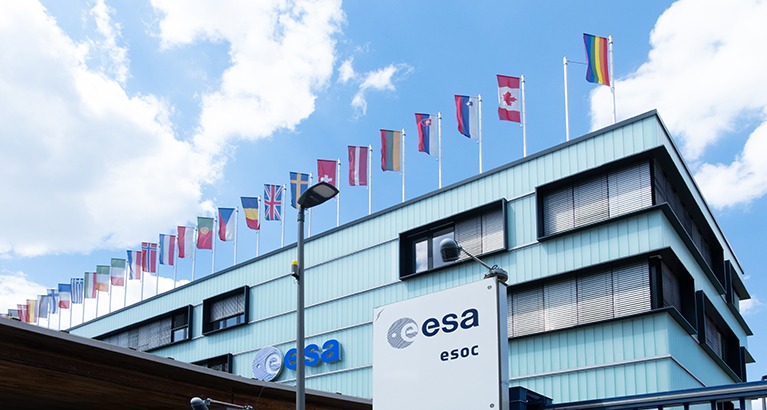
Governments urged to keep frontier-technology markets open
Governments should examine whether major decisions to procure and adopt frontier technologies could restrict future competition, argue 2 academics at Cambridge Judge Business School writing in the leading journal Nature. They propose a contestability check to help public agencies reward strong performance today without closing credible routes for later suppliers.

Research centre news
Paper calls for satellite ceiling linked to brightness
The huge rise in low-Earth orbiting devices has degraded astronomical capability and carries environmental risks that current regulatory and international governance frameworks cannot handle, says a new policy paper by Arjuna Sathiaseelan, a Visiting Fellow at Cambridge Judge Business School involved in the Space Economy Initiative at the Business School.
Research centre news
SpaceX’s $1.8 trillion IPO: what the valuation reveals
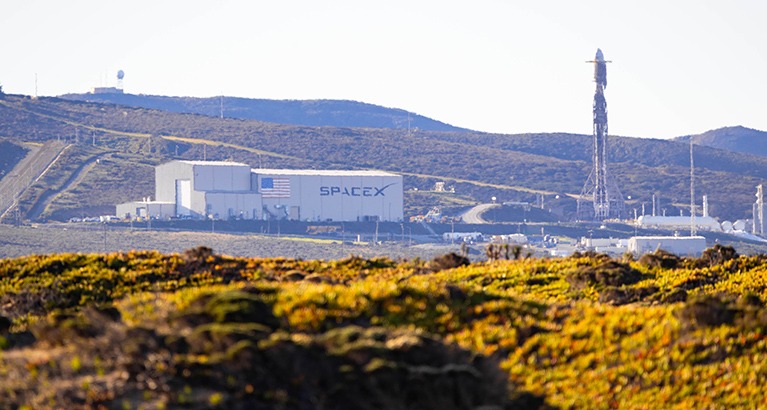
The recent $1.8 trillion valuation of SpaceX, the largest initial public offering in history, is a bet not about the launch business but rather on second-order consequences such as a dominant satellite-broadband utility in Starlink, says a research paper by Dr Arjuna Sathiaseelan, a Visiting Fellow at Cambridge Judge Business School involved in the Space Economy Initiative at the Business School.