

EnterpriseTECH 2026
- Programme launch: 6 October 2026
- Lecture intensive: 7-10 October 2026
- Programme finale: 9 December 2026
Lecture intensive programme schedule
- Wednesday 7 October 2026
- Thursday 8 October 2026
- Friday 9 October 2026
- Saturday 10 October 2026
- Compulsory workshops
Wednesday 7 October 2026
S0.01 (Simon Sainsbury Centre), Cambridge Judge Business School, Trumpington Street, Cambridge
08:45-08:50
Arrive at the lecture theatre in time to register
08:50-09:00
Welcome address

Dr Ghina M Halabi
Education Manager, Cambridge Judge Entrepreneurship Centre
Module 1: Venturing into entrepreneurship – beginners’ notes
Entrepreneurship offers tremendous value by opening doors to innovation, growth, and impact. When you cultivate an entrepreneurial mindset and skillset, you can effectively turn your ideas into successful businesses, understand the commercial potential of your work, secure funding, build valuable industry networks, and enhance your professional abilities. In this first theme, we dive into the theoretical foundations, practical skills, and real-life experiences of accomplished entrepreneurs.
09:00-09:50
Challenging yourself to think differently
In a modern engineering-driven landscape, entrepreneurs are often taught to prioritize “lean” methodologies, building minimum viable products and iterating their way to success. However, iteration without a bold plan is rarely enough to take a venture from “0 to 1”. This talk explores how to move beyond incrementalism and “local maximums” to achieve breakthrough innovation. ”The people who are crazy enough to think they can change the world, are the ones who do.”

Dr Matthew Grimes
Professor of Entrepreneurship and Sustainable Futures, Director of the MPhil in Innovation, Strategy and Organisation Programme, Co-Director of the Entrepreneurship Centre
Matthew has a BBA from College of William and Mary, MSc from Saïd Business School, University of Oxford, and PhD from Owen Graduate School of Management, Vanderbilt University.
His research interests include entrepreneurship and sustainable development. It examines how individuals and organisations create, introduce, and sustain positive social change by way of entrepreneurship by studying both the contextual and individual factors that contribute to innovation and the governance of innovation. He’s a member of the Organisational Theory and Information Systems subject group at Cambridge Judge Business School, Academic Co-Director of the Cambridge Judge Entrepreneurship Centre, and current Deputy Editor at the Academy of Management Journal (formerly Associate Editor).
09:50-10:40
Opening perspectives: Mapping multiple commercial pathways
This session encourages participants to think expansively about the many possible commercialisation routes available to early-stage technologies. It introduces the idea that innovation doesn’t follow a single path; products can evolve, markets can shift, and entry strategies may vary depending on industry dynamics. Students are challenged to consider scenarios involving different customers, sectors, regulatory hurdles, and risk factors from the outset. The session prompts them to approach subsequent lectures (e.g., on IP, customer profiling etc) with a flexible mindset, recognising that each tool or framework may apply differently depending on the pathway they choose to explore.
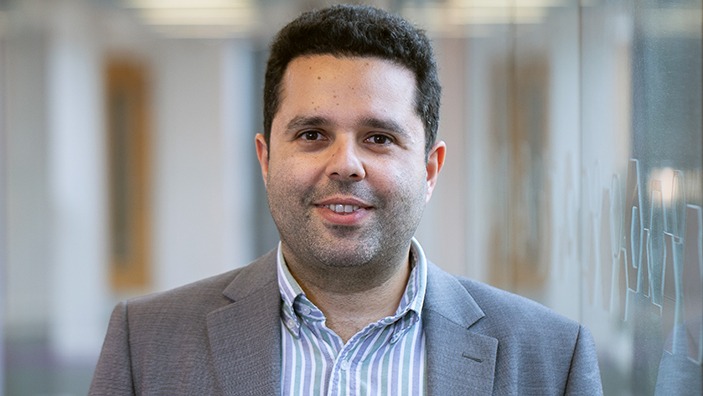
Dr Keivan Aghasi
Lecturer in Entrepreneurship, University of Sheffield
Keivan Aghasi is a Lecturer in Entrepreneurship at the University of Sheffield. Before his appointment, he was a Research Associate at the Entrepreneurship Centre, University of Cambridge Judge Business School, where he currently holds an honorary Associate position. His research areas revolve around unravelling and alleviating the challenges of growth and transformation of start-ups into viable businesses. In particular, he is investigating the impact of accelerators, incubators, and other scalable (regional) interventions in the start-up ecosystem to bolster entrepreneurship. Keivan has participated and been consulted in several European Commission and nationally funded projects in the UK and Italy related to understanding the challenges of resource acquisition for start-ups and growth for SMEs as the driver of innovation in various sectors, including high-tech, knowledge-intensive, and cultural creative industries.
10:40-11:00
Morning coffee
11:00-12:00
The adaptive path: How entrepreneurs test, pivot and grow
For entrepreneurs, vision provides direction—but progress depends on adaptation, learning, and, at times, pivoting. This session examines the tension at the heart of entrepreneurship: how founders commit to a strategic intent while staying responsive to evidence, feedback, and changing conditions. We explore how entrepreneurial visions emerge and evolve, and how decisions to persist, refine, or pivot are shaped by founder roles, attitudes to failure, and everyday judgement under uncertainty.

Dr Monique Boddington
Director of the MSt in Entrepreneurship programme, Cambridge Judge Business School
My research centres on entrepreneurship, with particular emphasis on early-stage venture formation, startup strategy development, experimentation and pivoting, gender dynamics, entrepreneurial impact, and the use of sociological frameworks to deepen our understanding of entrepreneurial activity. I am especially driven by the potential for research to enhance the design and effectiveness of entrepreneurship education, to empower the next generation of entrepreneurs.
12:00-12:30
The Aha Moment: How your technology becomes a product that early customers want to buy
Many entrepreneurs begin with a technology vision: something they believe is technically possible, valuable and different. But a technology is not a product, and a product does not guarantee you will have a customer.
This session explores the journey from technology vision to the earliest real customers. Drawing on practical experience of building technology businesses, it examines how entrepreneurs discover what their technology is really for, identify the customers who have the strongest need, and turn an emerging capability into a product that people can understand, want and ultimately buy. The session will also explore how you find evangelist customers who not only recognise the problem but are actively looking for a solution and are willing to engage with an emerging product because they can see its strategic value.
Early-stage entrepreneurship is a process of choosing directions amidst great uncertainty. The challenge is to preserve the overall vision while being flexible on the details. Ultimately, the goal is to help you as technology entrepreneurs recognise the difference between having something clever and having something that someone genuinely wants to buy, and to understand how to make that transition happen.

Richard Vellacott
Co-founder CEO and chair of Biologic Technologies
Richard is co-founder, CEO and Chair of BiologIC Technologies, leaders in the fast-growing category of intelligent bioprocessing systems that “put all the power of a factory into your own hands”. You can engineer factory ready biology, solve hidden development threats and unlock new business models with Qudos, the first of a new kind of “personal manufacturing” platform.
In seven valuable years as interim CEO, deputy CEO, CFO, COO and Company Secretary, Richard was instrumental in growing the gene editing tools business Horizon Discovery Group plc from an emerging private company of £3m revenue in 2012 to a recognised global leader delivering revenue of £60m at a valuation of £350m. Richard delivered one of the most successful ever Life Science listings on AIM raising £68.6m in a heavily oversubscribed IPO at the top of its valuation range within 3 months, followed by fundraisings in the UK and the US, four acquisitions and hostile bid defence.
Richard was previously Vice President, Finance at CSR plc, a dual listed FTSE 250 semiconductor company with $1bn of revenues, and a director in Deloitte’s life sciences practice. Richard is a scientist with a first-class degree in biological sciences from Durham University, and a qualified chartered accountant.
12:30-13:00
Stories from the frontlines: Mimicrete’s journey of innovation
An insightful talk with Dr Liz Zijing Li as she unravels the fascinating journey of Mimicrete’s innovation. Discover the challenges, triumphs, and strategic decisions that went into protecting the groundbreaking IP and learn how Mimicrete transformed a visionary idea into a tangible market presence. This talk promises an engaging exploration of innovation, resilience, and the strategic navigation of the intellectual property landscape.

Dr Liz Zijing Li
COO and Co-Founder, Mimicrete
Dr Liz Zijing Li is the COO and Co-Founder of Mimicrete Ltd, driving the company’s day-to-day operations and strategic vision. Armed with a PhD in civil and environmental engineering from the University of Cambridge, Liz seamlessly blends technical expertise with management consulting acumen. Award-winning and strategically adept, Liz is driving product validation and commercial trials in transformative projects, showcasing her multifaceted expertise. Leading transformative projects, Liz is at the forefront of Mimicrete’s pursuit of sustainable innovation.
13:00-14:00
Lunch break
Module 2: Team dynamics in early-stage ventures
According to research, successful entrepreneurial ventures often stem from strong team dynamics rather than the efforts of a lone founder. When it comes to team building, it is crucial to establish clear communication channels, delegate tasks and responsibilities, and foster a culture of trust and shared commitment.
In addition to effective team building, cultivating and maintaining a growth mindset plays a pivotal role in entrepreneurial success. A growth mindset entails believing that talents and abilities can be developed through hard work and dedication, rather than being fixed traits. This mindset is particularly essential for entrepreneurs as it enables them to persevere through challenges and setbacks, and continuously adapt and improve their business strategies.
14:00-15:00
How we work together: Roles, expectations and friction points.
In this session, we will be looking at how entrepreneurial team members inhibit or enable each other, and the importance of distinguishing different levels of interdependence. We will then discuss what makes entrepreneurial teams successful in particular when it comes to information and diversity. Throughout, we will get the participants to consider their positions, enabling factors and bottleneck in their own entrepreneurial team.

Professor Thomas Roulet
Professor of Organisational Sociology and Leadership, Judge Business School, University of Cambridge
Fellow in Behavioural Science, King's College, University of Cambridge
Thomas Roulet is the Professor of Organisational Sociology and Leadership at the Judge Business School, and a Fellow in Behavioural Science at King’s College, both at the University of Cambridge.
His work focuses on leading change, the future of work, and mental health in the workplace. His comments are regularly featured in the Financial Times, the Economist, Bloomberg, the Telegraph, BBC or Le Monde and he has a number of papers in the Harvard Business Review and MIT Sloan Management Review in addition to his research.
Since 2025, he is the Co-Chair of the World Economic Forum’s Global Future Council for Leadership. In 2024 only, he was recognised as one of the Young Global Leaders by the World Economic Forum, and as an upcoming leadership thinker by Thinkers50, MT/Sprout, or Nexxworks. He was made a Fellow of the Academy of Social Sciences in 2024. In 2020, he was named among the 40 Best Business School Professors below 40, and a Business School Professor to Look for by Business Because.
He has taken this research and learning to dozens of firms and public organisations as a speaker, consultant and through the design of executive education programmes. In 2020, he advised Suez on their cultural resilience during the hostile takeover initiated by their main competitor. He has collaborated with consulting firms (KPMG, United Minds), insurers (MS Reinsurance), law firms (Gide, Matheson), and government (HM Treasury, Ministry of Defence) among other.
15:00-16:00
Acing the EnterpriseTECH assignments: tips and tricks for the CFR, video and pitch deck
The EnterpriseTECH assignments require you to understand your projects like an inventor, assess commercial feasibility like a strategist, and communicate compellingly enough to attract VCs, customers and champions. You will need to do a great deal of research, identify meaningful insights and prepare three very different outputs. We will break down and tackle each of the three assignments, along with tools, tips and tricks to efficiently manage the process, deliver high quality outputs, avoid last minute stress and – we hope – create a great deal of value for your inventors.

Stephanie Richards
Investor and Partner, BrightView Global
EnterpriseTECH business supervisor
Stephanie heads up Innovation Ecosystem Policy and Middle East Market Strategy at 500 Global, a leading global venture capital firm, startup accelerator and ecosystem builder, which has invested in over 2,500 companies via 20+ early-stage funds. She is also head of ecosystem development for iGan Arabia, a $250M healthtech VC fund focused on medtech in the Middle East. She regularly works with the Dubai and Abu Dhabi Governments’ future talent programmes.
16:00-16:15
Afternoon tea
16:15-17:15
Team time: Scoping your journey ahead, reviewing project, and creating the Project Initiation Document (PID)
This is a collaborative session that brings your team together for a chance to review your assigned project details and work on drafting the Project Initiation Document (PID). The PID, which you received with your project pack, serves as a critical reference point for your project planning and execution. It helps you divide the work, set goals and deadlines, and define the scope of the project ensuring you are all aligned on tasks and objectives and thus set up for success!
Remember, the deadline for submitting your PID is Monday 19 October 11:59pm.
You’re welcome to bring your own snacks and drinks.
Dr Ghina M Halabi
Education Manager, Cambridge Judge Entrepreneurship Centre
17:15-17:30
Close of Day for Group 2
Refreshment break for Group 1
17:30-19:30
Practical workshops for teams
Each team has been assigned a group (Group 1 or Group 2). This was shared with you via email at the start of the programme. Please ensure you are attending the correct group workshop.
Engage, connect, innovate: Unleashing team synergy through the EPIC team-building workshop (Group 1)
Get to know your fellow team-members exploring what we bring to EnterpriseTECH and what we want to get out of it. Engaging with our curiosity, previous experiences and our ability to find and take opportunities, the workshop is designed to be an interactive, fun and energy filled session.

Paul Bourne
Artistic Director, Menagerie Theatre Company
Fellow in Creative Engagement, Cambridge Judge Business School
Thursday 8 October 2026
S0.01 (Simon Sainsbury Centre), Cambridge Judge Business School, Trumpington Street, Cambridge
08:45
Arrive at the lecture theatre in time to register
08:50-09:00
Plans for the day
Dr Ghina M Halabi
Education Manager, Cambridge Judge Entrepreneurship Centre
Module 3: From technology to opportunity: Evaluating early-stage ideas
When it comes to early-stage STEM-based ventures, evaluating business ideas is just one piece of the puzzle. In this competitive landscape, entrepreneurs need to ensure that their ideas have a viable market and a solid business model before investing significant time and resources.
One tried and tested strategy for evaluating business ideas is to conduct market research. This involves identifying the target market, understanding customer needs and preferences, and assessing the competition. By gathering data on the market size, growth potential, and key trends, entrepreneurs can gain a better understanding of the viability of their business idea and make informed decisions about how to proceed.
09:00-10:20
From business models to disruption: Lessons from SES
Gordon explores how business models evolve in response to technological and market disruption. Using SES as a case study, he will look at how satellite TV and connectivity models have been challenged by new and fierce entrants, and how SES is responding through innovation, diversification and new markets. The session will introduce practical approaches to business-model thinking, innovation and customer discovery, before sharing lessons from SES’s experience that participants can apply to their own technologies and commercialisation journeys.

Gordon Soutar
Innovation Process Manager, SES Satellites
Gordon Soutar is an innovation professional currently focussed on satellite communications, emerging technologies and business model innovation. At SES (a global satellite operator) he leads the development and refinement of innovation approaches that help identify, shape and accelerate future growth opportunities across the business.
Gordon is particularly focused on improving how organisations move from technology-led ideas to problem-led discovery, using structured innovation methods, customer interviews and business model design to uncover risk managed, high-potential opportunities.
Previously Gordon had his own consulting business for 25 years, focussed on creativity & innovation, learning & clear communication. He taught on the Accelerate Cambridge programme for over 20 years. Interests are food & drink, skiing, mountain biking & playing the guitar. He lives in Cambridge with his wife and 2 grown up kids.
10:20-10:40
Morning coffee
10:40-11:00
Shaping the business model
This session explores how business model innovation can unlock new value in technology ventures. Drawing from real-world experience across biotech, CROs, and deep tech start-ups, Dr Catherine Stace will guide participants through the fundamental elements of a business model and challenge conventional approaches. The talk will cover a range of business model types, introduce tools for ideation and adaptation, and equip students with practical insights to develop models that reflect the complexity and interdisciplinary nature of emerging technologies. Expect an engaging and applied session that expands your strategic thinking.

Dr Catherine Stace
EVP Business Development, Kuano and o2h Discovery
Founder, Platform First
Catherine has nearly 20 years experience in the drug discovery industry, specialising in biotechnology platform development and commercialisation. She has held strategic technology and business development roles in biotechnology, consultancy and CRO organisations, covering small molecule therapeutics, peptides, healthtech and engineering. With a passion for innovative technologies, Catherine is currently EVP BD for Kuano, a TechBio start-up with quantum technology, and o2h. Catherine was previously EVP Business Development for Domainex, during which the business more than doubled in size, and gave her insight into hundreds of innovative small companies. Catherine began her career establishing therapeutic platforms for Isogenica and Bicycle Therapeutics, becoming inventor of core industrial technology and clinical candidates (17 patents). She subsequently trained as a systems engineer to deliver the benefits of combinatorial approaches to technology strategy, to a range of tech-focused start-up organisations through her consultancy company, Platform First, before moving to business development.
Catherine holds an MSci in Biochemistry (Nottingham), PhD Cell Biology (Cambridge), and MBA (Open University) where her thesis focused on commercialisation challenges faced by inter-disciplinary technology start-ups.
11:40-12:40
Practical essentials for primary market research
A hands-on session on how to approach potential customers, clients, and key opinion leaders with professionalism and confidence to build trust and gather meaningful insights. Nicky will guide you through the different types of primary market research and how to combine them to best effect, framing effective questions, applying practical frameworks, and navigating key considerations such as GDPR, ethics, and anonymity. The session is designed to equip you with the tools and confidence to conduct market research in the real world, moving beyond theory into conversations that uncover valuable evidence and direction.

Nicky Dibben
Consultant, Invention Marketing
Deeptech and high-tech businesses choose Nicky to help them develop and execute on best practice commercialisation and marketing strategies. From spinouts or start-ups just beginning to commercialise their technology, to established companies seeking new product or market opportunities, Nicky focuses on translating innovation into commercial success. Nicky established Invention Marketing 25 years ago and brings her own 360◦ Marketing framework to help businesses make sense of marketing. As well as her consultancy practice, Nicky is a mentor on several acceleration programmes.
12:40-13:00
Team time: Deepening your project thinking – refining scope, market focus, and commercial lens
Following the intensive lectures on IP and IP strategy, business model innovation, and AI-powered market research, this session gives you the space to reflect as a team and begin refining your approach. You’ll revisit your Project Initiation Document (PID), integrating new insights to sharpen your understanding of the market opportunity, potential commercial pathways, and key customer segments. This is the time to start identifying assumptions, information gaps, and where you need to dig deeper. Together, you’ll lay the groundwork for a more focused and informed research plan.
You’re welcome to bring your own snacks and drinks.
13:00-14:00
Working lunch (continue to work in teams over lunch)
Module 4: From lab notebook to IP strategy: Protecting and positioning your innovation
For early-stage ventures, protecting their intellectual property is a number one priority. Intellectual property encompasses a wide range of assets, including patents, trademarks, copyrights, and trade secrets, all of which are vital to building a competitive advantage and attracting investment. At the same time, entrepreneurs must balance their need for legal protection with the need for continued innovation. Too much emphasis on protecting their intellectual property can stifle creativity, while too little can leave their innovations vulnerable to competitors.
14:00-15:00
You have had a clever idea, so what’s next? Engaging with legal counsel.
We’ll start with a role play to act out an entrepreneur’s first discussion with an IP adviser. You’ll learn valuable lessons on getting the most out of your relationship with your IP attorney. What information will your attorney need and what questions will you need to answer? This session is intended to be a practical and jargon busting guide on taking the first steps in your IP journey, demystifying interaction with legal counsel.

Holly Redman
Part-Qualified Patent Attorney
Holly Redman is a Part-Qualified Patent Attorney at Appleyard Lees with a background spanning academia, industry and start-ups. She holds an MChem in Chemistry from the University of Sheffield, including a year working in a large agrochemical company in Germany, and a PhD from Uppsala University, where her research focused on bioinspired catalysts for hydrogen production and contributed to more than 12 peer-reviewed publications. Before moving into intellectual property, Holly worked in a med-tech start-up developing breath analysis technologies. She has a particular interest in renewable energy and sustainable technologies and works with universities, spin-outs and technology businesses to help protect and commercialise innovation.

Jordan Tinkler
UK and European Patent Attorney, Appleyard Lees
Jordan Tinkler is a UK and European Patent Attorney at Appleyard Lees working within the physics, engineering and electronics sectors. He holds first class honours Bachelor’s and Master’s degrees in Physics from the University of Leeds, together with a PhD in Physics, where his research focused on the development of microbubble-based treatments for bacterial biofilm infections. His academic background provides him with a broad understanding of physical and biophysical systems and an appreciation of the challenges that interdisciplinary technologies can present. Jordan works with a diverse range of clients, from universities and start-ups to large multinationals, helping to protect and commercialise innovations across fields including medical devices, consumer electronics, optics, aerospace and defence, renewable energy systems, and aerosol generation technologies.
15:00-16:00
Founders keepers: IP strategy for entrepreneurs
Every business has intellectual property, so every business needs an IP strategy. This talk will cover the basics of developing an IP strategy to maximise the benefits that IP brings to your business.

Joseph Simon-Brown
Partner, Patent Attorney, J A Kemp LLP
A Cambridge-based patent attorney, I am passionate about entrepreneurship and love being involved with EnterpriseTECH, helping foster the next generation of Cambridge entrepreneurs. My clients range from individual inventors to large multi-national conglomerates, but a large proportion of my time is spent working with entrepreneurs and start-ups, helping them develop an intellectual property strategy to support their business ambitions. This may include developing their patent portfolio, considering their freedom-to-operate position, or ensuring they are investment ready from an IP perspective. I handle technology in the physical sciences, engineering and software fields, often with some overlap into the life sciences, such as medical devices and software, and drug discovery platforms. But, even if your technology doesn’t fit, I can advise with general strategic matters or defer to a colleague with the necessary technical expertise.
16:00-16:30
Afternoon coffee
16:30-17:15
First steps in the commercialisation journey of a university idea
What happens when you bring your idea or discovery to the technology transfer office in your university? What are the first steps, and how did this work for a particular case? This talk will show what questions you will need to address.

Dr Matthew Newman
Associate Director, Cambridge Enterprise (Physical Sciences)
As part of the Technology Development & Licensing Team, Matthew works with researchers to commercialise innovations in the physical sciences. He collaborates closely with researchers to identify and develop market opportunities for innovations created at the University of Cambridge, ensuring that these groundbreaking technologies reach their full potential.
Prior to joining Cambridge Enterprise, Matthew spent 10 years at technology development consultancy TTP plc. There, he worked with a mix of ambitious early-stage companies and corporate clients, helping to identify valuable market opportunities and take innovative technologies from concept to market launch. During this period, Matthew delivered projects across a broad range of markets, including Aerospace, CleanTech and HealthTech. He is experienced in project leadership, product engineering, software engineering and business development, having successfully negotiated commercial agreements and secured funding with a wide variety of stakeholder organisations. Matthew is a named inventor on several patents.
He holds a PhD in Physics from the University of Leeds and an MSci in Physics from Durham University.
17:15-18:00
Distinguished lecture – Building the world’s first AI-native rare disease pharma
I’ll share my entrepreneurial journey from PhD student at Cambridge to first-time founder and CEO: spinning out my research and learning how to scale an AI-native startup. Along the way, I’ll explore the transition from academic scientist to commercial leader, and how we can use AI for good to address unmet needs in rare diseases.
I’ll keep it personal and candid, covering the successes, failures, difficult decisions, and lessons I wish I’d known earlier. My aim is to give the cohort a practical sense of what it takes to turn research into a business with real-world impact, how a scientific background can help equip you for that journey, and how AI can help turbo charge the above.

Dr Tim Guilliams
Co-founder and CEO, Healx
Tim Guilliams is a tech entrepreneur based in the Cambridge Cluster, UK, with a deep passion for leveraging AI to accelerate treatments for rare diseases.
He is the Co-founder and Chief Executive Officer of Healx Ltd, an AI-powered, patient-centric biotech company that is revolutionising the discovery and development of treatments for rare diseases at scale. Under his leadership, Healx has raised over $100 million and has garnered numerous accolades for its innovative approach.
As CEO of Healx, Tim was honoured with the ‘Well Founded Founder/CEO Leadership Award’ for his pioneering contributions to HealthTech and patient impact, as well as his commitment to fostering a healthy workplace culture. He has also been recognized in The Sunday Times Maserati 100 list of entrepreneurs, The Telegraph’s Tech 100, and InVivo’s 30 Rising Leaders in the Life Sciences, among other prestigious lists. In addition to his work at Healx, Tim is the Founding Director of the Cambridge Rare Disease Network (CamRARE), a charity dedicated to improving the lives of those affected by rare diseases. Tim earned his PhD in Biophysics and Neuroscience from the University of Cambridge’s Department of Chemistry. Before moving to Cambridge, he completed an MEng in Bio- and Chemical Engineering at the University of Brussels.
18:00-18:30
Close of Day for Group 1
Refreshment break for Group 2
18:30-20:30
Practical workshops for teams
Each team has been assigned a group (Group 1 or Group 2). This was shared with you via email at the start of the programme. Please ensure you are attending the correct group workshop.
Engage, connect, innovate: Unleashing team synergy through the EPIC team-building workshop (Group 2)
Get to know your fellow team-members exploring what we bring to EnterpriseTECH and what we want to get out of it. Engaging with our curiosity, previous experiences and our ability to find and take opportunities, the workshop is designed to be an interactive, fun and energy filled session.
Paul Bourne
Artistic Director, Menagerie Theatre Company
Fellow in Creative Engagement, Cambridge Judge Business School
Friday 9 October
S0.01 (Simon Sainsbury Centre), Cambridge Judge Business School, Trumpington Street, Cambridge
08:45
Arrive at the lecture theatre in time to register
08:50-09:00
Plans for the day
Dr Ghina M Halabi
Education Manager, Cambridge Judge Entrepreneurship Centre
Module 5: Business models, customers & market fit
Market research techniques aim to profile potential customers and understand their desires and needs, using methods such as macroeconomic analysis, customer profiling, and forecasting. This enables businesses to better understand their target market, leading to the development and testing of a compelling value proposition. A vital element in this procedure is constructing a business model canvas. This provides a comprehensive visualisation of the business, highlighting pivotal elements like value proposition, customer segments, revenue streams, and cost structure. It’s a potent tool for seeing how business components interlock and for spotting weaknesses or opportunities.
The ultimate objective is achieving product-market fit, a delicate balance of crafting a product or service that satisfies customer needs while maintaining financial viability. This complex journey demands continual analysis and assessment to ensure the product’s relevance amid fluctuating market dynamics.
Branding and messaging also play a crucial role in market understanding. It enables a business to establish a unique identity that resonates with customers and fosters trust. It entails discerning the visual language that strikes a chord with the target audience and using it to forge a profound psychological bond that bolsters long-term loyalty.
09:00-10:45
Unpacking the business model canvas
This workshop provides an overview of business modelling and takes you through how to use the business model canvas effectively when considering your business idea. The workshop will also highlight the importance of understanding and testing your value proposition before committing to it fully.

Ludo Chapman
Founder, The Innovation Practice
Ludo has over 35 years’ business experience ranging from launching and leading start-ups to running a mid-sized business. He started out by setting up a software training company before becoming CEO of a scientific instrument business, Grant Instruments. More recently he helped technology start-ups get funding, leading product launches and setting up their sales channels, both in B2B and consumer markets.
10:45-11:15
Morning coffee
11:15-12:30
Your AI co-founder: Hands-on tools for idea validation and customer discovery
Forget the hype. This isn’t about the future of AI – it’s about using AI to accelerate your startup today. In this fast-paced, interactive session, we’ll go beyond the buzzwords and dive into practical, hands-on tools. You’ll learn how to leverage AI as a critical co-founder to rapidly validate business ideas, refine your value proposition, and simulate customer discovery interviews. Come ready to use your laptop; you’ll leave with a new way to think and work.

Michael Grange
CEO, Parker Veese
AI, Arm
Michael Grange is a specialist in artificial intelligence, entrepreneurship, and leadership development. With a career in technology product development and most recently at Arm in Cambridge, he has a deep understanding of how AI technologies are developed and integrated into the global technology ecosystem. Michael has a proven record in mentoring, coaching, and venture advising, having guided numerous entrepreneurs in launching and scaling innovative businesses. His expertise spans strategic innovation, startup ecosystems, and technology-driven transformation, making him uniquely qualified to share his insights on leveraging AI for startup success.
12:30-13:15
Beyond launch: Navigating the journey to product-market fit
Product market fit is the holy grail for any start-up, but few founders fully understand what it is and even fewer manage to achieve it. I’ll cover some thoughts on what it is, give some tools and suggestions that can help you find it, and share a very short case study that demonstrates why achieving it isn’t the promised land many make it out to be.

Tom Britton
Co-founder, SyndicateRoom
After completing his MBA at Cambridge Judge Business School, Tom co-founded SyndicateRoom to offer wider audiences access to venture capital investment. As co-founder, Tom works across all aspects of the business, emphasising product development, marketing strategy, and as much direct contact with super angels and investors as possible. He enjoys being plugged into the wider industry and sits on the UK Business Angel Association board. He also hosts SyndicateRoom’s Angel Insights podcast, interviewing key industry figures. Prior to founding SyndicateRoom, Tom was Product Manager at TheTrainline, where he headed up the launch of its mobile applications.
13:15-14:15
Lunch
14:15-15:15
Mastering the message
If you can’t communicate the benefits of your business, it’s going nowhere. Mastering the Message will take you through all the essentials of your business communications toolkit. We’ll look at how to sum up what you offer in a short, sharp and striking way, how to interest potential investors and customers in just a handful of seconds, and the art of an excellent website.

Simon Hall
Director, Creative Warehouse
Simon Hall created and leads an award-winning course in public speaking, storytelling and writing skills at the University of Cambridge, and runs his own business communication agency, Creative Warehouse. He has 20 books published, ranging from business and communication to crime fiction. The most recent, Compelling Communication (Cambridge University Press, 2024) is a companion to his university course. He’s also a journalist, writing for Times Higher Education, Management Today, and Business Weekly, an executive coach, and speechwriter. Previously, Simon was a BBC Television, Radio and Online News Correspondent for 20 years.
You might be interested to know that he also once played football for the same manager who coached the legendary Pele, although to rather less impressive effect.
15:15-16:15
Navigating the due diligence process
This session explains how investors and other external stakeholders perceive the value of a new opportunity and therefore whether it is worth exploring. It covers the process of simple due diligence including customers and markets, product, team, finance and risks. Attendees will learn what elements an investor is looking for and the criteria they use to evaluate each one.

Andrew Hatcher
Managing Director, The Applied Knowledge Network
Andrew is a seasoned entrepreneur, investor and advisor with a history of identifying, developing and managing innovation across many sectors. His corporate life was spent primarily at Reuters, where he was involved in developing an innovation management system within the corporate venturing division. This culminated in a role as CEO of an Asian-based Internet trading corporate spin-out in Singapore which he took through initial VC funding and on to a trade sale. Andrew has subsequently been involved in the creation and development of companies including Investing for Good, Working Knowledge, Applied Knowledge and Profyle and acts as a non-executive director at several early-stage technology companies in many sectors including financial services, education, Oil and Gas, marketing services, AI, and medical technology. Andrew teaches widely in the areas of innovation and marketing, is a Fellow at Cambridge Marketing College and has published books on innovation and marketing. Andrew received a BSc in Engineering from the City University of London and an MBA in International Business from the Bayes (formerly Cass) Business School.
16:15-16:30
Afternoon coffee
16:30-17:30
The alphabet model to grasp the basics of today’s marketing
This session covers the basics of contemporary marketing management focusing on the key elements of Audience, Benefits, Content, Data and Engagement. It provides attendees with a simple framework around which they can build a marketing plan for any business.
Andrew Hatcher
Managing Director, The Applied Knowledge Network
Andrew is a seasoned entrepreneur, investor and advisor with a history of identifying, developing and managing innovation across many sectors. His corporate life was spent primarily at Reuters, where he was involved in developing an innovation management system within the corporate venturing division. This culminated in a role as CEO of an Asian-based Internet trading corporate spin-out in Singapore which he took through initial VC funding and on to a trade sale. Andrew has subsequently been involved in the creation and development of companies including Investing for Good, Working Knowledge, Applied Knowledge and Profyle and acts as a non-executive director at several early-stage technology companies in many sectors including financial services, education, Oil and Gas, marketing services, AI, and medical technology. Andrew teaches widely in the areas of innovation and marketing, is a Fellow at Cambridge Marketing College and has published books on innovation and marketing. Andrew received a BSc in Engineering from the City University of London and an MBA in International Business from the Bayes (formerly Cass) Business School.
17:30-18:30
Beyond the business model: Macroeconomics & strategic thinking
This session zooms out to connect your team’s work to wider economic and strategic realities. It explores how macroeconomic forces such as industry cycles, global shocks, and long-term trends can influence a venture’s trajectory and strategic decisions. Students are invited to reflect on topics like risk-taking, long-term thinking, and personal agency (locus of control) in an entrepreneurial context. The session builds on the technical content from earlier in the week (e.g., IP, customer segmentation, business models) and challenges students to consider how their venture fits into a much broader innovation and economic landscape.
Dr Keivan Aghasi
Lecturer in Entrepreneurship, University of Sheffield
Keivan Aghasi is a Lecturer in Entrepreneurship at the University of Sheffield. Before his appointment, he was a Research Associate at the Entrepreneurship Centre, University of Cambridge Judge Business School, where he currently holds an honorary Associate position. His research areas revolve around unravelling and alleviating the challenges of growth and transformation of start-ups into viable businesses. In particular, he is investigating the impact of accelerators, incubators, and other scalable (regional) interventions in the start-up ecosystem to bolster entrepreneurship. Keivan has participated and been consulted in several European Commission and nationally funded projects in the UK and Italy related to understanding the challenges of resource acquisition for start-ups and growth for SMEs as the driver of innovation in various sectors, including high-tech, knowledge-intensive, and cultural creative industries.
18:30
Close of day
Saturday 10 October
Chen-Tsao Lecture Theatre, Cambridge Judge Business School, Trumpington Street, Cambridge
09:15
Arrive at the lecture theatre in time to register
09:20-09:30
Plans for the day
Dr Ghina M Halabi
Education Manager, Cambridge Judge Entrepreneurship Centre
Module 6: Investor readiness: Funding strategy, pitching, and term sheets
Start-ups in the UK typically go through several rounds of funding to fuel their growth and development. The first round of funding, known as pre-seed funding, usually comes from the founder’s personal savings or friends and family or grants. This funding is used to validate the business idea, develop a minimum viable product, and establish the start-up. Once the pre-seed stage is complete, start-ups can seek seed funding from angel investors or venture capital firms. Seed funding is typically used to fund early-stage growth and to expand the business. This funding round is usually focused on proving the concept, demonstrating market traction, and generating early revenue.
09:30-10:00
You have the attention of the venture capitalists – now what?
We will explore the world of venture capital and how to successfully engage with VCs to secure funding. Through interactive analysis and discussion of pitch decks, you will gain a deeper understanding of what VCs look for in an investment and how to build a mutually beneficial relationship with them. The workshop will cover the role of VCs on your board, how they can help you grow your business, and potential conflicts that may arise. As a new or future founder, understanding the ins and outs of the venture capital industry is crucial to securing long-term success for your start-up.

Ed Rayner
Managing Director at Panmure Liberum Cambridge Capital
Ed has spent 25 years as an investor in a wide range of fields including life sciences, technology and venture capital with a focus on analysing how technology, people and business models come together to achieve commercial success. He recently opened a Cambridge office for investment bank, Panmure Liberum, to raise capital for tech and life science companies, advising entrepreneurs on all aspects of fundraising. He is also a partner in a venture building firm, Alkamis, consulting for early-stage companies to help convert excellent science to winning business propositions, preparing firms to raise investment. Previously, he was Investment Director in a life sciences venture capital firm, Arix Bioscience, which created a portfolio of biotechs with differentiated science and world-class teams. Earlier in his career, Ed worked in a number of research-led investment firms including AMP Capital, Alliance Bernstein, UBS Asset Management and JP Morgan Investment Management. He has an MA in Chemistry and MSc in Management from Oxford University and is a Chartered Financial Analyst.
11:00-11:20
Morning coffee
11:20-12:20
Developing your funding strategy: What’s your value story?
Starting and scaling a venture requires vision, strategy, resilience, and of course, capital. Technology has transformed how value is created, and entrepreneurs are rising to new challenges and market opportunities. In fast-evolving entrepreneurship landscapes and dynamic global markets, fundraising is now central to the CEO’s skill-set. The ability to make a strong case for funding will be a determining factor in how ventures move from one significant milestone to the next. The session provides participants with hands-on experience in fine-tuning a value proposition, and defining a medium-term funding strategy to frame their investment case. Above all, the session will challenge participants to re-examine their business model and identify key risks to demonstrate how sustainable value will be created over the medium-term. Sam will work with you to transform your vision, resilience and strategy into a compelling value proposition – and a strong value story.

Sam Ofori
Venture mentor and consultant
I am a venture mentor and consultant specialising in research commercialisation and knowledge exchange. I work with entrepreneurs and business schools to develop and deliver global brands and programmes. I am a mentor on the Commercialisation of Research out of Social Sciences programme at Cambridge University. I also mentor at LSE Generate, and on the MSc Social Innovation and Entrepreneurship, both at the London School of Economics and Political Science. I am an entrepreneur-mentor-in-residence on the MSc Entrepreneurship at Bayes Business School, and a principal mentor at UCL Hatchery, University College London. I have previously mentored on incubator programmes at Queen Mary University of London and at City, University of London. I have sat on judging panels at LSE, Bayes Business School and Queen Mary. My recent and current assignments include developing knowledge exchange and business engagement platforms at Brunel University London, consulting on the startup and growth of a global venture capital services company, consulting on commercialising a women’s entrepreneurship and empowerment research project, and scaling up the Museum of Entrepreneurship, a groundbreaking project at Bayes Business School. I hold an Master of Laws (Venture Capital) degree and membership of the Chartered Institute of Public Relations.
Module 7: Beyond EnterpriseTECH: Pathways, stories & progression
This module offers inspiration and practical guidance on where to go next. Hear from speakers representing different entrepreneurial pathways, from accelerators and venture support to deep tech PhD commercialisation. Learn how to take your next step with confidence, whether that’s launching a venture, exploring new opportunities, or building on your EnterpriseTECH experience.
12:20-12:40
Next steps: Accelerate Cambridge at Cambridge Judge Entrepreneurship Centre
Accelerate Cambridge offers a structured approach of 3-month programmes that combine entrepreneurship training, regular coaching and mentoring, as well as access to shared workspace.
The Accelerate Cambridge programmes are designed to support aspiring entrepreneurs without any financial burden. We do not charge any fees or take any equity in the Ventures that participate. This ensures that you retain full ownership and control of your business while benefiting from our comprehensive entrepreneurship education support, resources, coaching and mentorship. Our goal is to empower you to focus entirely on developing and scaling your business.

Ann Davidson
Head of the Entrepreneurship Centre
12:40-13:00
Next steps: BioSpark (Milner Institute/Cambridge Gravity)
Bio-spark is an entrepreneurial programme and support system for early-career academics considering a career in business and enterprise. The programme is a gateway into industry and start-up formation. It is a fellowship programme that provides internships at Pharma, Biotech or Venture partners, mentorship for those with ideas for setting up companies, and networking opportunities for all Bio-spark fellows. This is a “learn by experience” programme that runs outside of PhD and Postdoc responsibilities.

Linia Zambezi
Bio-spark, Cambridge Gravity
13:00-14:15
Lunch
14:15-15:00
EnterpriseTECH field scenarios: When things go wrong
This session draws on real situations from previous EnterpriseTECH cohorts to explore what goes wrong in early venture teams. Through a series of practical scenarios, we’ll examine how small issues escalate, how attention and energy get misallocated, and how momentum is lost under pressure.
The focus is not on finding a “right” answer, but on developing judgement: how to prevent escalation, protect cognitive bandwidth, and maintain progress under constraint. These are predictable dynamics in innovation projects, and learning to recognise and respond to them early is a core entrepreneurial skill.
Dr Ghina M Halabi
Education Manager, Cambridge Judge Entrepreneurship Centre
15:00-16:15
Panel: Building your innovation capacity – From research to real-world impact
In this closing panel, EnterpriseTECH alumni share their journeys since completing the programme and reflect on how it shaped their careers, research, and entrepreneurial mindset. Besides showcasing some of the spinouts and startups some of the programme alumni have built, the discussion highlights the broader ways EnterpriseTECH builds innovative capacity – from influencing career paths and leadership approaches to driving real-world impact across academia, industry, and beyond.
Chair

Dr Sarah Arden
Strategic Advisor – Life Sciences & Emerging Technologies
Panellists

Sara AlMahri
Co-founder & CEO, Mina AI

Dr Mehrnoosh Heydari
Senior Analyst, Fastmarkets

Dr Mindaugas Gicevičius
CEO, Eleon
16:15-17:05
Being an entrepreneur: The joys, pains, and what no one tells you

Prashant Shah
CEO and co-founder, o2h
Prashant, an entrepreneur with extensive experience in technology and life sciences, shares an honest perspective on the entrepreneurial journey. From his days at Accenture to co-founding successful ventures, Prashant has navigated the highs and lows of building businesses. In this talk, he will discuss the rewards and challenges of entrepreneurship, offering insights beyond the typical advice, and sharing what it takes to seed and invest in early-stage life science and technology companies through his work at o2h Ventures.
A serial entrepreneur having begun a career with the Strategy group of at Accenture followed by co-founding two companies in the technology and life sciences sector. The second of these companies focused on drug discovery was acquired by a public company. Prashant co-founded o2h Ventures which is involved in seeding, incubating and investing in early-stage life science and technology companies. Prashant has a BEng, MSc and an MPhil in Management.
17:15-18:30
Lecture intensive closing reception
An informal opportunity to relax and unwind after an intensive four days and mark the transition into the project phase of the programme, with drinks, nibbles, and light refreshments.
Compulsory mid-programme workshops
Team dynamics workshop: Social Intelligence in Action
- Date and time: Tuesday 10 November, 18:00-20:00
- Speaker: Dr Helena Kim, author and coaching psychologist
- Location: Chen-Tsao Lecture Theatre, Cambridge Judge Business School
Crafting a compelling video infomercial: Telling your story visually
- Date and time: Thursday 12 November, 18:00-20:00
- Speaker: Paul Bourne, Fellow in Creative Engagement, Cambridge Judge Business School
- Location: Online
Perfect pitch: Building a narrative to make you pitch stand-out
- Date and time: Wednesday 18 November, 18:00-20:00
- Speaker: Paul Bourne, Fellow in Creative Engagement, Cambridge Judge Business School
- Location: Chen-Tsao Lecture Theatre, Cambridge Judge Business School