

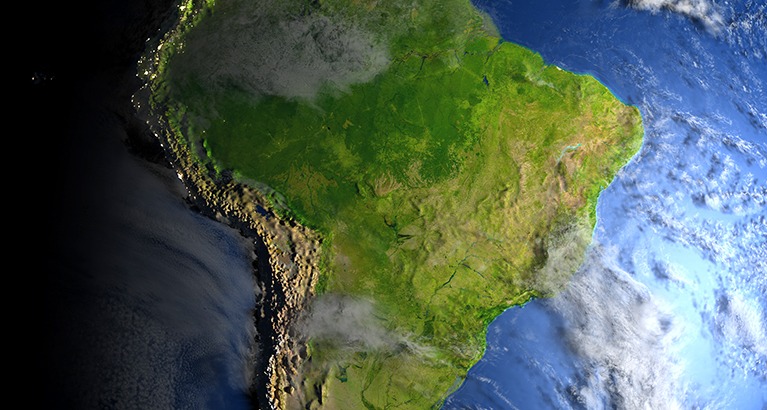
The Cambridge Centre for Alternative Finance (CCAF) at Cambridge Judge Business School and the Inter-American Development Bank (IDB) have today jointly published the ‘Cryptoasset Ecosystem in Latin America and the Caribbean (LAC)’ report, which provides key assessments of the development of the cryptoasset ecosystem in the region from private and public sector perspectives.
Key findings
1. Rapid industry growth
The study, which surveyed private sector companies and public institutions in the region between June and August 2022, reveals that the industry experienced significant growth from 2020 to mid-2022, with a median cryptoasset company doubling its number of users in 2020 and experiencing a median growth rate close to 50% in both 2021 and the first half of 2022. This positive trend was further illustrated by growth in active and identity-verified users’ engagement with company services in the same period.
2. New cryptoasset employment opportunities
This user growth has been linked to an increase in cryptoasset company employment, as new employment opportunities in the sector have emerged across the Latin America and the Caribbean (LAC) region in the past few years.
3. Cryptoasset companies as alternative full-service fintech providers
Looking at the industry structure development, the findings show that cryptoasset companies are evolving into alternative full-service fintech providers, serving as a one-stop-shop for investors, consumers and businesses. This was illustrated by all surveyed entities providing more than one service and, on average, offering around four services – including buying and selling, sending, receiving and storing, as well as related educational and consulting services.
4. A more positive attitude towards cryptoassets
A further reason for this growth could be the changing attitude of regulators in the region, with 36% of public sector survey respondents reporting a more positive attitude towards cryptoassets (at the time of their survey response) than they had five years ago. This is further supported by respondents to the private sector survey believing that regulators now have a better understanding of cryptoassets and reporting increased interaction with regulators through innovation hubs and regulatory sandboxes.
5. Regulatory unclarity, the most significant challenge to industry growth
Even though market performance and regulatory development are improving, the findings do show that there remain challenges to be addressed. Private sector respondents highlighted that regulatory unclarity is a more significant challenge to industry growth than any business-related challenge. Results from both private and public-sector respondents suggest that a lack of regulatory staff with an in-depth knowledge of cryptoassets is a concern requiring attention. Further, regulators underlined their need for further training and for more research on the cryptoasset ecosystem.
The rapid pace of change in the cryptoasset ecosystem has increased the urgency for greater understanding and cooperation among public and private stakeholders to ensure that the industry’s development is sustainable, consumer protection is robust and policymaking is evidence-based. We hope this study’s findings will provide insights into the development of LAC’s cryptoasset ecosystem and inform evidence-based decision-making and regulation.”
The cryptoasset industry, which encompasses more than the trading and speculation of cryptoassets, has the potential to be a game-changer for financial inclusion in Latin America and the Caribbean. By providing new opportunities for payments infrastructure, cross-border payments, digital identity, and other services, cryptoassets could help to bring financial services to those who are currently underserved. Public policy needs to be carefully designed to enable the industry to grow while protecting users, investors, and the financial system as a whole.
Growth opportunities
Looking forward, private sector respondents identify adding corporate clients and expanding decentralised finance (DeFi) services as the main growth opportunities. Other notable opportunities include providing clear and comprehensive regulations and further transforming cryptoasset companies into full-service fintech firms.
Whilst expanding DeFi services is a priority for the private sector, regulators are not likely to implement DeFi regulations soon. Almost half the responding regulators do not plan to implement DeFi regulation in the 5 years following their survey response or are unclear about their plans.
Download the report
This study is an output of the Cambridge Digital Assets Programme, a multi-year research initiative that aims to shed light on the rapid digitisation of assets and value transfer systems. The programme is a collaboration with 15 leading public and private institutions from the financial sector that provide directional input and guidance through joint working group sessions to ensure meaningful and practically relevant research impact.
Related articles
This article, by Pavle Avramovic, Gabriella Gebri and Aishwarya Viswanathan, examines the governance challenges shaping the next generation of digital identity systems. Based on cross-regulatory dialogues in Uganda and Ethiopia, it explores how stronger coordination, interoperability, and trust can unlock the full potential of digital identity and e-KYC across sectors.

Research centre news
New global survey maps e-KYC and digital ID adoption
Financial Innovation for Impact (Fii) in collaboration with the Cambridge Centre for Alternative Finance (CCAF), has launched the Global e-KYC Landscape Study. It captures intersecting perspectives of public authorities, regulators and supervisors, and industry (fintechs, banks, other financial institutions and digital ID service providers) via 2 parallel surveys. The resulting insights will provide a holistic view of e-KYC landscape and adoption dynamics today.

Research centre news
New report says financial complexity requires rethink
Cambridge Judge Business School and Bain & Company have published a new whitepaper warning that the global financial system has entered a phase of sustained structural instability, as geopolitical fragmentation, rapid technological change and shifting capital flows redraw the rules for business. The paper says new ways of leadership, governance and strategy are needed.